
Bug Identifier: Identify Bugs and Bug Bites by Photo Instantly
Finding an unfamiliar bug on your kitchen counter, in your bed, or crawling across the porch is unsettling, especially when you cannot tell if it bites, stings, or carries disease.
What’s That Bug?
Upload a photo and identify any insect in seconds
Our bug identifier tool solves that problem in seconds by matching a photo of the insect against a database of known species, so you get a clear answer instead of an anxious guess.
This article walks through how our bug identifier works, why a tool-based approach beats searching through generic pest photos online, and how to tell apart the bugs you are most likely to run into at home. It also covers bug bites in detail, since plenty of people open a bug identifier right after waking up with an itchy mark on their skin rather than after spotting the bug itself. By the end, you will know exactly how to use the tool and what to do with the result.
What Is a Bug Identifier and How Does It Work
A bug identifier is a tool that recognizes an insect from a photo, description, or a combination of physical traits like color, size, and leg count. Our tool uses image recognition trained on a large library of insect photos, so it compares your picture against that library and returns the closest matches ranked by confidence.
Some identifiers only handle live insects, while ours also supports bug bite photos, helping you match a rash or bump to the insect that likely caused it. Not sure what bit you? Start with our bug bite identification guide. Location matters here too, since an insect that looks similar in one region of the country may be a completely different species elsewhere. Our tool lets you set your state so the results reflect bugs actually found near you rather than a generic worldwide list.
Photo quality plays a big role in accuracy as well. A blurry or partial photo gives the tool less to work with, which is exactly why the next section covers how to get a photo that actually produces a reliable match.
How to Identify a Bug With Our Tool (Step-by-Step)
Getting an accurate identification takes less than a minute once you know what each step is for.
Step 1
Upload a Clear Photo
Open our bug identifier and upload a photo, or snap one directly through the tool if you are on mobile. Get as close as safely possible and keep the bug in focus, ideally against a plain background like a wall, tile, or countertop.
Step 2
Provide Your Location
Enter your state or zip code when prompted, since this narrows the results to species actually found in your part of the country. This one step alone rules out dozens of lookalike insects that only live in other climates.
Step 3
Select the Environment
Tell the tool where you found the bug, whether that is inside the house, in the yard, near standing water, or in stored food. This detail helps separate household pests from outdoor insects, since many species coloring.
Step 4
Run the Identification
Submit the photo and details, and our bug identifier processes the image and returns a list of likely matches with a confidence score attached to each one. Some results come back with a single clear top match, while others show three to five possibilities worth comparing.
Step 5
Review and Confirm Result
Enter your state or zip code when prompted, since this narrows the results to species actually found in your part of the country.
This one step alone rules out dozens of lookalike insects that only live in other climates.
Why Use a Bug Identifier Instead of Guessing
Scrolling through random pest photos online takes far longer than running a single photo through a dedicated tool, and it is easy to land on the wrong match when every beetle or spider photo looks similar at a glance. A bug identifier narrows the field automatically based on your actual photo, your location, and the environment you found the bug in, which generic image searches cannot do.
There is also a real cost to getting it wrong. Treating a harmless insect as dangerous leads to wasted money on pest control that was never needed, while dismissing an actual infestation as “just a few bugs” can let the problem grow for weeks before anyone notices. A quick, accurate identification keeps both of those mistakes from happening.
Bug vs Insect: What Is the Difference
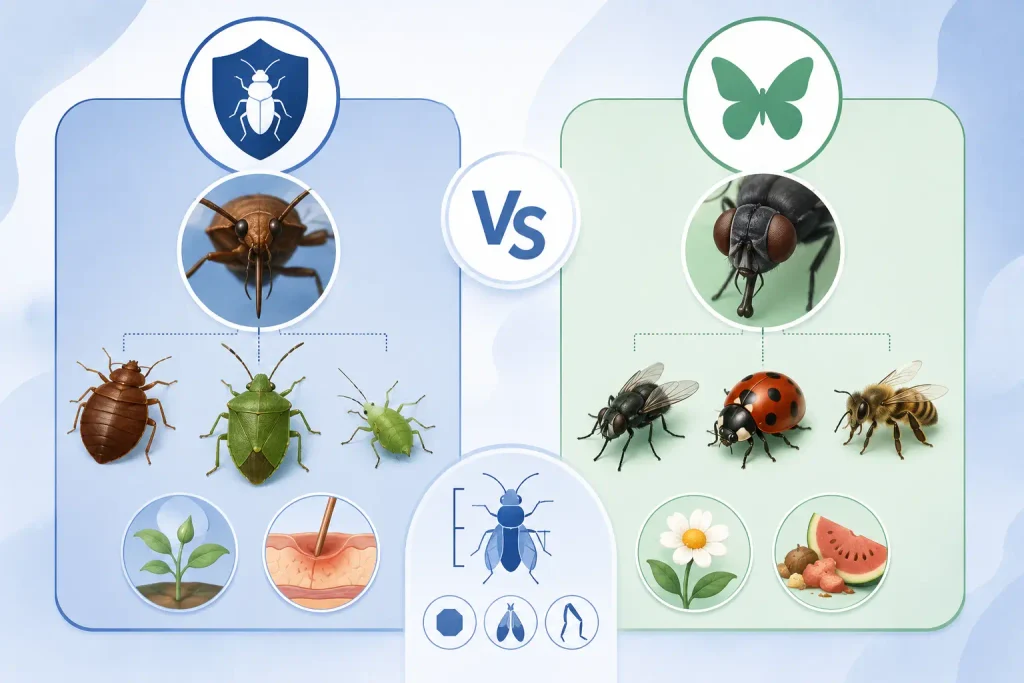
People often use “bug” and “insect” interchangeably, but they are not quite the same thing. Insect is the broader scientific category, covering any six-legged creature with a three-part body and, in most cases, wings. Ants, beetles, cockroaches, and butterflies all fall under this group.
True Bug
A true bug belongs to a specific insect order called Hemiptera, identified by piercing mouthparts used to feed on plant sap, other insects, or blood. Bed bugs, stink bugs, and aphids are true bugs, and this is where the biting, itch-inducing reputation of “bugs” mostly comes from.
Insect
Every true bug is technically an insect, but not every insect is a true bug. A housefly, for instance, is an insect but not a true bug, since it has different mouthparts and belongs to a separate order entirely. Our tool tags results by their correct classification, so you can tell at a glance whether something is a true bug or a different type of insect.
Common Household Bugs Across the World
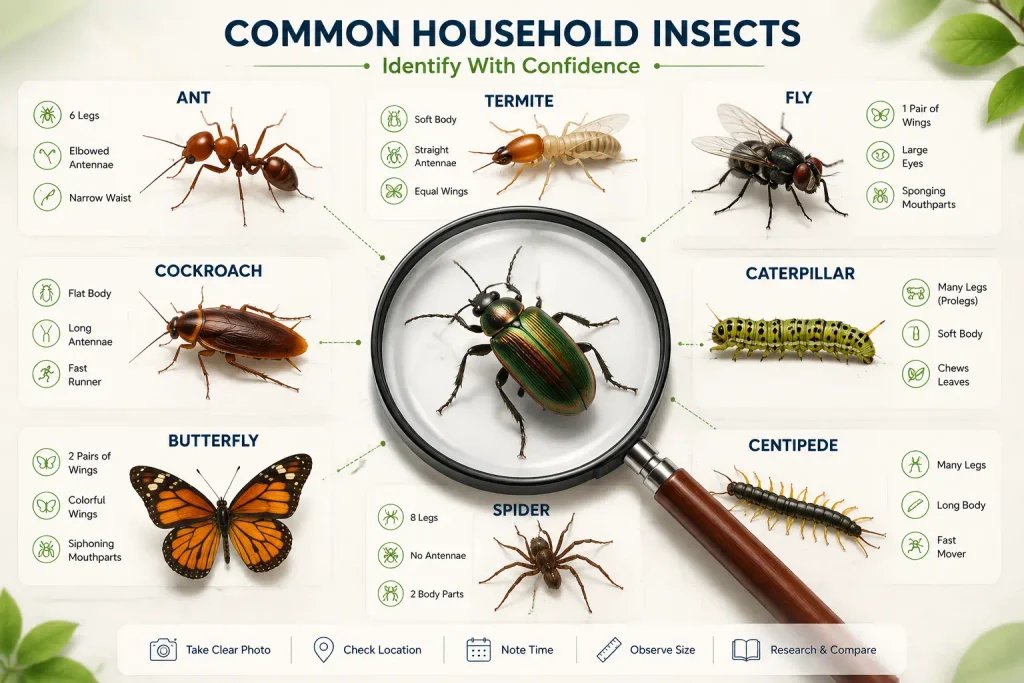
American homes deal with a fairly consistent set of insects, though the exact mix shifts depending on climate and region. Recognizing these bugs on sight saves time compared to running every single sighting through the identifier.
Cockroaches
Cockroaches are reddish-brown, flat-bodied insects with long antennae, commonly found near kitchens, drains, and damp basements. They are drawn to food residue and moisture, and spotting several at once usually points to a sanitation issue rather than a one-time visitor.
Ants
Common household ants range from small odorous house ants that invade kitchens to fire ants in warmer states, known for a painful sting. Ants typically travel in visible trails leading straight to a food source, which makes them one of the easier bugs to identify without needing a photo at all.
Termites
Termites are pale, soft-bodied insects that damage wood, furniture, and structural beams if left untreated. Unlike ants, termites have straight antennae and a uniform waist instead of a pinched one, a detail that helps separate swarming termites from flying ants during their swarm season.
Bed Bugs
Bed bugs are small, flat, reddish-brown insects that hide in mattress seams, furniture joints, and cracks near sleeping areas. They feed on blood at night and leave behind small blood spots or dark fecal marks on sheets, which is often the first clue people notice before ever spotting the bug itself.
Mosquitoes
Mosquitoes carry real health risks, including West Nile virus in many states, so correctly identifying the type matters more than with most household bugs. Species that breed in standing water tend to be most active at dusk and dawn, while a few daytime-biting species have become more common in southern states in recent years.
Ticks
Ticks are not insects but are frequently searched alongside bugs, and identifying them matters because of the risk of Lyme disease and other tick-borne illnesses. A tick found attached to skin should be removed carefully and saved in a sealed bag, since our tool can help identify the species from a clear photo if symptoms develop later.
Pantry Pests
Small brown beetles or larvae found in rice, flour, or cereal are usually pantry pests that thrive in stored food left open for too long. These bugs rarely bite humans, but affected food should be discarded and containers cleaned thoroughly once identified.
How to Identify Bug Bites on Skin
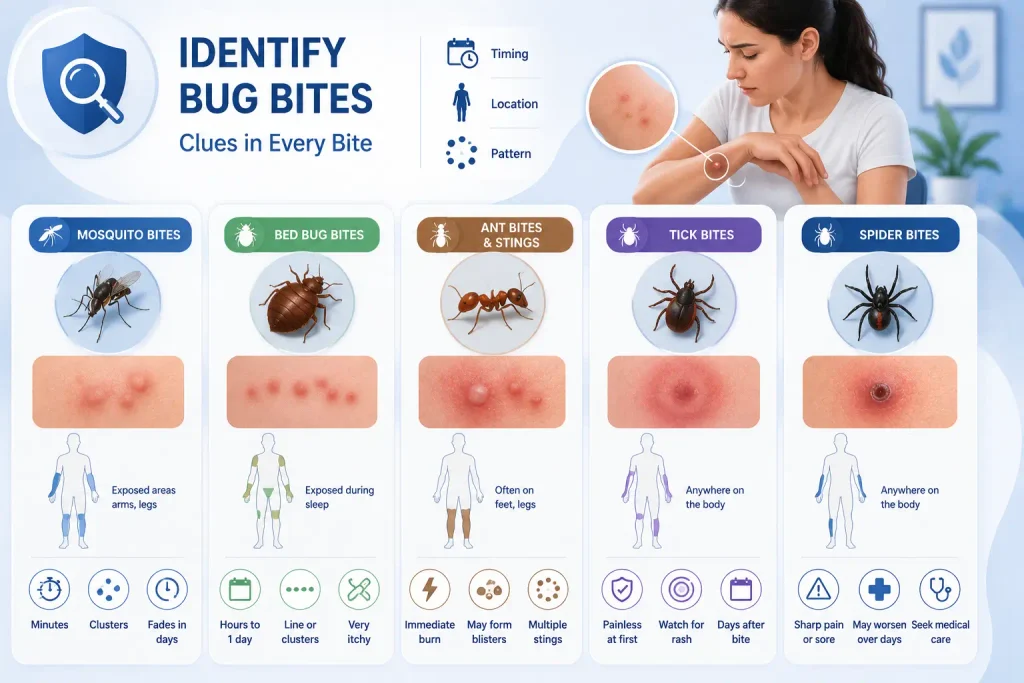
Identifying the bug itself is only half the picture, since plenty of people only notice a bite mark without ever seeing what caused it. Bite pattern, location on the body, and timing all give useful clues.
Mosquito Bites
Mosquito bites appear as small, round, itchy bumps that often show up in clusters on exposed skin like the arms and legs. They typically develop within minutes of the bite and fade within a few days unless scratched repeatedly.
Bed Bug Bites
Bed bug bites tend to appear in a line or small cluster, sometimes called a “breakfast, lunch, and dinner” pattern, on skin that was exposed while sleeping. They are often itchier and slower to show up than mosquito bites, a day.
Ant Bites and Stings
Fire ant stings cause an immediate burning sensation followed by a raised, red bump that often develops into a small blister within a day. Multiple stings clustered together usually mean a person stepped near a mound directly.
Tick Bites
Tick bites are often painless at first, which is why the tick itself is usually noticed before any bite symptoms appear. Watch for a spreading, ring-shaped rash in the days following a tick bite, since this can be an early sign of Lyme disease.
Spider Bites
Most spiders in the US are harmless, but bites from a black widow or brown recluse are the two that deserve real caution. A black widow bite causes sharp pain and muscle cramping, while a brown recluse bite can develop into a slow-healing sore over several days, and either situation calls for medical attention rather than home treatment.
When a Bug Bite Needs Medical Attention
Seek medical care if a bite causes difficulty breathing, widespread swelling, fever, or a rapidly spreading rash, since these can signal an allergic reaction or infection rather than a normal bite response. Spotted a spider indoors? Use our spiders identifier to figure out the species. Bites that fail to improve after several days, or that show pus and increasing pain, should also be checked out instead of monitored indefinitely at home.
Identifying Bugs Around Kids and Pets
Children and pets tend to pick up more bug bites than adults simply because they spend more time close to the ground, outdoors, or in grass and brush. Parents and pet owners using our bug identifier after spotting a bite or a bug near a child or animal should pay close attention to swelling, since both can react more strongly to a bite that barely bothers an adult.
Photographing the bite as soon as it appears, along with any bug found nearby, gives a doctor, pharmacist, or veterinarian something concrete to work from if the mark worsens later. It also helps to check common hiding spots like mattress seams, pet bedding, and stuffed toys if bed bugs or fleas are suspected, since these areas are just as vulnerable as any other part of the home.
Dangerous vs Harmless Bugs
Most bugs found around American homes are harmless nuisances rather than genuine health threats, but a handful deserve extra caution. Mosquitoes and ticks rank among the most dangerous common bugs in the country because of the diseases they can transmit, even though the bite itself often looks mild at first.
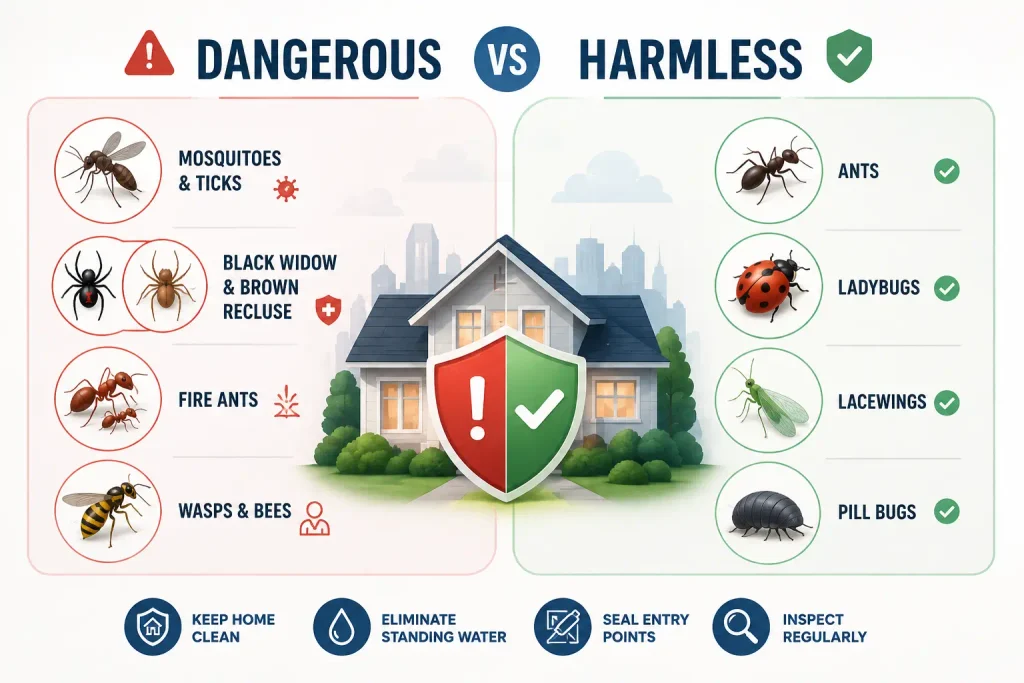
Certain spiders, particularly the black widow and brown recluse, can deliver a bite serious enough to require medical treatment, though both tend to hide rather than seek people out. Fire ants and some wasp or bee species also pose a real risk for people with allergies, since a sting that is minor for most people can trigger a severe reaction in others.
On the harmless end, the vast majority of household spiders, crickets, moths, and beetles pose no real threat and are better left alone or gently relocated outside. Learning to tell dangerous species apart from harmless ones through a quick identification cuts down on unnecessary fear and helps you focus pest control efforts where they actually matter.
Signs of Infestation You Should Not Ignore
A single bug sighting rarely means much on its own, but certain patterns point to a larger problem building up inside the home. Repeated sightings of the same insect in the same room, especially at night, usually mean there is an active nest or breeding site nearby rather than a one-off visitor.
Small dark droppings near baseboards, food packaging, or furniture joints can indicate cockroaches or rodents, depending on their size and shape. A musty odor combined with sightings of small pale insects near wood structures is a common early warning sign of termite activity, particularly in older homes. If you suspect an infestation, learn how to spot bed bug bites early.
For bed bugs specifically, waking up with new bites that were not there the night before, alongside tiny rust-colored stains on the sheets, is one of the clearest infestation signals. Catching these signs early makes treatment faster and considerably cheaper than waiting until the problem spreads to multiple rooms.
Common Mistakes People Make When Identifying Bugs
Many identification attempts fail simply because of avoidable errors during the photo or matching process. Taking a photo from too far away is one of the most frequent mistakes, since it leaves the tool with too little detail to work with.
Relying on a single blurry image instead of trying a few different angles is another common issue, especially for insects with distinguishing features on their underside or wings. Skipping the location field also reduces accuracy, since it forces the tool to consider species from regions that do not match where you actually live.
Some people also assume every small biting bug is a bed bug, when fleas, mites, chiggers, and even certain ants can leave similar-looking marks. Cross-checking the bite pattern against the actual insect, rather than guessing from the bite alone, produces far more reliable results.
Tips for Getting a More Accurate Result
A few small habits make a noticeable difference in how reliable your identification turns out to be. Photograph the bug from more than one angle whenever it stays still long enough, since top-down and side views reveal different identifying features. Want to prevent bugs altogether? Learn how to keep insects away naturally.
Include something for scale in the frame, like a coin or a ruler, so the actual size of the insect is clear rather than guessed from the photo. Note any distinct behavior you observed, such as jumping, flying in a straight line, or clustering with others, since this detail can help separate species that look similar in photos but behave very differently in person.
If a bug bites you, try to capture both the insect and the resulting mark in separate photos rather than relying on the bite pattern alone to guess the cause.
What to Do After You Identify a Bug or Bug Bite
Once our bug identifier tells you what you are dealing with, the next steps depend heavily on the type of insect involved. For occasional household pests like ants or the odd cockroach, cleaning up food residue, sealing entry points, and using basic traps or sprays is usually enough to keep numbers down.
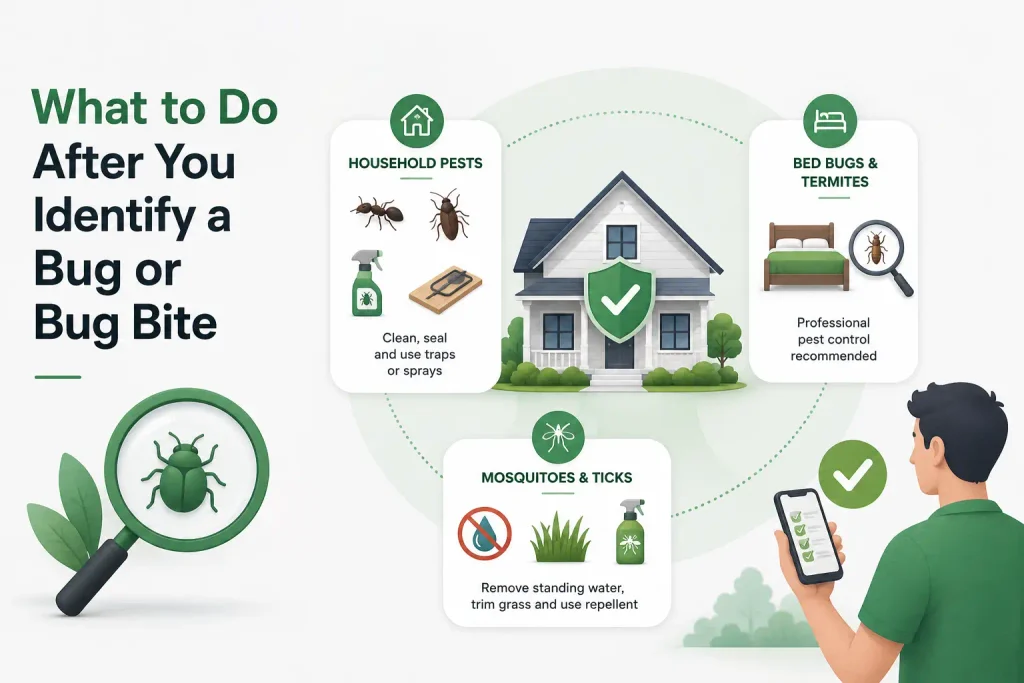
For bed bugs or termites, professional pest control is almost always the more reliable route, since these insects hide in places that household products rarely reach effectively. If mosquitoes or ticks are the main concern, focus on removing standing water, keeping grass trimmed, and using repellent, particularly in areas with reported cases of West Nile virus or Lyme disease.
For bites that turn out to come from something potentially dangerous, monitor the area for the first 24 to 48 hours and seek medical attention if swelling spreads, pain worsens, or symptoms like fever develop. For a roach problem, here’s how to get rid of cockroaches for good. Keeping the identification result saved on your phone is also useful if you end up visiting a doctor or pharmacist, since it gives them something concrete to reference.
Frequently Asked Questions
Conclusion
A reliable bug identifier turns a stressful, uncertain moment into a quick, confident answer, whether you are staring at an unfamiliar insect on the counter or an itchy bite you cannot explain. Taking a clear photo, setting your location, and noting the environment where you found the bug are the three habits that consistently produce the most accurate results from our tool. From there, knowing which bugs are genuinely dangerous versus simply annoying helps you decide whether a bit of cleaning and a sealed entry point will solve the problem, or whether it is time to call in professional pest control. Bookmark our bug identifier and use it the next time something unexpected shows up, so you can go from “what is this thing” to a clear next step in under a minute.