How to Identify a Black Widow Spider: Markings, Webs, and Warning
A shiny black spider tucked into a woodpile or garage corner is enough to make anyone pause, and for good reason. Black widows are one of the few spiders that genuinely warrant caution, so knowing exactly how to identify one removes the guesswork the moment you spot something suspicious.
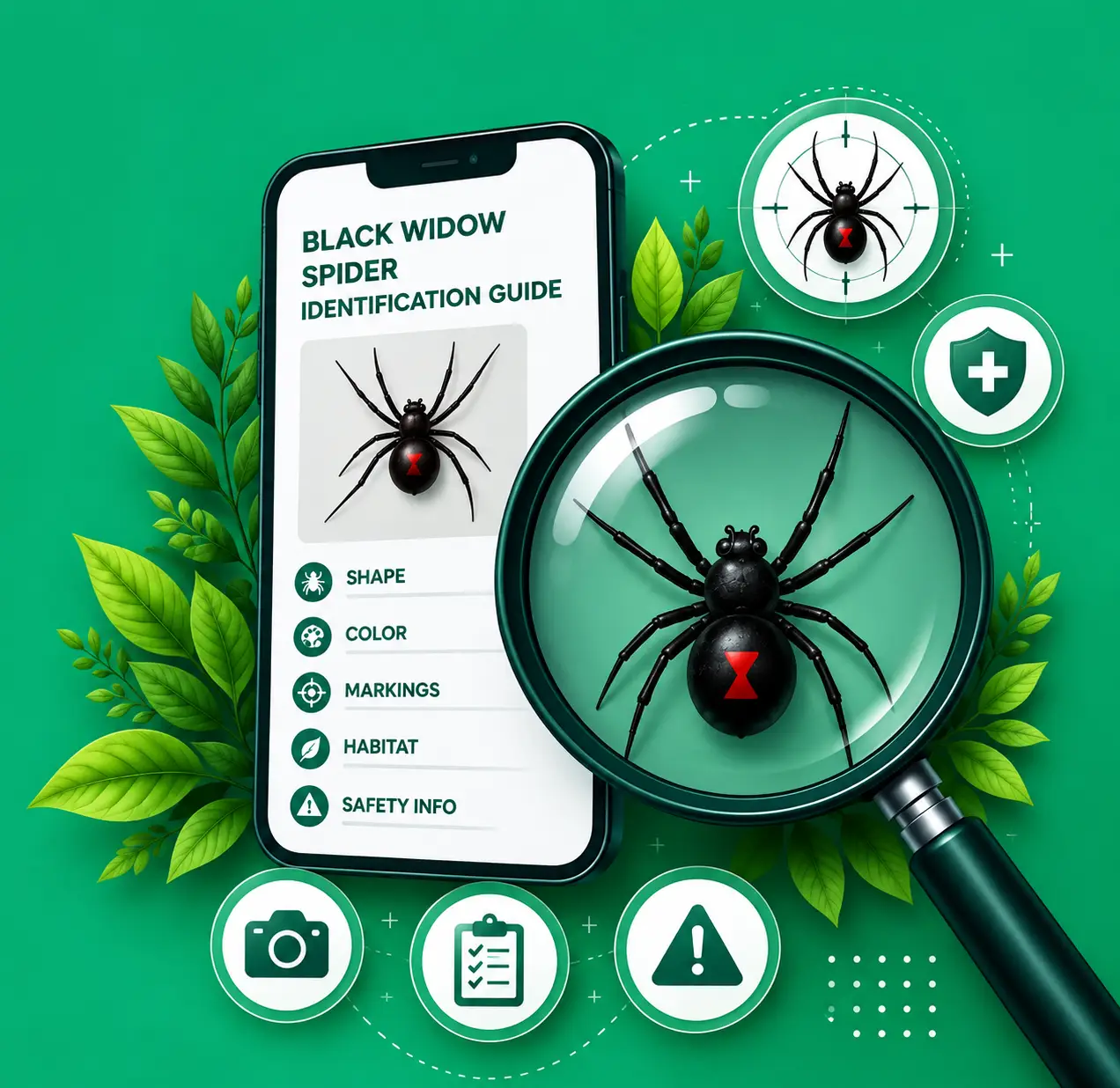
Our bug identifier tool can confirm a match from a photo in seconds, but knowing the physical traits yourself means you can act with confidence even before pulling out your phone.
This article walks through every reliable way to identify a black widow, from the marking everyone knows about to the web pattern and behavior that back it up. It also covers the differences between males and females, the types found across different regions, and what actually happens if a bite occurs. By the end, you will know how to tell a black widow apart from every look-alike spider that gets mistaken for one.
Quick Identification Checklist
A black widow is most reliably identified by a shiny black, rounded abdomen paired with a red or orange hourglass marking on the underside of the body. The legs are long, thin, and spindly compared to the round body, and the spider is usually found close to the ground in an irregular, tangled web built in a dark, undisturbed spot. Females show this classic look, while males and juveniles are smaller, lighter in color, and often have pale streaks or spots instead of a solid black body.
If several of these traits line up at once, especially the shiny black body and red marking together, the odds of a correct identification are high. When only one or two features match, or the coloring looks slightly off, a photo run through an identifier tool is worth the extra minute before assuming either way.
What Black Widow Spiders Look Like
Female Appearance
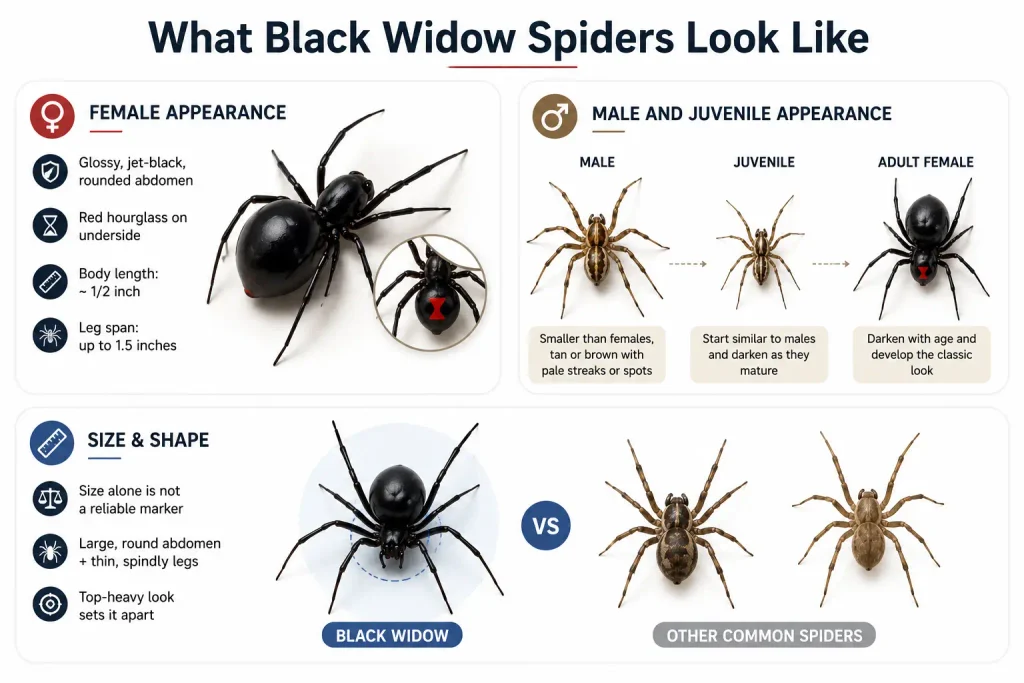
Adult female black widows have a glossy, jet-black, rounded abdomen that looks almost polished under direct light. The red hourglass marking sits on the underside of the abdomen, which means the spider often needs to be viewed from below or caught in a reflection to see it clearly. Females measure roughly half an inch in body length, with a leg span that can reach an inch and a half.
Male and Juvenile Appearance
Males are noticeably smaller than females and rarely display the solid black coloring people associate with the species. Instead, they tend to be tan or brown with pale streaks, spots, or bands running along the abdomen, which makes them easy to mistake for an entirely different spider. Juveniles start out looking similar to males and gradually darken as they mature, so a young black widow may not show the classic markings yet.
Size
Body size alone is not a reliable identification marker, since several harmless spiders reach a similar length. What sets a black widow apart is the combination of a disproportionately large, round abdomen relative to thin, spindly legs, giving the body an almost top-heavy look compared to more evenly proportioned spiders.
The Red Hourglass Marking Explained
The red hourglass is the single most recognizable feature of a female black widow, formed by two triangular shapes meeting at a narrow point in the middle of the abdomen’s underside. For a full species overview, see our spiders identifier tool. The marking ranges from bright red to a duller orange depending on the individual and the region, and in rare cases it can appear broken into two separate triangles rather than one connected shape.
Not every black widow shows a full, unbroken hourglass, and a small number of individuals have very faint markings or none at all, which is one reason relying on this single trait can occasionally lead to a missed identification. Because the marking sits on the underside of the body, spotting it usually requires a careful look from below, a mirror, or a photo taken at the right angle rather than a glance from above.
Black Widow Webs: What to Look For
Black widow webs look distinctly messy compared to the neat, wheel-shaped webs built by orb weavers. Instead of a symmetrical pattern, the web appears as an irregular tangle of strong, sticky strands built close to the ground in a quiet, rarely disturbed spot.
These webs are typically found in places like woodpiles, under outdoor furniture, inside storage boxes, or in corners of a garage or shed where foot traffic is minimal. The spider usually stays hidden within the web during the day and becomes more active after dark, so an occupied web often looks undisturbed until closer inspection reveals the spider tucked into a fold of silk near the center.
Where Black Widows Live and Hide
Black widows favor dry, sheltered spaces that offer both protection and a steady supply of small insects to prey on. Woodpiles, rock piles, crawl spaces, and cluttered garages rank among the most common hiding spots, along with meter boxes, storage sheds, and the undersides of outdoor furniture left in place for long stretches. Learn the general steps for how to identify a spider accurately.
Indoors, sightings are far less common but do happen, usually in basements, unfinished areas, or storage boxes that sit undisturbed for months at a time. Because black widows prefer stillness over open, high-traffic areas, an active infestation often goes unnoticed until someone reaches into a rarely used space and disturbs a web directly.
Black Widow Behavior and Activity Patterns
Black widows are primarily nocturnal, meaning they are far more active at night than during the day, which is part of why sightings often happen when moving stored items after dark or early in the morning. During daylight hours, they tend to stay motionless within the web, relying on stillness and their hidden location rather than movement to avoid detection.
Despite their reputation, black widows are not aggressive toward people and will typically retreat or stay still rather than approach. Most bites happen when a hand, foot, or piece of clothing accidentally presses against the spider or its web, rather than from any deliberate attack.
Types of Black Widow Spiders
Southern Black Widow
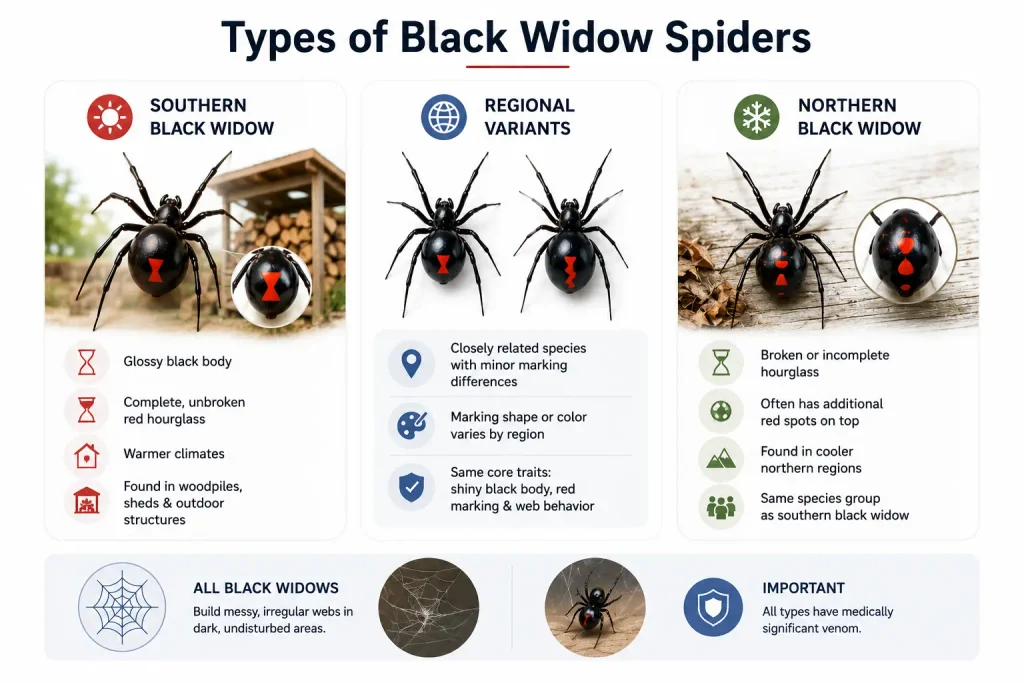
The southern black widow is the most widely recognized type, featuring the classic glossy black body and a complete, unbroken red hourglass marking. It tends to favor warmer climates and is commonly found in woodpiles, sheds, and outdoor structures across
much of the southern and central parts .
Regional Variants
Other closely related species, sometimes referred to by regional names, share the same core traits but show minor differences in marking shape or coloring depending on climate and location. Regardless of the specific type, the shiny black body, red marking, and web behavior described earlier apply consistently across all of them.
Northern Black Widow
The northern black widow looks similar overall but often shows a broken or incomplete hourglass, sometimes appearing as two separate red triangles instead of one connected shape. This type also tends to have additional red spots along the top of the abdomen, giving it a slightly different pattern from its southern counterpart .
Male vs Female Black Widow Spider
Females are the ones responsible for the species’ dangerous reputation, since they are larger, produce venom in greater quantity, and are the ones typically involved when a bite occurs. Their glossy black body and visible red hourglass make them relatively easy to recognize once the key traits are known.
Males look so different that people often do not realize they are looking at the same species at all. Smaller in size, lighter in color, and marked with pale streaks or spots rather than a solid black body, males also have proportionally longer legs relative to their body size. Male black widows do have venom and are technically capable of biting, but their fangs are smaller and less effective at penetrating skin, which makes bites from males extremely rare and rarely medically significant. If you’ve been bitten, check our full bug bite identification guide.
Diet, Life Cycle, and Sexual Cannibalism
What They Eat
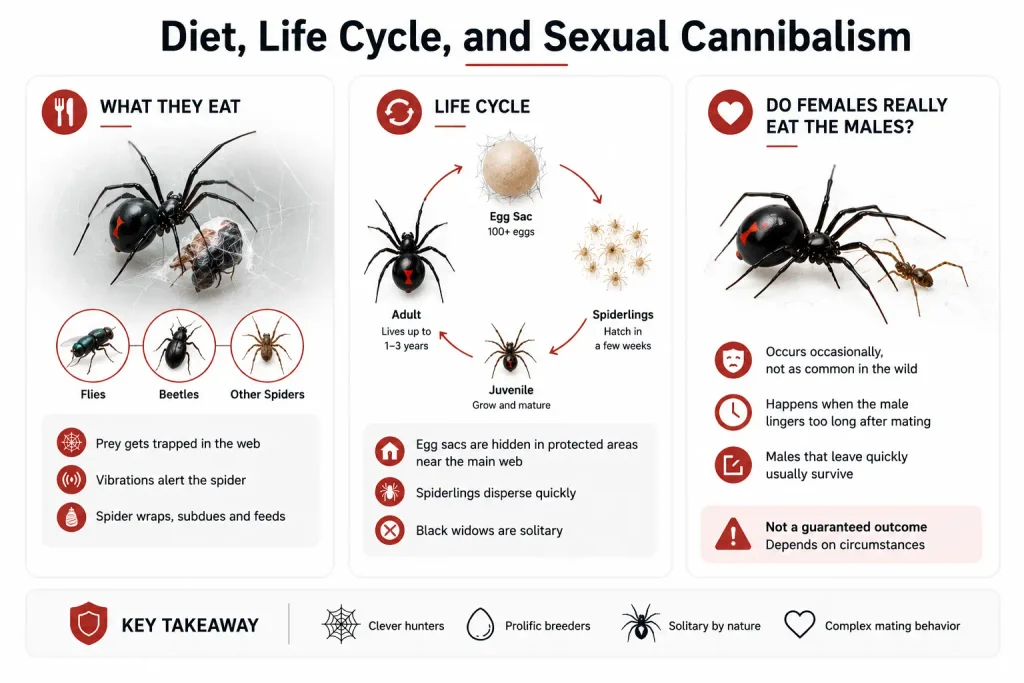
Black widows feed primarily on small insects that become trapped in their web, including flies, beetles, and other spiders that wander into the tangled silk. The spider detects vibrations in the web when prey becomes caught, then quickly wraps and subdues it before feeding.
Life Cycle
Females produce silk egg sacs that can each contain over a hundred eggs, typically laid in a hidden, protected spot near the main web. Spiderlings hatch after a few weeks and disperse quickly, since black widows are solitary and do not tolerate close contact with others of their own species outside of mating.
Do Females Really Eat the Males
The name “widow” comes from the occasional behavior of females consuming males after mating, though this happens far less often in the wild than the popular image suggests. When it does occur, it tends to happen when a male lingers near the female after mating rather than leaving promptly, making the encounter more circumstantial than a guaranteed outcome.
Spiders Often Mistaken for Black Widows
Several harmless spiders get mistaken for black widows due to dark coloring or a vaguely similar body shape. False widow spiders, for example, share a rounded, dark abdomen but lack the true red hourglass and instead show a duller, cream-colored pattern on the back rather than the underside.
Some jumping spiders and wolf spiders also get flagged as potential black widows simply because of their dark color, despite having a completely different body shape, leg proportion, and web behavior, or no web at all. A quick check for the specific hourglass shape, the web’s messy, ground-level pattern, and the spindly leg-to-body ratio usually rules these look-alikes out fairly quickly. If one is found indoors, here’s how to kill a spider safely.
Black Widow Spider Bites
What a Bite Feels Like
A black widow bite often starts as a sharp pinch, sometimes barely noticeable, followed within an hour by muscle cramping and stiffness that can spread from the bite site toward the abdomen, chest, or back. Sweating, nausea, and elevated blood pressure sometimes accompany more significant bites, and symptoms typically peak within a few hours.
How Serious Is a Bite
Bites are rarely fatal in healthy adults, since effective antivenom and supportive medical treatment have made severe outcomes uncommon in recent decades. That said, young children, older adults, and anyone with underlying health conditions face a higher risk of complications, so a bite involving any of these groups should always be treated as priority.
When to Seek Medical Care
Seek medical attention promptly if cramping spreads beyond the bite area, if breathing becomes difficult, or if symptoms escalate rather than settle within the first few hours.
Bringing a photo of the spider, if it was seen or captured,
helps medical staff confirm the cause and choose
the right treatment quickly.
Signs of a Black Widow Infestation
A single sighting does not necessarily mean an infestation, but a few patterns suggest more than one spider is present. Multiple messy, ground-level webs appearing in the same general area, particularly around woodpiles, storage boxes, or crawl spaces, points toward an established population rather than a lone wanderer.
Finding egg sacs, which look like small, round, papery balls of silk tucked into a web, is one of the clearest signs of an active infestation rather than a single passing spider. Repeated sightings in the same storage area over several weeks, especially after dark, also suggests it is worth inspecting more thoroughly rather than assuming it was a one-time encounter.
How to Get Rid of and Prevent Black Widows
Reducing clutter is the single most effective long-term step, since black widows depend on undisturbed, sheltered spaces to build their webs safely. Regularly moving or rotating stored boxes, firewood, and outdoor furniture disrupts the still conditions these spiders prefer and makes an area far less appealing to settle in.
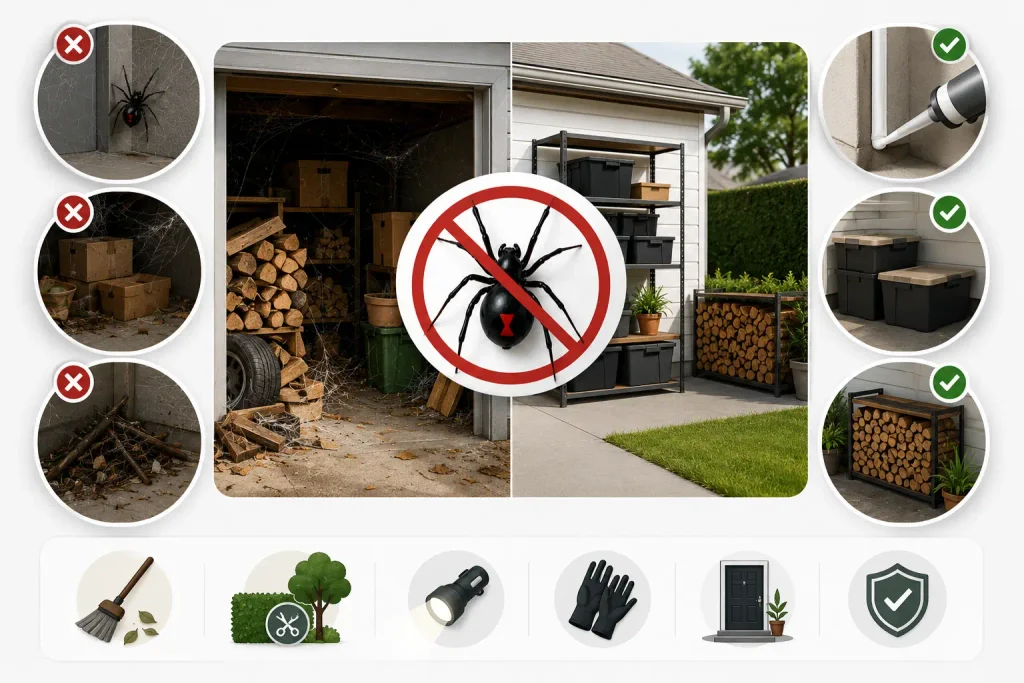
Sealing gaps around doors, vents, and foundation cracks helps keep spiders from moving indoors from outdoor hiding spots. For an active infestation, especially one involving multiple egg sacs, professional pest control is the more reliable option, since safely removing webs and treating hiding spots without direct contact reduces the risk of an accidental bite during cleanup.
Common Mistakes When Identifying a Black Widow
Relying on the hourglass marking alone is one of the most common mistakes, since the marking sits on the underside of the body and is easy to miss from a quick glance above. Assuming every glossy black spider must be a black widow is another frequent error, since several harmless species share similar coloring without the marking, web pattern, or leg proportions to match.
Overlooking males and juveniles is a third common gap, since their lighter coloring and pale streaks look so different from the classic image that people often dismiss them as a different species entirely. Cross-checking a photo through an identifier tool, rather than relying on color alone, catches most of these mistakes before they lead to either unnecessary panic or a missed risk.
Frequently Asked Questions
Conclusion
Identifying a black widow comes down to a specific combination of traits working together: a glossy black body, a red hourglass on the underside, spindly legs, and a messy web built close to the ground in a quiet spot. Males and juveniles look different enough to catch people off guard, which is exactly why checking the full picture matters more than relying on a single feature. Running a clear photo through our bug identifier tool settles any uncertainty in seconds, especially when the marking is hard to see or the spider only partially matches the classic description. Knowing these details ahead of time means the next unexpected sighting in a woodpile or storage box turns into a confident identification rather than a guessing game.