
Spiders Identifier: Upload a Photo and Get an Instant Match
Finding an unfamiliar spider and needing a fast, reliable answer is exactly what a good spiders identifier is built for, turning a blurry moment of uncertainty into a confirmed species match within seconds.
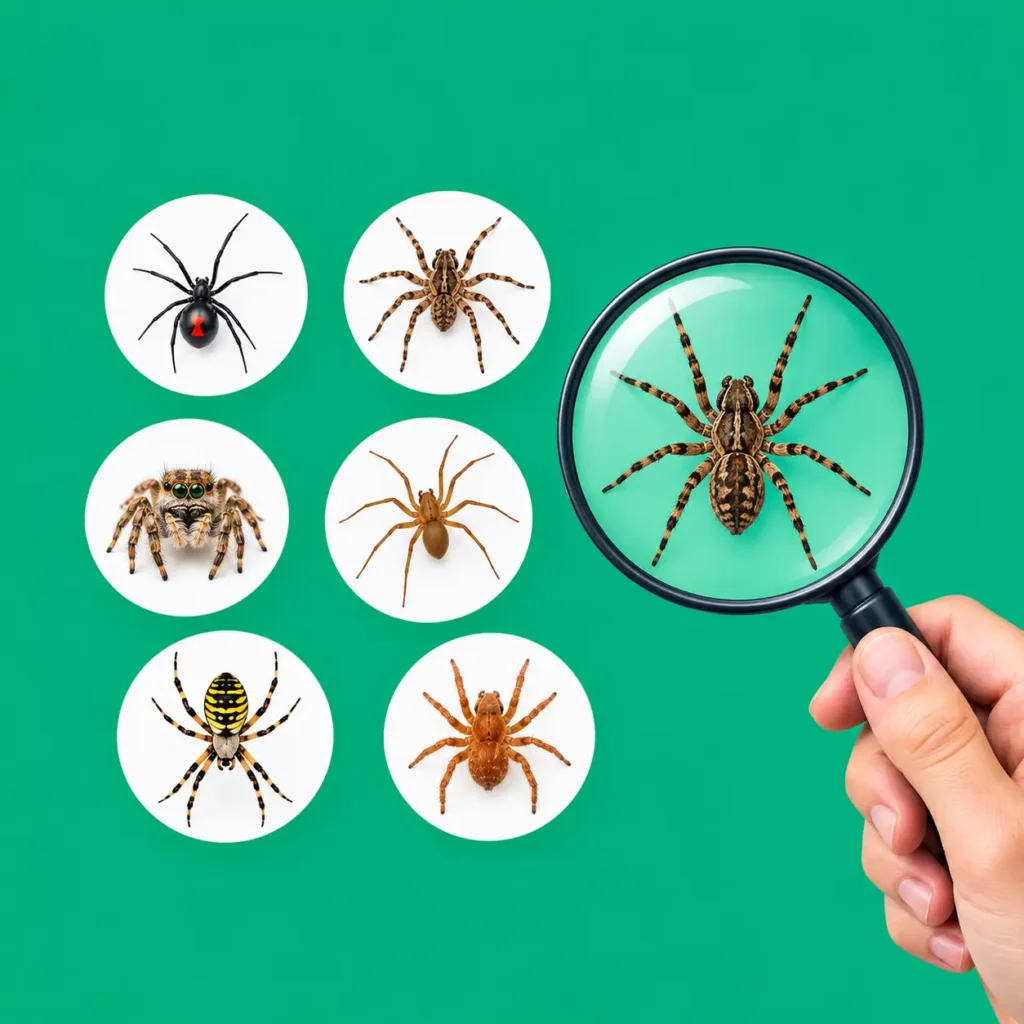
Whether the goal is confirming something is harmless before it gets relocated outside, or checking whether a marking matches something worth real caution, a photo-based identifier removes the guesswork that comes with comparing memory against random pictures online. This article covers how to use our tool effectively, the specific visual features that matter most, and the traditional identification methods worth knowing even when a photo tool is not immediately available.
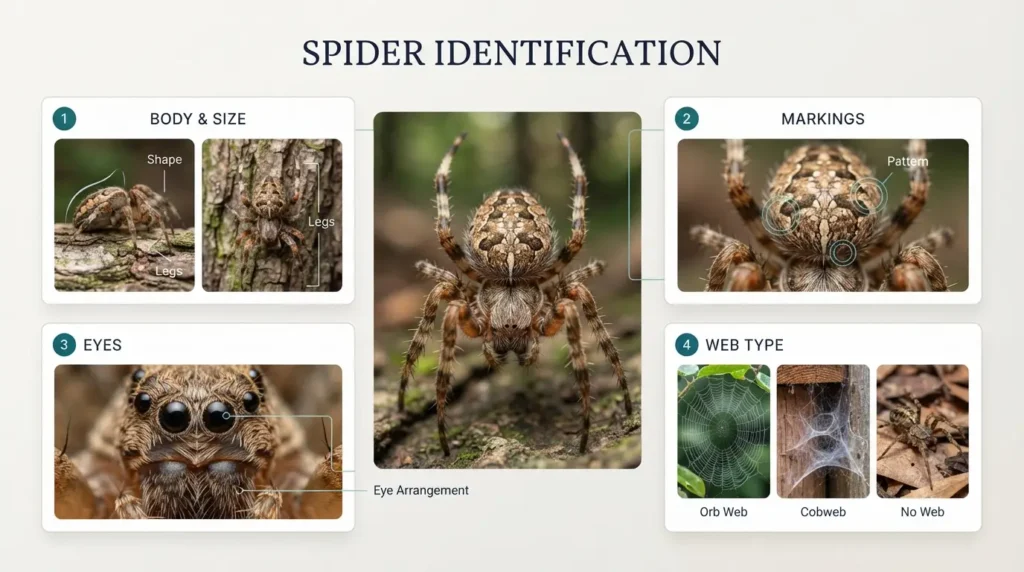
A spiders identifier works by comparing a photo you upload against a large database of known species, returning the closest matches ranked by confidence along with key identifying details. Accuracy depends heavily on photo quality, angle, and whether you also provide your location, since regional context narrows the pool of realistic matches considerably. Even without an app, the same core features, body shape, color pattern, eye arrangement, and web type, form the basis of every reliable identification method, from a photo tool to a printed chart.
Upload a Spider Photo: How Our Spiders Identifier Works
Uploading a clear photo of the spider is the first step, and our tool accepts images taken directly through your phone’s camera or selected from an existing photo library. Once uploaded, the identification results appear within seconds, showing the most likely species matches ranked by confidence, along with a short profile covering typical size, coloring, and whether the species is generally considered harmless or one to treat with more caution.
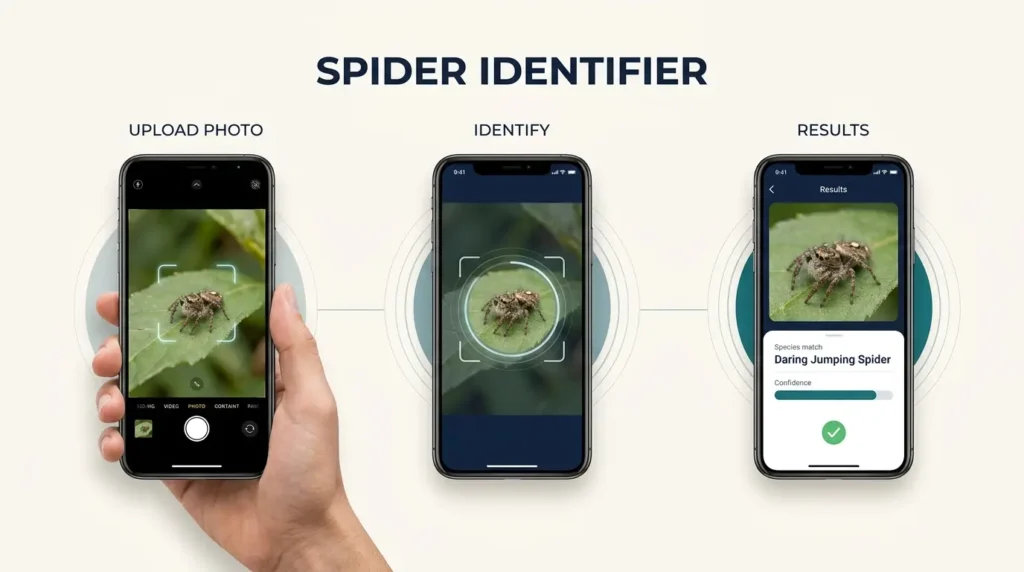
Using the tool effectively is straightforward: take or upload a clear photo, add your location if prompted, and review the results against the actual spider in front of you rather than assuming the top match is automatically correct. For species with several similar-looking relatives, checking the secondary matches listed alongside the top result often resolves any remaining uncertainty.
Why Spider Identification Actually Matters
Correctly identifying a spider changes what actually needs to happen next, since treating a harmless house guest as a serious threat wastes time and causes unnecessary anxiety, while dismissing a genuinely risky species as “just a spider” increases the odds of an unnecessary bite. Most spiders encountered around a home are completely harmless and even beneficial, feeding on other insects that would otherwise become a bigger nuisance.
A small number of species, most notably the black widow and brown recluse, do carry venom capable of a medically significant bite, making accurate identification genuinely useful rather than just an interesting exercise. For a step-by-step approach, see our full guide on how to identify a spider. Getting the identification right the first time removes both unnecessary fear and unnecessary risk from the equation.
Key Features to Look At When Identifying Spiders
Body Structure and Size
Overall body shape, whether compact and rounded or longer and more elongated, along with leg length relative to body size, narrows down the realistic possibilities before any other detail is considered. Size alone is rarely decisive, since several harmless species reach a similar length to more concerning ones, but it still helps rule out obvious mismatches quickly.
Color and Markings
Distinct markings, such as a violin shape, a red hourglass, or a specific banding pattern along the legs, tend to be far more reliable than overall color, since individual coloring can vary noticeably within the same species. Checking for a marking’s exact shape and location on the body, rather than just its general presence, avoids common misidentifications between similarly colored species.
Eye Arrangement
Most spiders have eight eyes arranged in a pattern specific to their family, though a few notable exceptions, including the brown recluse with only six eyes in three pairs, use this detail as a strong confirming feature. This detail usually requires a fairly close, well-lit photo to see clearly, making it one of the more useful checks once other features have already narrowed the possibilities. If it has a distinctive violin marking, it may be an identified brown recluse.
Web Type
The presence and style of a web, or its complete absence, narrows down the family considerably, since orb-weavers build a distinctive circular pattern while ground hunters like wolf spiders build no web at all. Cobweb-style, irregular webs tucked into dark corners point toward a different group entirely, including a few species that warrant more caution than average.
How Picture Identification Actually Works
Photo-based identifiers use image recognition trained on large libraries of spider photos, comparing the shapes, colors, and patterns in your uploaded image against that trained dataset to find the closest statistical matches. Adding a location narrows the comparison further, since it excludes species that do not realistically occur in your area regardless of how visually similar they might appear in the results.
This approach works best when the photo clearly shows the spider’s distinguishing features rather than a distant or heavily shadowed shot, since the tool can only compare what is actually visible in the image provided. Confidence scores attached to each result reflect how closely the photo matches known examples of that species, giving a useful sense of how much to trust a given result. A shiny black body with a red hourglass points to an identified black widow spider.
Getting the Best Photo for Identification
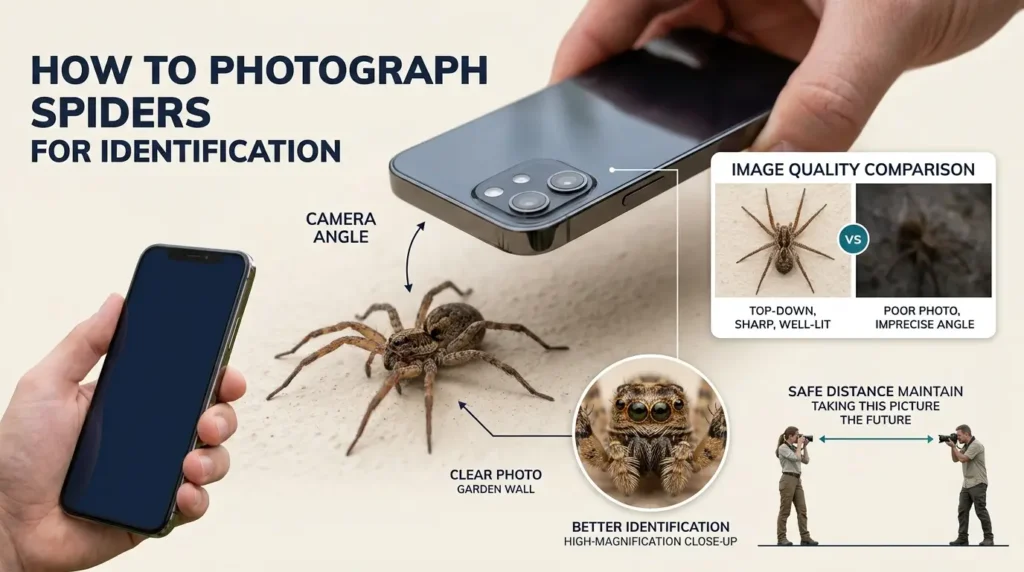
A photo taken from directly above the spider, in natural daylight rather than with a flash, captures body shape and coloring far more accurately than a rushed, angled shot. Getting as close as safely possible without disturbing the spider improves detail significantly, particularly for smaller features like eye arrangement or fine leg markings.
Including something for scale, like a coin placed nearby, helps clarify actual size rather than leaving it to guesswork from the photo alone. If the spider is moving, taking several quick photos increases the odds of capturing at least one clear, well-focused frame to work with.
What Makes a Spider Identifier Tool Reliable
A reliable identifier lets you specify your location, since this single detail eliminates a large share of species that simply do not live in your region regardless of visual similarity. Showing multiple ranked matches, rather than a single forced answer, also matters, since it gives you the context needed to compare against the actual spider rather than accepting one guess at face value.
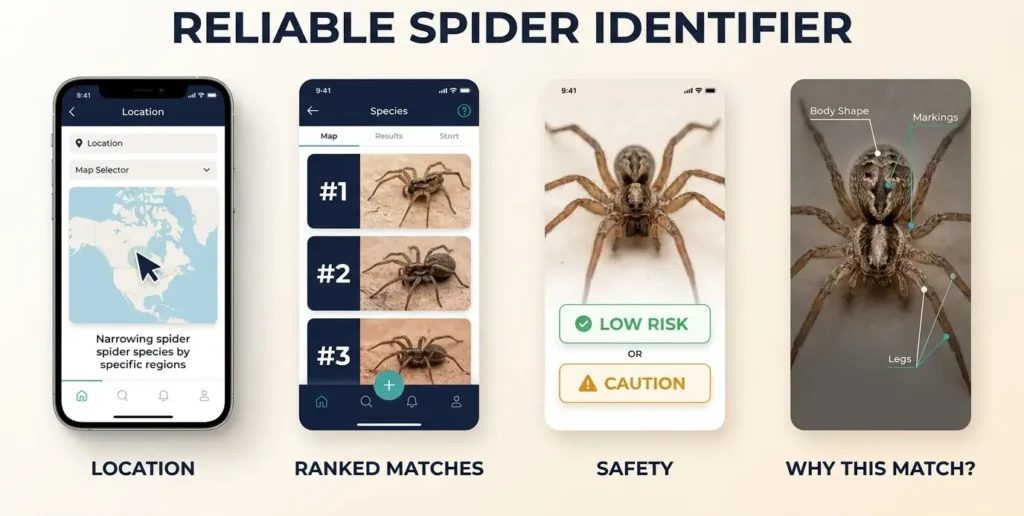
Clear information about whether a matched species is generally harmless or one that warrants caution adds practical value beyond just a species name. A tool that also explains the key features behind its match, rather than returning a name with no supporting detail, helps you learn to recognize that species independently the next time it comes up.
The Traditional Spider Identifier Chart Method
Understanding Chart Categories
A printed or online spider identification chart typically organizes species by broad categories first, such as web-builders versus active hunters, then narrows further by body shape, color, and regional distribution. Understanding this category structure before diving into specific species makes the chart considerably faster to use than scanning through every entry individually.
Working Through the Chart Systematically
Starting with the broadest category, web type or hunting behavior, and progressively narrowing through body shape, size, and markings mirrors the same logical process a photo-based tool follows internally. This systematic approach works well as a backup method when a photo tool is not available, or as a way to double-check a digital result against a more traditional reference.
Common Spider Types You Are Likely to Encounter
Harmless House Guests
Cellar spiders, common house spiders, and jumping spiders account for the vast majority of indoor sightings, all completely harmless and often helpful in controlling other household insects. These species vary in appearance from long-legged and delicate to compact and fuzzy, but none of them pose any real risk even when found indoors in noticeable numbers.
Spiders That Deserve Respect and Distance
Black widows and brown recluses are the two species most worth learning to recognize specifically, given their capability for a medically significant bite under the right circumstances. Our dedicated guides on identifying a black widow and a brown recluse cover the specific markings, habitat, and behavior for each in far more detail than a quick overview can provide here.
Regional Differences in Spider Populations
Climate and Habitat Factors
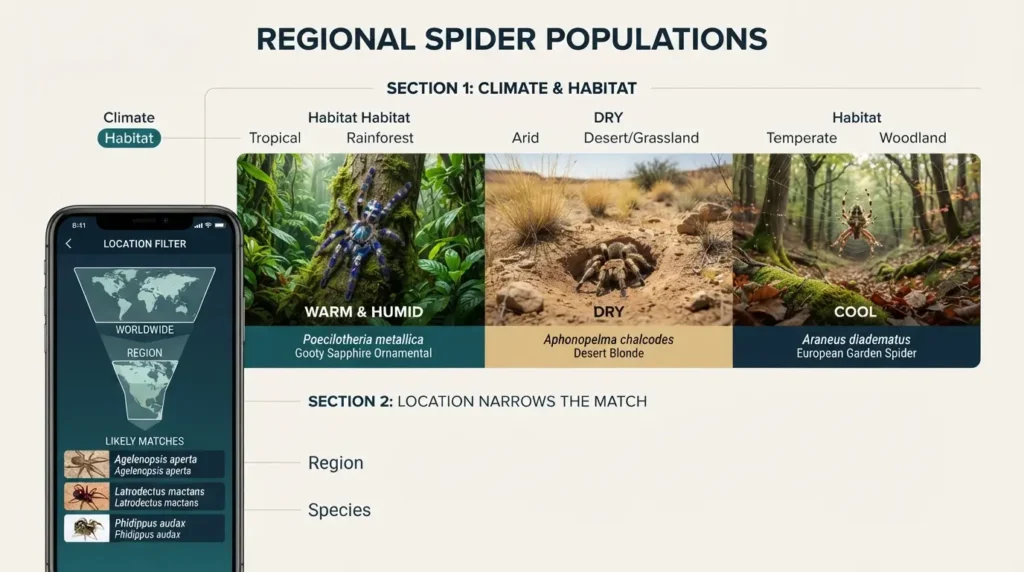
Warmer, more humid climates tend to support a wider variety of spider species overall, while drier or cooler regions typically host a more limited set adapted specifically to those conditions. This variation is exactly why setting a location in a photo-based tool meaningfully improves accuracy compared to a generic, worldwide database search.
Using Location to Narrow Down Options
Knowing which species are actually documented in a specific region eliminates a significant share of visually similar but geographically implausible matches before comparing any other feature. This is particularly useful for species with close look-alikes that only exist in entirely different parts of the world.
Safety First: What to Do If You Cannot Identify a Spider
Capture and Release Techniques
Trapping an unidentified spider under a container and sliding a piece of paper underneath allows for a closer photo and safe relocation outside without direct contact. This method works well for the vast majority of spiders, since most species, even ones capable of a bite, generally avoid confrontation and prefer to escape when given the chance.
When to Call a Professional
Repeated sightings of a spider matching the markings of a black widow or brown recluse, particularly in numbers suggesting an established population, is a reasonable point to bring in professional pest control rather than continuing to handle removal individually. A professional can also confirm identification with more certainty in ambiguous cases and address the broader hiding spots a single relocation cannot fully resolve.
Common Mistakes When Using a Spider Identifier
Uploading a blurry or distant photo and expecting a confident match is one of the most common mistakes, since the tool can only work with the detail actually visible in the image provided. Skipping the location field also reduces accuracy meaningfully, since it forces the comparison against a much broader, less relevant set of possible species. Curious about size? Find out how big a wolf spider can get.
Accepting the top result without checking it against the actual features described for that species, particularly for a result suggesting a potentially dangerous spider, can lead to either unnecessary panic or a missed genuine risk. Relying on color alone, rather than checking markings, eye arrangement, and web type together, remains one of the most frequent sources of misidentification regardless of whether a photo tool or a traditional chart is being used.
Frequently Asked Questions
Conclusion
A reliable spiders identifier turns an uncertain, sometimes unsettling encounter into a confirmed answer within seconds, provided the photo is clear and your location is included to narrow the realistic possibilities. The same core features driving that automated match, body shape, color and markings, eye arrangement, and web type, also form the basis of the traditional chart method, so understanding them makes you better at evaluating any tool’s results rather than accepting them blindly. Most spiders turn out to be harmless once identified, and knowing the specific markings that set black widows and brown recluses apart means the rare genuine risk gets treated with the caution it actually deserves. Upload a photo the next time an unfamiliar spider shows up, and let the identification guide whether it gets gently relocated outside or handled with a bit more care.