Are Cockroach Droppings Dangerous?
Finding small, dark specks scattered near a pantry shelf or behind an appliance is rarely a pleasant discovery, and the natural next question is whether those specks pose any actual health risk beyond the obvious unpleasantness.
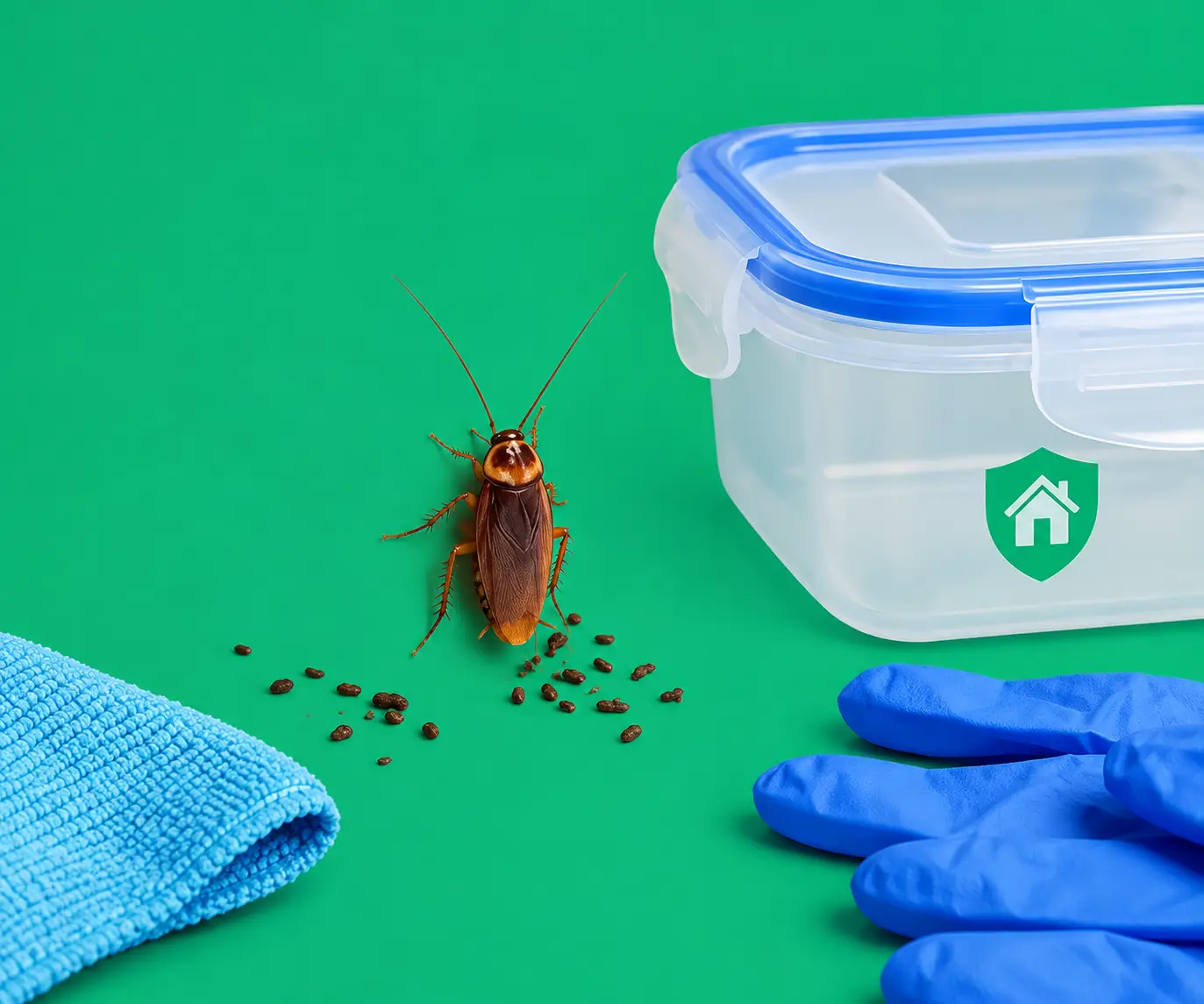
Cockroach droppings genuinely can carry health risks, particularly for people with asthma or allergies, making proper cleaning more important than simply wiping them away with a paper towel. Our bug identifier tool can confirm which roach species is present based on a photo of the insects themselves, which helps put dropping size and pattern into better context.
This article covers exactly what cockroach droppings look like, the specific health risks they carry, and the safest way to clean them without spreading allergens into the air. It also covers how droppings differ from other common pest droppings, what they reveal about an infestation’s size and species, and the steps that actually stop them from reappearing.
What Do Cockroach Droppings Look Like
Cockroach droppings typically appear as small, dark brown to black specks, often compared to coffee grounds or coarsely ground black pepper depending on the specific species. Larger species like the American cockroach produce more cylindrical, slightly ridged droppings, while smaller species like the German cockroach leave finer, more granular specks that can be mistaken for dirt or debris at a quick glance.
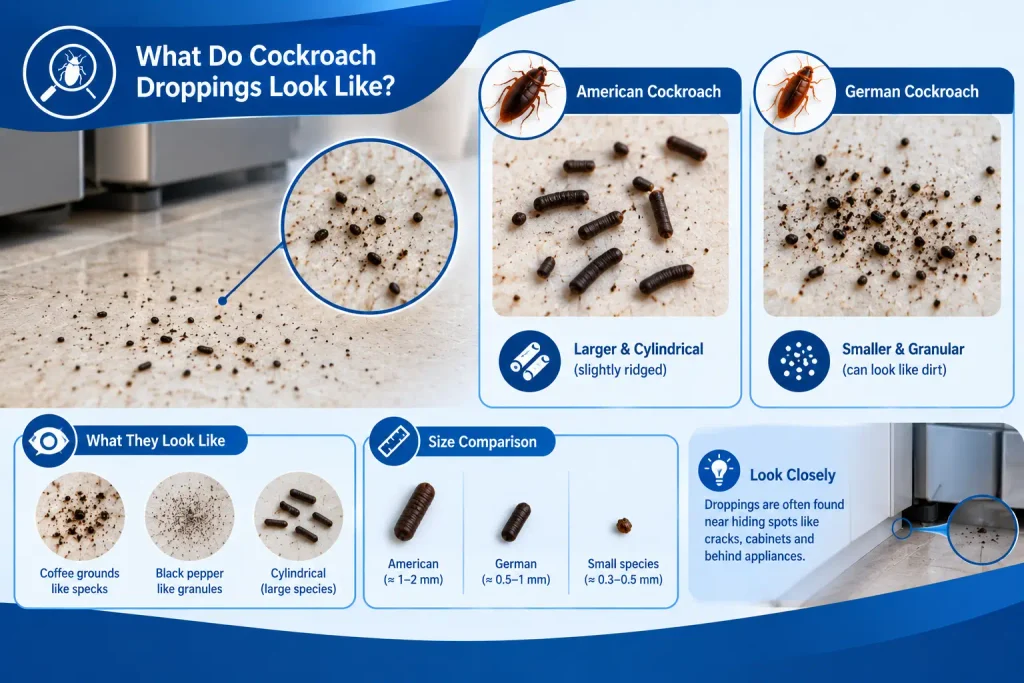
Yes, cockroach droppings can be dangerous, primarily because they contain allergens and bacteria capable of triggering asthma symptoms, allergic reactions, and in some cases contributing to the spread of foodborne illness. The droppings themselves look like small, dark specks resembling coffee grounds or ground pepper, varying slightly in size depending on the roach species responsible. Cleaning them safely requires gloves, a mask, and proper ventilation rather than simply wiping the area with a dry cloth, since dried droppings can release airborne particles when disturbed. If you’re dealing with an infestation, learn how to get rid of cockroaches safely.
Droppings often accumulate in a consistent pattern along the same travel routes a roach population uses repeatedly, rather than scattering randomly throughout a space. Noticing this concentrated pattern, rather than isolated specks in unrelated areas, is itself a useful clue that an established population is nearby rather than a single wandering insect.
Are Cockroach Droppings Actually Dangerous
Health Risks
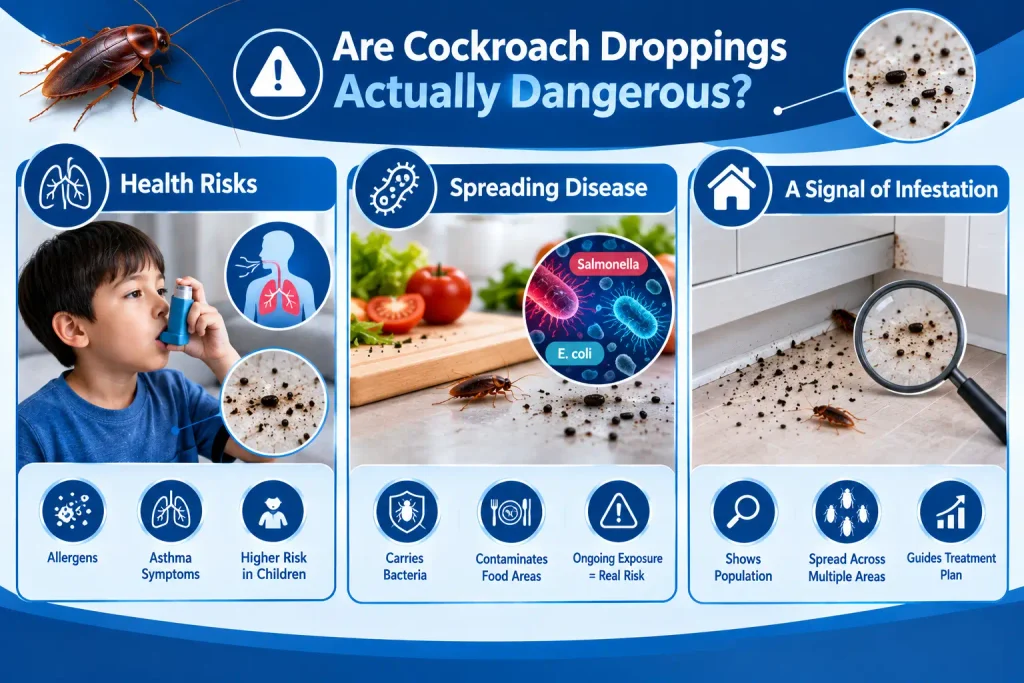
Cockroach droppings contain proteins that act as allergens, and repeated exposure, particularly for people with asthma, has been linked to increased asthma symptoms and more frequent attacks. Children in homes with a significant cockroach presence show a notably higher rate of asthma-related complications tied specifically to this allergen exposure over time.
Spreading Disease
Cockroaches can carry bacteria including salmonella and E. coli on their bodies and in their droppings, picked up from unsanitary surfaces they travel across before contaminating food preparation areas. While a single dropping is unlikely to cause illness on its own, ongoing exposure in a kitchen or food storage area raises a genuine contamination concern worth addressing promptly.
A Signal of Infestation
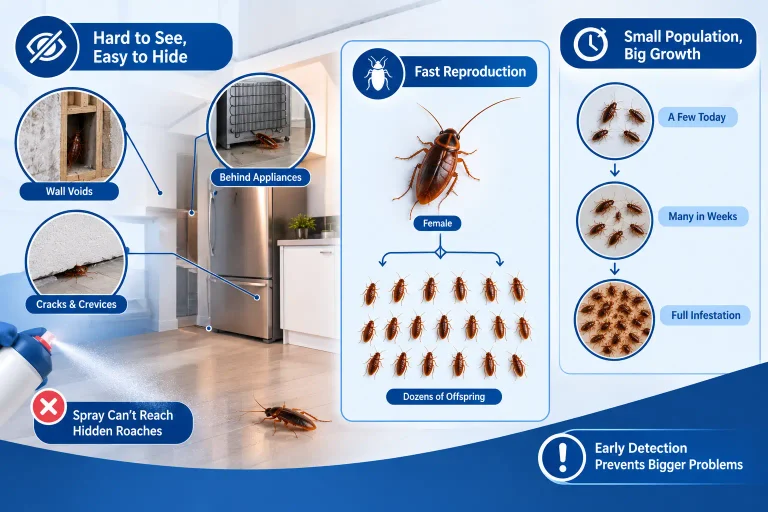
Finding droppings, even without seeing a live roach, is one of the clearest signs of an established population rather than a single isolated visitor. The concentration and spread of droppings across multiple areas of a home often indicates how far an infestation has progressed, which matters for deciding how aggressive a treatment response needs to be.
Cockroach Droppings vs Other Pest Droppings
Cockroach droppings are often mistaken for mouse droppings, though mouse droppings tend to be slightly larger, more uniformly oval, and softer in texture when fresh compared to the harder, more angular specks roaches leave behind. Bed bug droppings, by comparison, look more like tiny ink stains or dark smears rather than distinct, separate specks, since they are typically composed of digested blood rather than the drier waste roaches produce.
Checking texture and shape closely, ideally alongside actual insect sightings or a photo comparison, helps confirm which pest is actually responsible before choosing a cleaning or treatment approach. Misidentifying the source can lead to addressing the wrong pest entirely, particularly when droppings are found without a clear insect sighting to confirm the cause.
What Droppings Reveal About the Species and Infestation Size
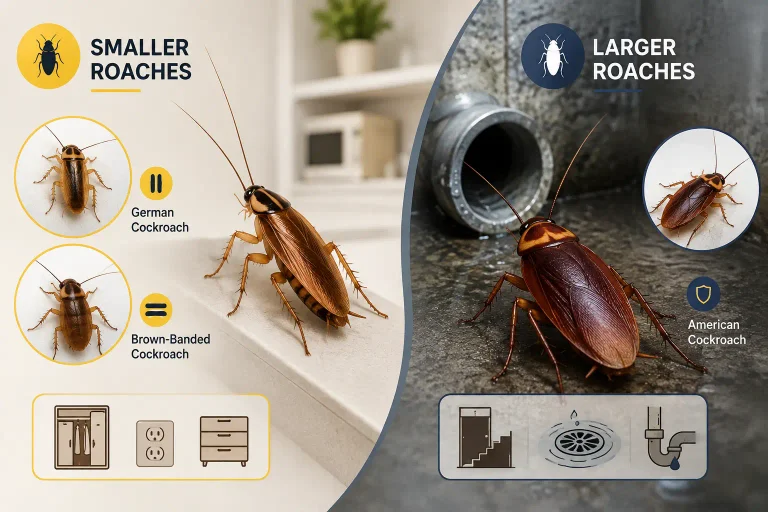
German cockroach droppings appear finer and more scattered, reflecting this smaller species’ tendency to travel through tight cracks and crevices in kitchens and bathrooms. For severe cases, see what exterminators use for roaches. American cockroach droppings are noticeably larger and more cylindrical, consistent with this species’ larger body size and preference for damp areas like basements and drains.
A small, localized cluster of droppings often points to an early-stage or minor infestation, while widespread droppings across multiple rooms suggest a more established population requiring a more thorough treatment approach. This size and spread assessment helps set realistic expectations for how much cleaning and treatment effort a specific situation will likely require.
Where to Look for Cockroach Droppings
Kitchens account for the most common dropping sightings, particularly inside cabinets, behind appliances like refrigerators and stoves, and along baseboards near food storage areas. Bathrooms, especially areas near pipes and drains, are another frequent location, particularly for larger species that favor damp conditions.
Less obvious spots, including inside electrical outlets, behind wall-mounted picture frames, and within cardboard boxes stored in closets or garages, can also harbor droppings that go unnoticed during a routine cleaning pass. Checking these less visible areas during a thorough inspection often reveals the true extent of an infestation that a quick glance at obvious surfaces would miss entirely.
How to Safely Clean Cockroach Droppings
Step 1: Ventilate the Area
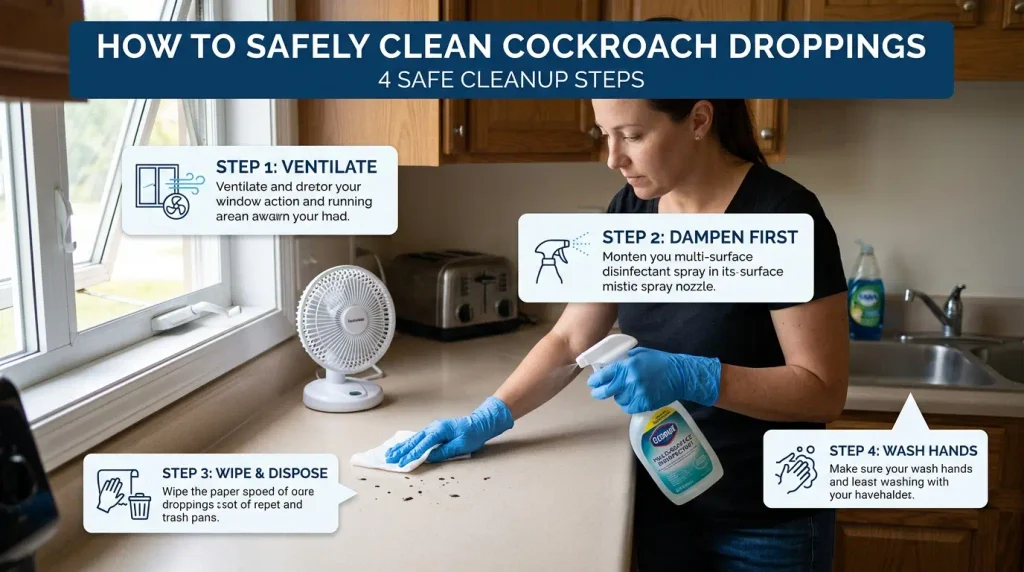
Opening windows or turning on a fan before starting to clean reduces the concentration of airborne allergens released as dried droppings are disturbed during the cleaning process. This simple step matters particularly for anyone with asthma or known allergies who will be doing the cleaning themselves.
Step 2: Dampen the Droppings Before Wiping
Spraying the affected area lightly with water or a disinfectant solution before wiping prevents dry droppings from becoming airborne dust, which is far more likely to happen with dry sweeping or vacuuming. Allowing the solution to sit briefly before wiping also helps loosen any droppings stuck to surfaces.
Step 3: Wipe and Dispose Properly
Using a disposable cloth or paper towel to wipe the area, then sealing it in a plastic bag before disposal, prevents accidentally spreading allergens or bacteria to other areas of the home during cleanup. A follow-up wipe with a disinfectant solution addresses any remaining bacteria on the cleaned surface.
Step 4: Wash Hands and Clean Tools Thoroughly
Washing hands thoroughly after cleaning, along with disinfecting any reusable tools like gloves or scrub brushes, prevents accidental cross-contamination to other surfaces touched afterward. This final step matters especially in kitchen areas where cross-contamination could affect food preparation surfaces.
Personal Protective Precautions While Cleaning
Wearing disposable gloves and a well-fitted mask, ideally an N95 or similar respirator rather than a basic cloth mask, reduces both direct contact exposure and inhalation of airborne allergen particles during cleaning. This precaution matters more than people often expect, since dried droppings can break into fine particles capable of remaining airborne briefly once disturbed. If you’re also noticing skin reactions, check our bug bite identification guide.
Anyone with diagnosed asthma or significant allergies should consider having someone else handle the actual cleaning where possible, or at minimum ensure thorough ventilation and protective equipment throughout the process. Removing pets and young children from the immediate area during cleaning further reduces unnecessary exposure for household members most vulnerable to a reaction.
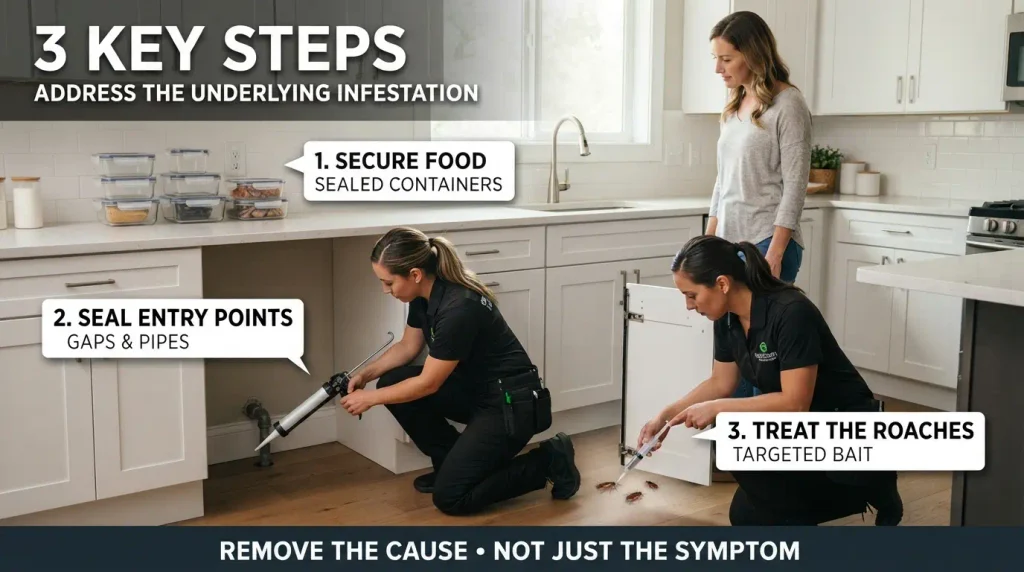
Addressing the Underlying Infestation
Secure Food Sources
Storing all dry goods in sealed, airtight containers and promptly cleaning up food residue removes the food source sustaining the population responsible for the droppings in the first place. This step matters as much as any direct cleaning, since droppings will continue reappearing as long as roaches have consistent access to food.
Seal Entry Points
Sealing gaps around baseboards, pipes, and utility penetrations blocks the pathways roaches use to move between wall voids and living spaces, limiting how easily new individuals can join an existing population. This step also helps prevent reinfestation even after an initial treatment has addressed the current population.
Treat the Roaches Directly
Gel bait, boric acid, or professional treatment targets the actual roach population responsible for the droppings, since cleaning alone addresses only the visible symptom rather than the underlying cause. Combining direct treatment with the sanitation steps above produces far more lasting results than focusing on cleanup without addressing the roaches themselves.
Preventing Future Droppings
Maintaining consistent kitchen and pantry cleanliness, including prompt cleanup of crumbs and spills, removes the ongoing food access that sustains a roach population capable of producing new droppings. Regular inspection of common hiding spots, particularly behind appliances and inside cabinets, catches a developing problem before droppings accumulate into a larger, more noticeable amount.
Keeping indoor humidity reasonably low and fixing any leaks promptly removes the damp conditions certain roach species specifically favor. Consistent long-term prevention, rather than only reacting after droppings appear, keeps both the roaches and the health risks associated with their waste from becoming a recurring problem.
When to Call a Professional
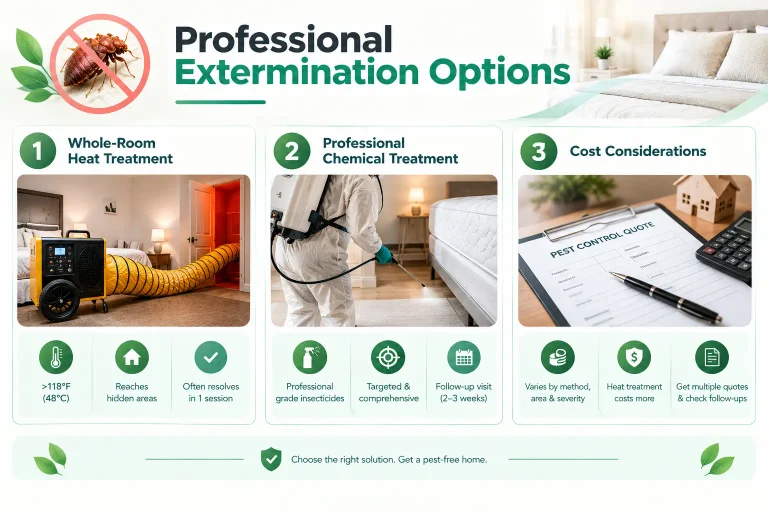
Widespread droppings across multiple rooms, despite consistent cleaning and DIY treatment attempts, suggest an infestation that has outgrown what home methods can effectively address. Household members with asthma or significant allergies dealing with a persistent cockroach problem may also benefit from professional treatment sooner rather than later, given the direct health stakes involved.
A professional exterminator can identify the specific species responsible, apply targeted treatment beyond what over-the-counter products offer, and provide a follow-up schedule that DIY cleaning alone cannot replicate. Combining professional treatment with the sanitation and prevention steps covered here produces more reliable, longer-lasting results than either approach used alone.
Common Mistakes When Dealing With Cockroach Droppings
Dry sweeping or vacuuming droppings without dampening them first is one of the most common mistakes, since this approach can release allergen particles into the air rather than safely containing them. Cleaning visible droppings while ignoring the underlying infestation addresses only the symptom, allowing new droppings to reappear as the roach population continues undisturbed.
Skipping protective gloves and a mask, particularly for household members with asthma or allergies, increases unnecessary exposure risk during what should be a routine cleaning task. Assuming all small dark specks found in a home are automatically cockroach droppings, without checking texture and shape against other possibilities like mouse droppings, can also lead to addressing the wrong pest entirely.
Frequently Asked Questions
Conclusion
Cockroach droppings are more than just an unpleasant sight, since they carry real allergen and bacterial risks that make careful, protected cleaning genuinely important rather than optional. Dampening droppings before wiping, wearing gloves and a mask, and disposing of cleaning materials properly protects against unnecessary exposure during what might otherwise seem like a routine cleanup task. Addressing the underlying infestation through sealed food storage, blocked entry points, and direct treatment matters just as much as the cleaning itself, since droppings will keep reappearing as long as the roaches producing them remain active. Confirming the actual species behind a dropping pattern, whether through direct observation or our bug identifier tool, helps set the right expectations for how extensive the cleanup and treatment ahead will likely need to be.