What Attracts Silverfish Insects? The Real Causes Explained
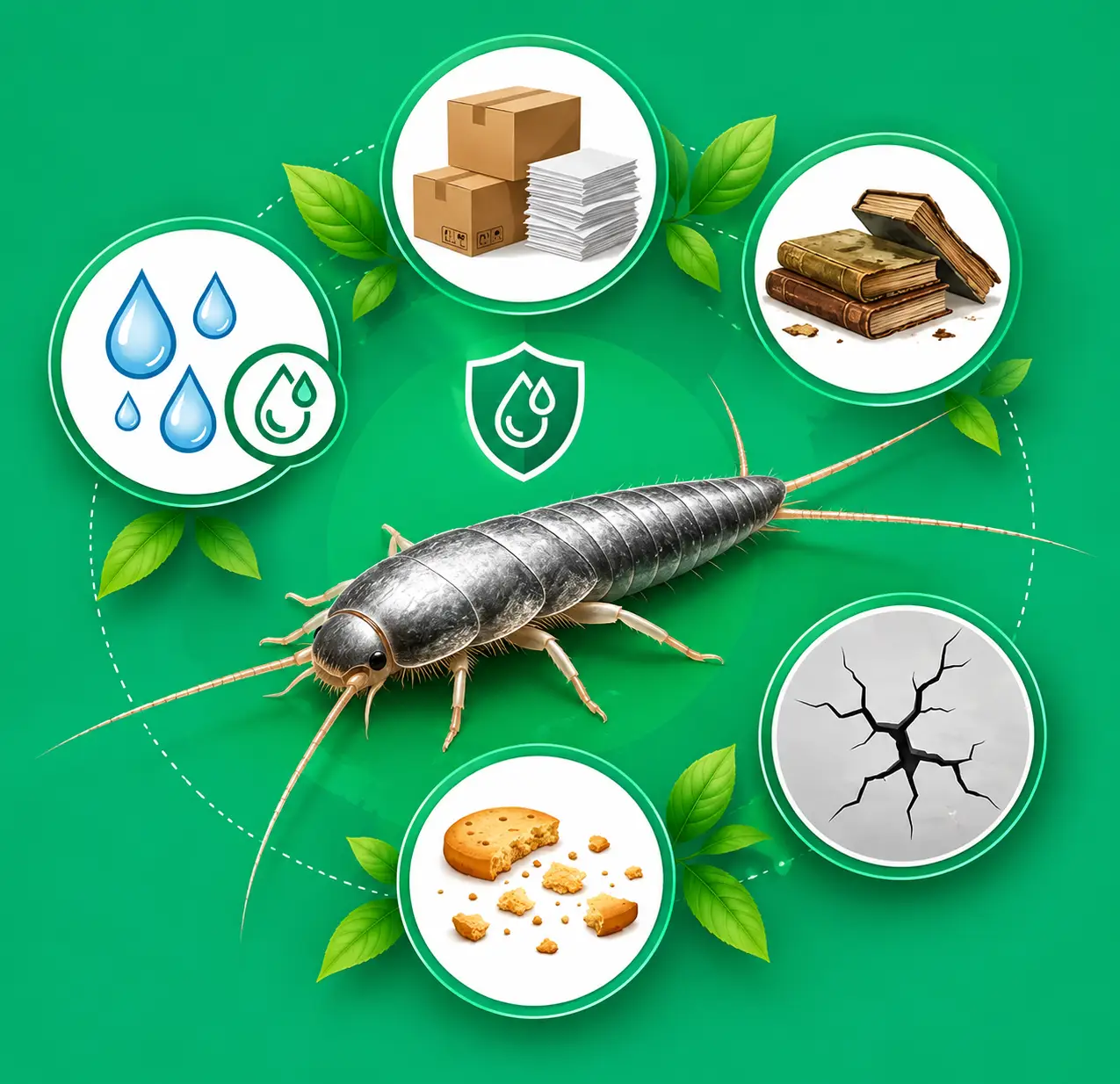
Spotting a silverfish darting across a bathroom floor at night usually raises one immediate question: why is it here in the first place? The answer almost always comes down to three specific conditions working together, moisture, darkness, and an accessible food source, rather than anything about a home being dirty or poorly kept.
Our bug identifier tool can confirm a silverfish sighting from a photo, which helps rule out similar-looking insects before addressing what is actually drawing them in.
This article breaks down exactly what attracts silverfish, what they eat, and where they tend to hide once they find favorable conditions indoors. It also covers how long they live, whether they pose any bite risk, and the specific signs that confirm an established population rather than a single wandering insect.
What Are Silverfish and What Do They Look Like
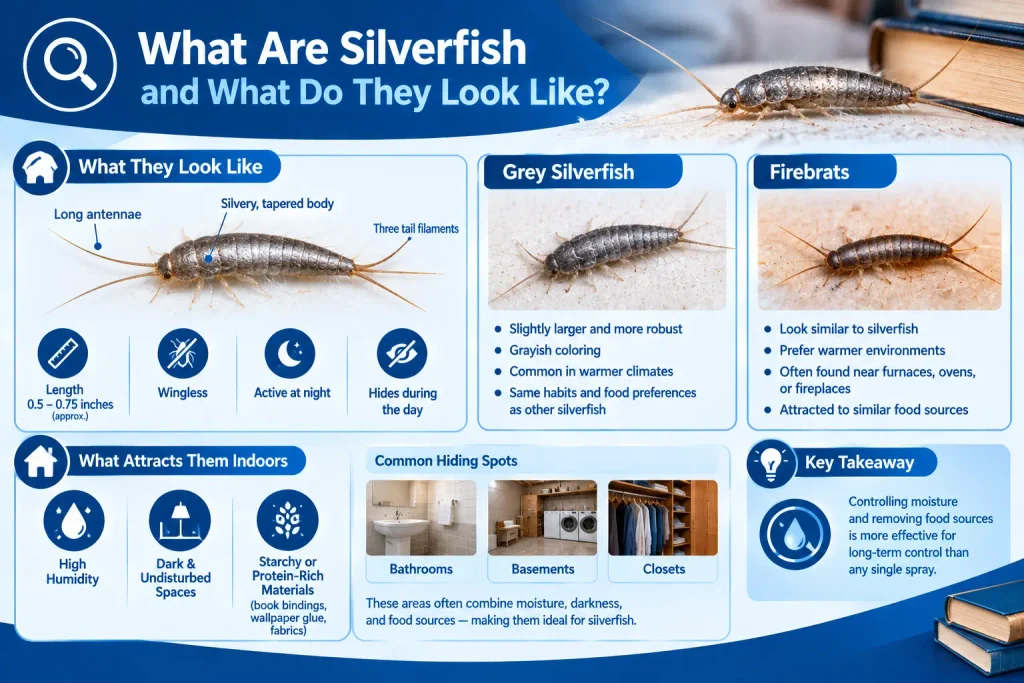
Silverfish are small, wingless insects with a distinctive silvery, tapered body and long antennae, moving in a quick, fish-like wriggle that gives them their common name. They typically measure around half an inch to three-quarters of an inch in length and prefer to stay hidden during the day, becoming more active at night when conditions are quieter and darker.
Silverfish are drawn indoors primarily by high humidity, dark and undisturbed spaces, and access to starchy or protein-rich materials like book bindings, wallpaper glue, and certain fabrics. Once you know the cause, here’s how to get rid of silverfish for good. Bathrooms, basements, and closets tend to attract them most consistently, since these areas commonly combine all three conditions at once. Addressing moisture and food access matters more for long-term control than any single spray, since silverfish will keep returning as long as these underlying conditions remain in place.
Grey Silverfish
The grey silverfish is a slightly larger, more robust species compared to the common silverfish, often found in warmer climates and showing a somewhat darker, grayish coloring. It shares the same general habits and attraction to moisture and starchy food sources as other silverfish species.
Firebrats
Firebrats look similar to silverfish but tend to favor noticeably warmer environments, often found near furnaces, ovens, or fireplaces rather than the cooler, damp areas typical silverfish prefer. Despite this temperature preference, firebrats are drawn to many of the same food sources, making them a closely related concern when discussing what attracts these insects overall.
What Attracts Silverfish Into a Home
Moisture
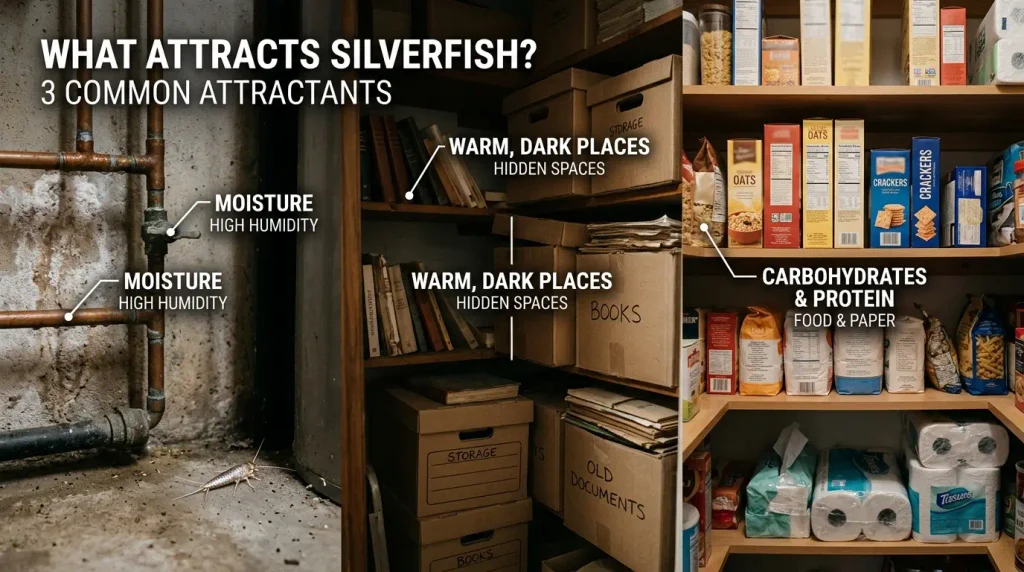
High humidity is arguably the single biggest factor drawing silverfish indoors, since these insects depend on moisture in the air and their surroundings to survive and reproduce successfully. Bathrooms, basements, and areas around leaky pipes consistently rank among the most common silverfish sighting locations specifically because of this moisture dependence.
Warm, Dark Places
Silverfish strongly prefer warm, dark, undisturbed spaces where they can remain hidden during the day and avoid both predators and general disturbance. Closets, behind wallpaper, inside stacked boxes, and similar rarely disturbed areas provide exactly this combination of warmth and darkness that silverfish seek out.
Carbohydrates and Protein
Silverfish feed on a range of starchy and protein-rich materials, including book bindings, wallpaper glue, certain fabrics, and even dried food items left accessible in a pantry. This dietary flexibility means almost any home with paper goods, natural fiber clothing, or unsealed dry food has at least some potential attraction for these insects.
What Silverfish Actually Eat
Silverfish primarily consume carbohydrates, particularly starches found in book bindings, wallpaper paste, and cardboard packaging, which explains why paper storage areas are such common sighting locations. They also feed on certain natural fibers like cotton and linen, along with dead skin cells and even mold or mildew growing in damp areas.
In pantries, silverfish will feed on dry goods like flour, cereal, and pasta if given access through improperly sealed packaging. This broad diet, spanning paper, fabric, and food, is part of why addressing multiple potential attractants at once produces better results than focusing on just one category alone.
Where Silverfish Usually Hide
Bathrooms rank among the most common hiding spots due to consistently high humidity, particularly around tubs, sinks, and any areas with minimal ventilation. Basements and crawl spaces offer similarly favorable conditions, especially in homes with any ongoing moisture or drainage issues.
Closets, bookshelves, and areas with stored cardboard boxes provide the dry food sources and undisturbed darkness silverfish favor for both feeding and hiding during daylight hours. Kitchen pantries round out the most common hiding spots, particularly where dry goods are stored in packaging that has already been opened or damaged.
How Silverfish Get Into a House
Silverfish typically enter a home through small gaps around foundations, utility penetrations, window frames, and door thresholds, taking advantage of any opening that provides direct access from outside. They can also arrive indirectly through secondhand furniture, used books, or cardboard boxes that already contain eggs or young silverfish before ever entering the home. Reducing humidity is also one of the best ways to keep insects away naturally.

Once indoors, silverfish spread from an initial entry point toward whichever areas offer the moisture and food conditions they need, which is why a single entry point can eventually lead to sightings throughout multiple rooms. Sealing these common entry points, covered in more detail in a dedicated removal guide, forms one part of a broader strategy alongside addressing the moisture and food sources covered throughout this article.
Do Silverfish Bite
No, silverfish do not bite, sting, or transmit disease to people or pets, making them a property concern rather than a health or safety risk. Their feeding habits target paper, fabric, and stored food rather than human skin, which distinguishes them clearly from biting pests like bed bugs or fleas that people sometimes worry about when finding an unfamiliar insect indoors.
The real concern with silverfish centers on the gradual damage they can cause to books, documents, and clothing left in storage for extended periods without protection. Understanding this distinction helps put a silverfish sighting into proper perspective, treating it as a household maintenance issue rather than a source of personal health anxiety.
How Long Silverfish Live
Silverfish have a notably long lifespan compared to many common household insects, often living two to eight years under favorable conditions with consistent access to food and moisture. They also take considerably longer to reach adulthood than many pests, sometimes requiring several months to a few years to fully mature depending on temperature and humidity levels.
Females lay eggs in small groups within cracks and crevices, and these eggs can take weeks to hatch depending on environmental conditions, particularly temperature. This combination of a long adult lifespan and a gradual maturation process means an established silverfish population can persist for years if the underlying attractants are never addressed.
Signs You Have a Silverfish Problem
Live Silverfish Sightings
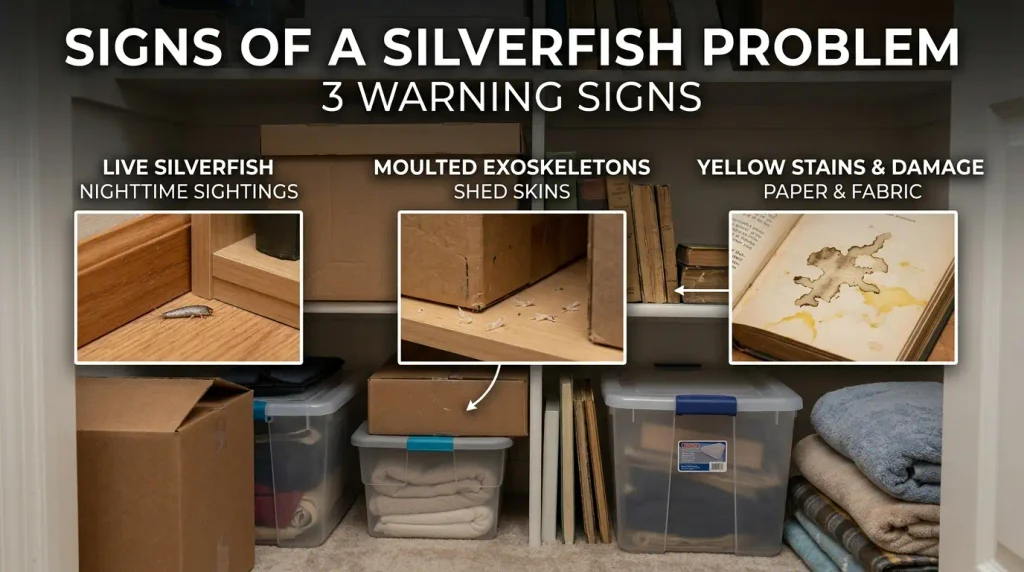
Spotting an actual live silverfish, particularly at night or when moving stored boxes or books, is the most direct and unmistakable sign of their presence. Repeated sightings in the same general area over time suggest an established population rather than a single insect that wandered in from outside.
Moulted Exoskeletons
Silverfish shed their exoskeleton multiple times as they grow, leaving behind small, pale, silvery skins that can accumulate in areas with consistent activity. Finding these shed skins, even without spotting a live insect, confirms that silverfish have been present and active in that specific location.
Yellow Stains
Yellowish stains on fabric, wallpaper, or paper goods often indicate feeding damage or waste left behind by silverfish, particularly on items stored for extended periods in a humid area. Combined with small, irregular holes or chewed edges on paper and fabric, these stains provide strong physical evidence of an active or past silverfish problem.
Why Removing Attractants Matters More Than Spraying Alone
A spray or trap addresses the silverfish currently present but does nothing to change the moisture, darkness, or food access that drew them in and will continue attracting new individuals afterward. This is the core reason silverfish problems tend to recur in the same specific areas of a home even after an apparently successful initial treatment. If you’re seeing other pests too, check our guide on small black bugs in the house.
Reducing humidity, improving ventilation, and securing food and paper items removes the underlying appeal of a space rather than only reacting to the insects it has already attracted. Treating the attraction itself, rather than only the visible symptom, is what separates a lasting solution from a cycle of repeated, temporary fixes.
Quick Steps to Reduce What Attracts Silverfish
Running a dehumidifier in consistently damp areas like bathrooms and basements directly addresses the moisture silverfish depend on most for survival. Storing books, papers, and natural fiber clothing in sealed containers rather than open boxes removes easy access to their preferred food sources.
Sealing gaps around foundations, windows, and utility penetrations closes off common entry points before silverfish ever make it indoors in the first place. For a complete, step-by-step treatment plan covering natural remedies, instant-kill options, and long-term prevention, our dedicated guide on getting rid of silverfish walks through the full process in detail.
Common Mistakes When Trying to Reduce Attractants
Treating only the visible silverfish while ignoring ongoing humidity or moisture issues typically leads to a recurring problem within a fairly short time. Storing valuable books, papers, or clothing in cardboard boxes in a damp basement, without any additional protection, significantly increases the risk of continued attraction and damage.
Assuming a home must be dirty or poorly maintained to attract silverfish overlooks the reality that moisture and paper or fabric storage matter far more than general cleanliness. Focusing exclusively on one attractant, such as sealing entry points while ignoring persistent bathroom humidity, addresses only part of the picture and often produces disappointing long-term results.
Frequently Asked Questions
Conclusion
What attracts silverfish comes down to a consistent combination of moisture, darkness, and accessible starchy or protein-rich materials, rather than anything related to general household cleanliness. Understanding this helps explain why bathrooms, basements, and closets show up so reliably as sighting locations, and why addressing those specific conditions matters more for lasting control than any single spray or trap. Signs like shed exoskeletons and yellow staining on paper or fabric confirm an active problem even before a live insect is spotted directly. Removing the humidity, food access, and entry points covered here, paired with our dedicated removal guide for the full treatment process, gives silverfish far fewer reasons to stick around in the first place.