Bug Bite Identification: The Complete Guide to Every Common Bite
Finding a new mark on your skin and not knowing what caused it is one of the more common reasons people search for help online, yet the answer depends on details easy to miss at a glance: the exact pattern, the timing, where on the body it appeared, and what it feels like beyond simple itching.
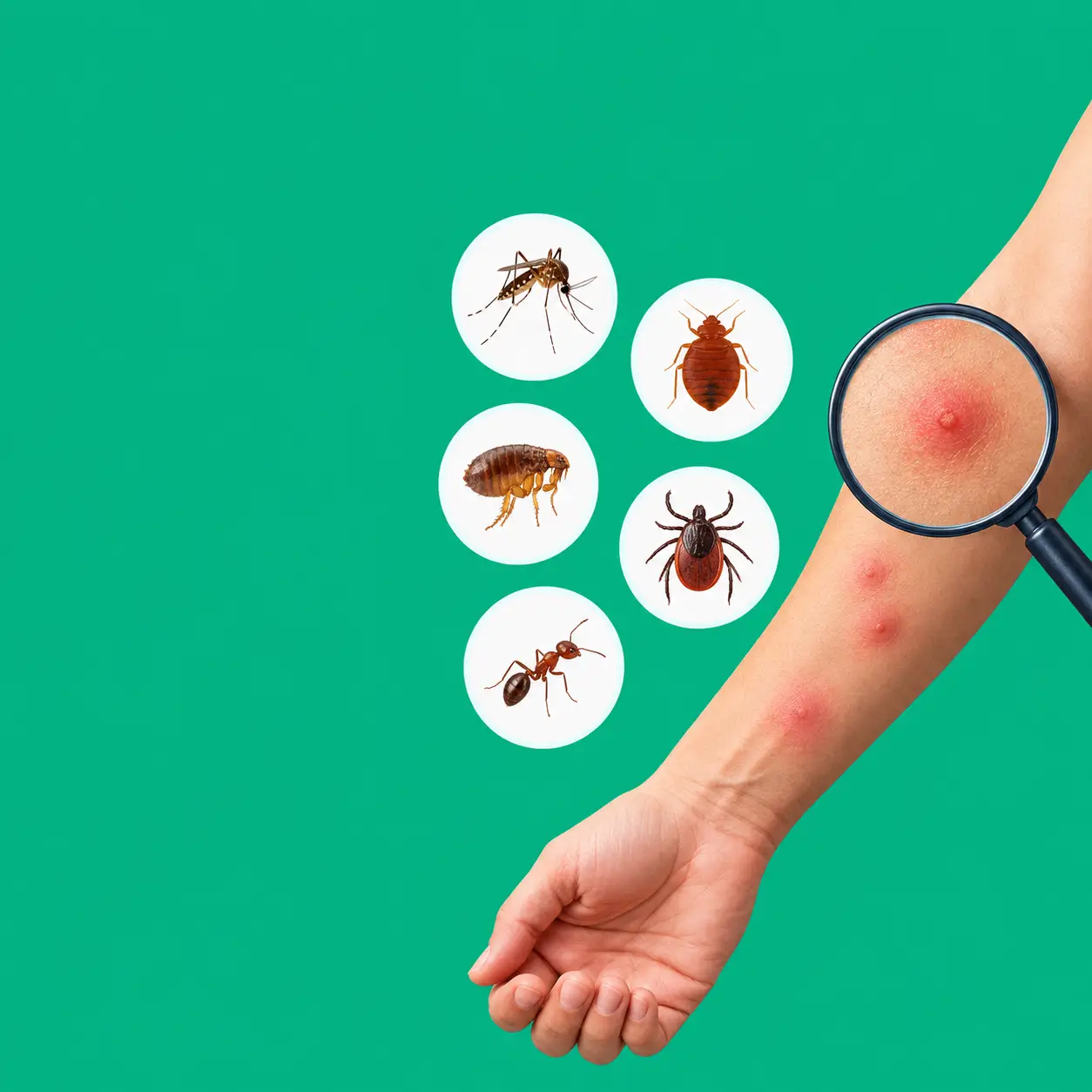
This guide walks through every common bug bite and sting, the rarer but genuinely dangerous ones, and the specific symptom patterns that help narrow down a cause even without seeing the insect responsible. Our bug identifier tool can confirm a suspected insect or spider from a photo, which pairs well with the symptom-based approach covered throughout this article.
Medical Disclaimer
This article is intended for general educational purposes and does not replace professional medical evaluation. Bite appearance varies significantly between individuals, and several different causes can look similar enough that a confident diagnosis sometimes requires an in-person exam. Anyone experiencing severe, worsening, or unusual symptoms should seek medical attention rather than relying on self-diagnosis alone.
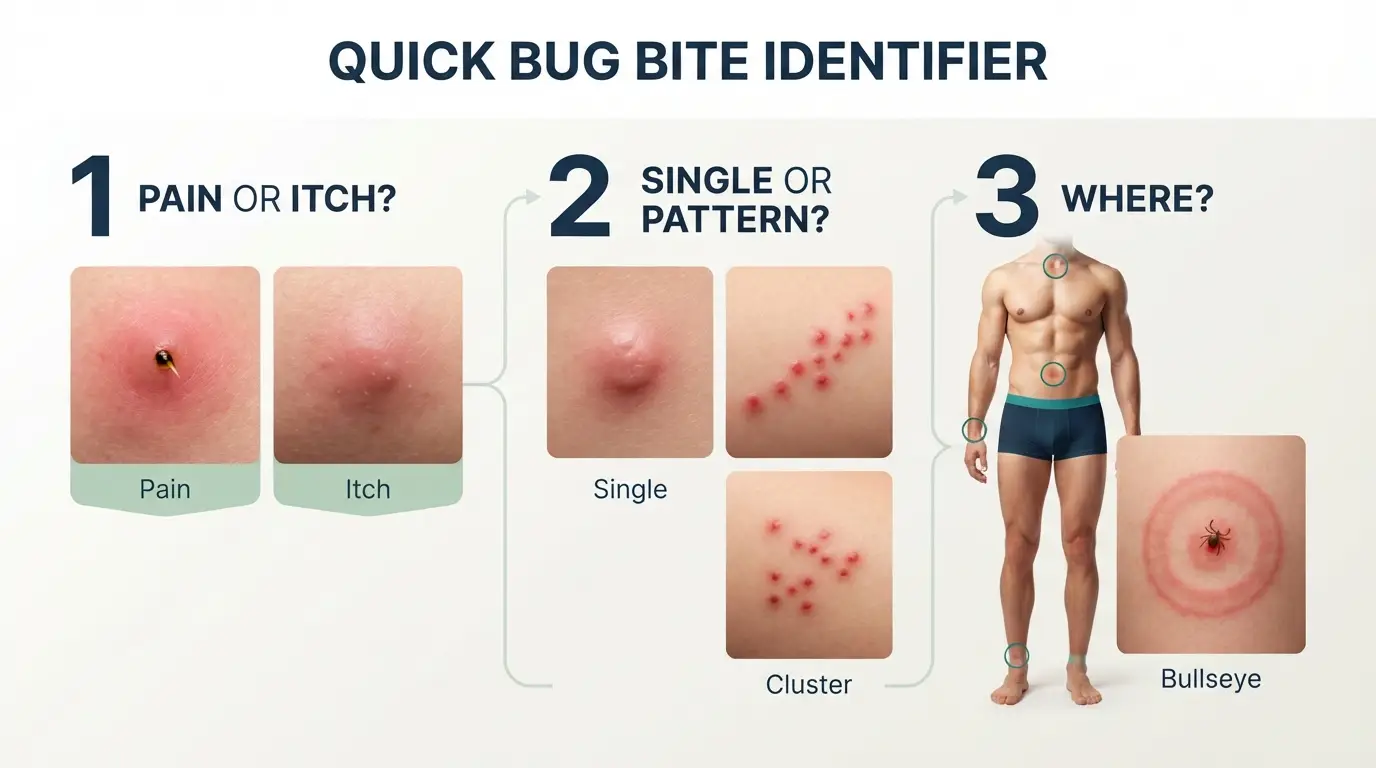
Quick Bug Bite Identifier
Start with three questions: did the bite hurt immediately or develop itchiness over time, does it appear alone or in a pattern with others, and where on the body did it happen. A bite that hurt immediately points toward a sting or a spider, while one that developed itching gradually points more toward a mosquito, flea, or mite. Small, itchy clusters are often a sign of bed bug bites. A line or cluster of bites suggests bed bugs or fleas, a single isolated bite fits mosquitoes or spiders better, and a bullseye pattern specifically raises the possibility of a tick bite requiring closer attention. Cross-referencing these basics against the detailed entries below narrows things down considerably before ever needing a photo comparison.
Signs You Should Worry: Emergency Symptoms
Seek emergency care immediately if a bite or sting is followed by difficulty breathing, swelling of the face, lips, or throat, a rapid drop in blood pressure, or a widespread hive reaction affecting areas far from the bite site, since these signal a potentially life-threatening allergic reaction. Severe abdominal pain, muscle rigidity, or intense cramping following a bite, particularly one involving a spider, can indicate a serious envenomation requiring urgent evaluation rather than home monitoring.
A rapidly spreading bullseye rash, fever, fatigue, or joint pain appearing days after a tick bite warrants prompt medical attention given the possibility of tick-borne illness. Any bite accompanied by confusion, difficulty speaking, chest tightness, or fainting should be treated as a medical emergency regardless of which insect is suspected as the cause. A painful bite with necrotic skin may point to an identified brown recluse.
Most Common Bug Bites, With Clear Symptom Guides
Mosquito Bites
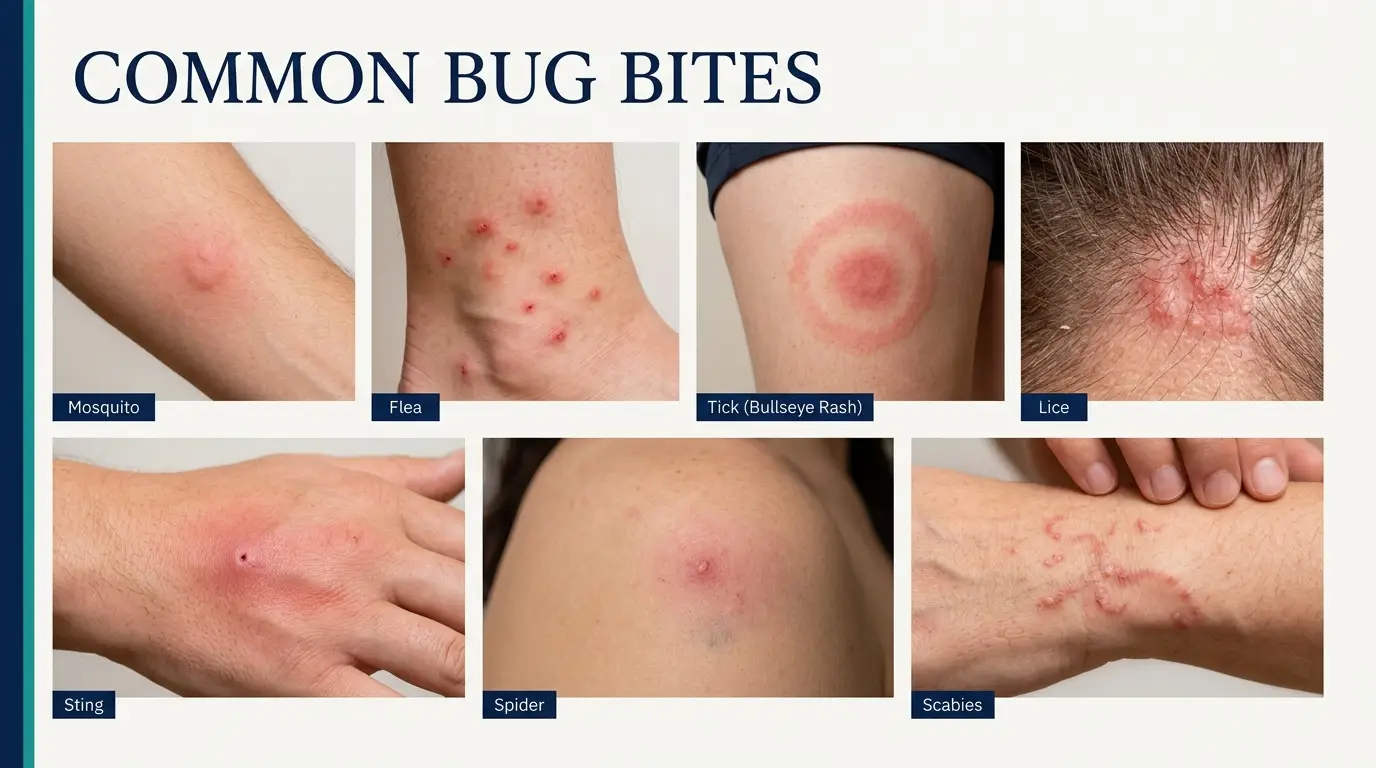
Mosquito bites appear as small, round, raised bumps that itch almost immediately and typically show up scattered individually across exposed skin like the arms and legs. They usually fade within a few days and rarely cause more than mild, localized irritation in people without a specific sensitivity.
Flea Bites
Flea bites cluster in small groups, often around the ankles and lower legs, and show a distinct small red dot at the center of each bite surrounded by a slightly swollen area. They are especially common in homes with pets and tend to itch intensely, sometimes more so than a comparable mosquito bite.
Tick Bites
A tick bite is often painless at first and may not be noticed until the tick itself is found still attached to the skin, typically in a warm, hidden area like behind the knee or along the hairline. A tick bite that develops into an expanding, ring-shaped bullseye rash days later is a specific warning sign of possible Lyme disease and should prompt a medical evaluation.
Chigger Bites
Chigger bites appear as small, intensely itchy red welts, often clustered around areas where clothing fits snugly against the skin, such as the waistband or sock line. Unlike a common misconception, chiggers do not burrow under the skin and instead feed briefly on skin cells before dropping off, with itching typically developing several hours after exposure.
Lice Bites
Lice bites appear as small, itchy red bumps on the scalp, neck, or areas where clothing seams rest against skin, depending on whether head lice or body lice are responsible. Persistent scalp itching combined with visible nits attached to hair shafts is the clearest confirming sign, distinguishing lice from a simple dry scalp or unrelated rash.
Horsefly and Deer Fly Bites
Horsefly and deer fly bites cause sharp, immediate pain at the moment of the bite, followed by a raised, red welt that can remain swollen and tender for several days. These flies bite rather than sting, using cutting mouthparts that make the initial sensation noticeably more painful than a typical mosquito bite.
Sand Fly Bites
Sand fly bites produce small, intensely itchy red bumps, often appearing in clusters on exposed skin during evening or nighttime outdoor activity near sandy or coastal areas. In certain regions, sand flies can transmit disease, making persistent or unusual symptoms following known sand fly exposure worth mentioning to a doctor.
Ant Bites: Fire Ants and Regular Ants
Fire ant bites cause an immediate burning sensation followed by a raised welt that often develops into a small, fluid-filled blister within a day. Regular ant bites tend to be milder, causing a brief pinch and small red bump without the blistering typically associated with fire ant venom specifically.
Bee, Wasp, Yellow Jacket, and Hornet Stings
These stings cause immediate, sharp pain followed by localized redness and swelling that typically peaks within a day before gradually improving. A bee leaves its stinger behind and dies after stinging, while wasps, yellow jackets, and hornets can sting multiple times, and any of these stings can trigger a severe allergic reaction in sensitive individuals.
Spider Bites
Brown Recluse
A brown recluse bite is often painless initially, then develops into a red, swollen area that can progress into a slow-healing, open sore over several days, making early identification and prompt treatment particularly important.
Black Widow
A black widow bite causes sharp pain followed by muscle cramping and stiffness that can spread from the bite site toward the abdomen or chest, a combination that calls for medical evaluation rather than home treatment.
Wolf Spider
A wolf spider bite causes mild, localized redness and swelling similar to a bee sting, resolving within a day or two without any specific treatment in the vast majority of cases.
Scabies
Scabies causes intense itching, particularly at night, along with small, thread-like burrow marks visible on the skin, most commonly between fingers, on wrists, or around the waistline. Unlike a single insect bite, scabies results from tiny mites burrowing into the skin and requires prescription treatment to fully resolve rather than typical bite home care.
Kissing Bug Bites and Chagas Risk
Kissing bug bites often occur on the face near the mouth or eyes during sleep and can appear as a cluster of small red welts, sometimes with minimal initial discomfort. In regions where these insects carry the parasite responsible for Chagas disease, a bite followed by swelling around the eye or unexplained fever warrants medical evaluation. A bite with intense pain and swelling could be from an identified black widow spider.
Scorpion Stings
A scorpion sting typically causes immediate, sharp pain, numbness, or tingling at the sting site, with more dangerous species causing symptoms that can spread to affect breathing or muscle control. Because sting severity varies dramatically by species, any scorpion sting accompanied by symptoms beyond localized pain deserves prompt medical attention.
Blister Beetle Bites
Blister beetles do not actually bite but release a chemical called cantharidin on contact, causing a distinct, fluid-filled blister to form at the site of contact within hours. Avoiding direct contact or crushing these beetles against skin prevents this reaction,
which differs mechanically from a true
insect bite or sting.
Bed Bug Bites
Bed bug bites appear as small, itchy, red welts often arranged in a line or small cluster on skin exposed while sleeping, typically developing a few hours to two days after the actual bite occurs. This delayed appearance and the specific overnight exposure pattern help distinguish bed bug bites from the more immediate reactions caused by mosquitoes or fleas.
Rare but Dangerous Bites You Should Know
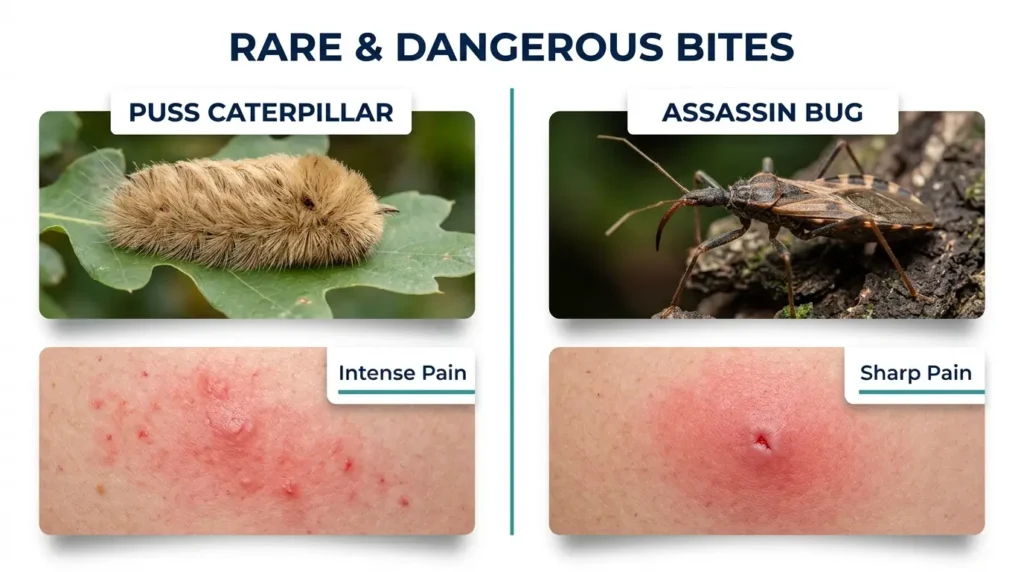
Puss Caterpillar
The puss caterpillar looks deceptively soft and fuzzy, but contact with its hairs delivers a potent sting causing intense, throbbing pain that can radiate well beyond the immediate contact area. Symptoms can include nausea, headache, and swollen lymph nodes, making this one of the more painful reactions on this list despite the caterpillar’s harmless appearance.
Assassin Bugs
Assassin bug bites cause sudden, sharp pain significantly more intense than most insect bites, since these predatory insects use their piercing mouthparts defensively when handled or disturbed. The pain typically fades within a few hours, though the bite site can remain tender and mildly swollen for a day or two afterward.
How to Identify a Bug Bite by Symptom Pattern
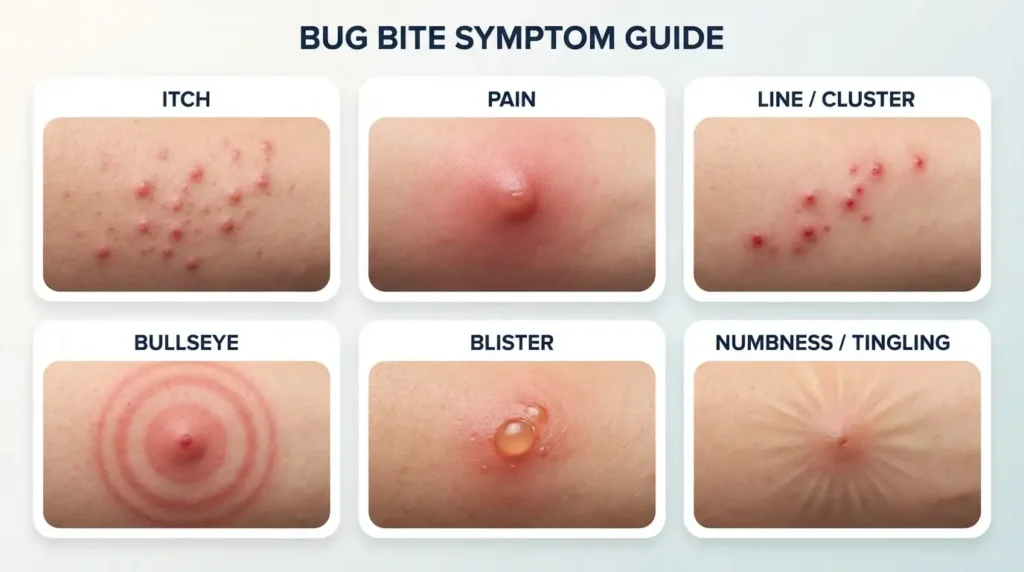
Bites That Itch a Lot
Intense itching without significant pain points most strongly toward mosquitoes, fleas, chiggers, or bed bugs, all of which trigger a histamine-driven reaction rather than direct tissue damage. Scabies also causes severe itching, particularly at night, but is distinguished by visible burrow marks rather than isolated bite bumps.
Bites That Hurt Immediately
Sharp, immediate pain typically indicates a sting from a bee, wasp, or scorpion, or a bite from a horsefly, deer fly, or assassin bug, all of which cause direct tissue trauma at the moment of contact. This immediate pain response differs clearly from the delayed itching typical of mosquito or bed bug bites.
Bites That Appear in a Line or Cluster
A line or small cluster of bites strongly suggests bed bugs, which often feed at several points during a single feeding session, while fleas typically cluster bites around the ankles and lower legs specifically. Distinguishing between the two often comes down to location on the body and whether pets are present in the home.
Bites With a Bullseye Pattern
A bullseye pattern, an expanding red ring around a central bite mark, is a specific and important warning sign of a tick bite that may be transmitting Lyme disease. This pattern typically develops several days after the actual bite and should prompt medical evaluation rather than routine home treatment.
Bites With Blisters
Blistering can result from a fire ant bite, a blister beetle’s cantharidin exposure, or, more seriously, from a developing brown recluse bite that has begun to break down surrounding tissue. Distinguishing between a mild, self-limiting blister and one signaling a more serious reaction often depends on how quickly it worsens and whether it is accompanied by spreading redness or pain. Not all red bites are dangerous — check whether tiny red spiders are dangerous before assuming the worst.
Bites That Cause Numbness or Tingling
Numbness or tingling at a sting site is a hallmark symptom of certain scorpion species, where venom affects nerve signaling directly rather than just causing localized pain. Any numbness or tingling that spreads beyond the immediate area, or that is accompanied by muscle weakness, warrants prompt medical evaluation.
Diseases Linked to Bug Bites
Ticks are associated with the most significant number of bite-related illnesses, including Lyme disease, which typically presents with the characteristic bullseye rash alongside fever and fatigue. Mosquitoes in certain regions transmit West Nile virus and other mosquito-borne illnesses, making unusual symptoms like high fever or severe headache following known mosquito exposure worth mentioning to a doctor.
Kissing bugs can transmit the parasite responsible for Chagas disease in specific regions, while sand flies are linked to disease transmission in certain parts of the world as well. Understanding which bites carry disease risk helps set realistic expectations for when a routine, self-limiting bite requires nothing more than basic care versus when ongoing symptoms genuinely warrant medical follow-up.
How to Treat Bug Bites Step-by-Step
Step 1: Clean the Area
Washing the bite or sting site with soap and water removes any remaining venom, saliva, or debris and reduces the risk of secondary infection regardless of which insect was responsible.
Step 2: Apply a Cold Compress
A cold compress applied for ten to fifteen minutes reduces swelling and provides meaningful relief for most stings and bites, particularly in the first hour after the incident occurs.
Step 3: Manage Itching and Pain
An over-the-counter antihistamine or hydrocortisone cream addresses itching effectively, while a basic pain reliever helps manage discomfort from more painful stings or bites.
Step 4: Monitor for Changes
Checking the site daily for signs of worsening redness, spreading swelling, or the development of a bullseye pattern catches complications early, before they progress into something requiring more urgent care.
Step 5: Seek Care When Needed
Following through on medical evaluation when any of the emergency signs covered earlier appear, rather than waiting to see if symptoms resolve on their own, ensures a genuinely serious reaction gets addressed promptly.
Natural Remedies Based on Best Evidence
A paste made from baking soda and water, applied directly to an itchy bite, can help neutralize mild irritation for some people, though evidence for its effectiveness remains largely anecdotal rather than clinically proven. Aloe vera gel offers a soothing, cooling effect for irritated skin and carries a stronger evidence base for general skin soothing than many other home remedies commonly suggested online.
Oatmeal baths can help calm widespread itching from multiple bites, particularly useful for chigger or flea bites covering a larger area of skin. These natural approaches work best for mild, uncomplicated bites and should not replace medical care for bites showing any of the warning signs covered throughout this article.
Medical Treatment Options
For bites causing significant allergic reaction, a doctor may prescribe a stronger oral antihistamine or a short course of oral corticosteroids to reduce swelling and inflammation more effectively than over-the-counter options. Confirmed tick-borne illness typically requires a specific course of antibiotics, with treatment most effective when started promptly after diagnosis rather than delayed.
Severe spider bites, particularly confirmed black widow or brown recluse bites, sometimes require antivenom or specialized wound care depending on how the bite has progressed by the time medical care is sought. Anaphylaxis from a sting requires immediate epinephrine administration, which is why anyone with a known severe allergy to stings typically carries an epinephrine auto-injector for emergency use.
How to Prevent Bug Bites
Using an insect repellent containing an effective active ingredient on exposed skin during outdoor activity significantly reduces the likelihood of mosquito, tick, and chigger bites. Wearing long sleeves and pants, along with tucking pant legs into socks in tick-prone areas like tall grass or wooded trails, adds a physical barrier beyond repellent alone.
Checking thoroughly for ticks after spending time outdoors in grassy or wooded areas, particularly in warm, hidden spots on the body, allows for prompt removal before disease transmission risk increases significantly. Keeping window and door screens in good repair, along with addressing standing water around a property, reduces mosquito populations at the source rather than only reacting to bites after they occur.
How to Identify the Insect Behind the Bite, in Your Home
Signs of Bed Bugs
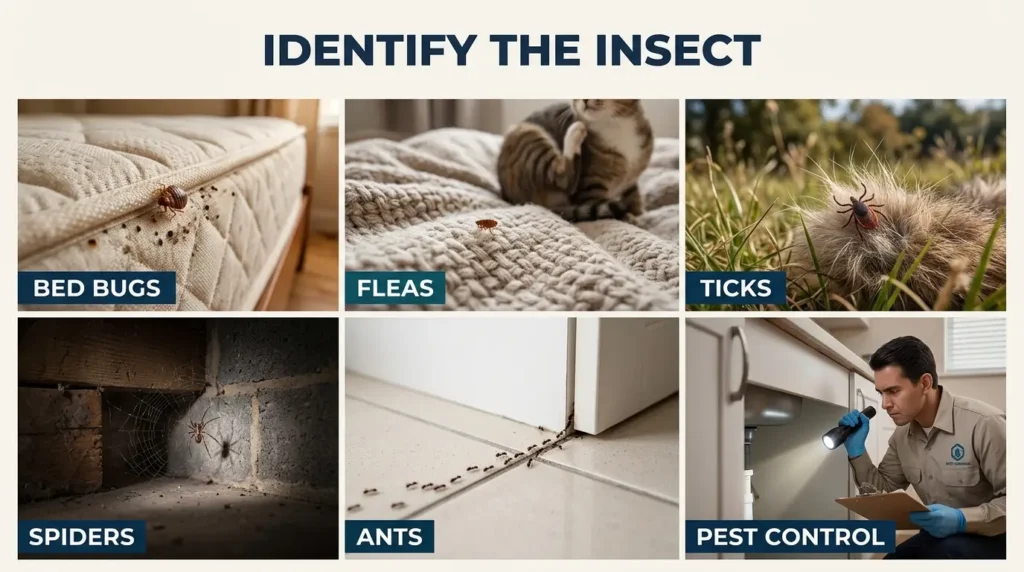
Small, dark, ink-like droppings in mattress seams, pale shed exoskeletons, and a faint musty odor in a heavily affected room all point toward an active bed bug population rather than another cause of overnight bites.
Signs of Fleas
Finding small, dark, jumping insects on pet bedding or noticing pets scratching more than usual strongly suggests fleas, particularly when household bites concentrate around the ankles and lower legs.
Signs of Ticks in the Yard
Overgrown grass, leaf litter, and dense brush at the edge of a yard create favorable tick habitat, and finding ticks on pets after outdoor time is a reliable indicator that the yard itself likely harbors an active population.
Spider Hiding Places
Dark, undisturbed areas like closets, garages, woodpiles, and storage boxes are the most common hiding spots for spiders capable of a medically significant bite, particularly brown recluses and black widows.
Ant Pathways
Ants traveling in a visible, consistent trail toward a food source indicate an active colony nearby, and following this trail back toward its origin often reveals the specific entry point or nest location.
When to Call Pest Control
Persistent bites despite thorough home cleaning and DIY treatment, multiple confirmed bed bug or flea sightings, or the discovery of a black widow or brown recluse population all justify bringing in professional pest control rather than continuing to rely on home methods alone.
Who Is Most at Risk
Young children and older adults tend to experience more pronounced reactions to insect bites and stings, partly due to differences in skin sensitivity and immune response compared to healthy younger adults. People with a known history of severe allergic reactions to stings face a significantly elevated risk of anaphylaxis with future exposure and should carry appropriate emergency medication.
Outdoor workers, hikers, and anyone spending significant time in grassy, wooded, or humid environments face substantially higher exposure to ticks, chiggers, and mosquitoes compared to those primarily indoors. People with weakened immune systems or certain chronic health conditions may also experience slower healing or a higher risk of secondary infection from bites that would resolve quickly in a healthier individual.
Diagnosing a Bug Bite: Professional Guidance
When Doctors Can Identify a Bite Confidently
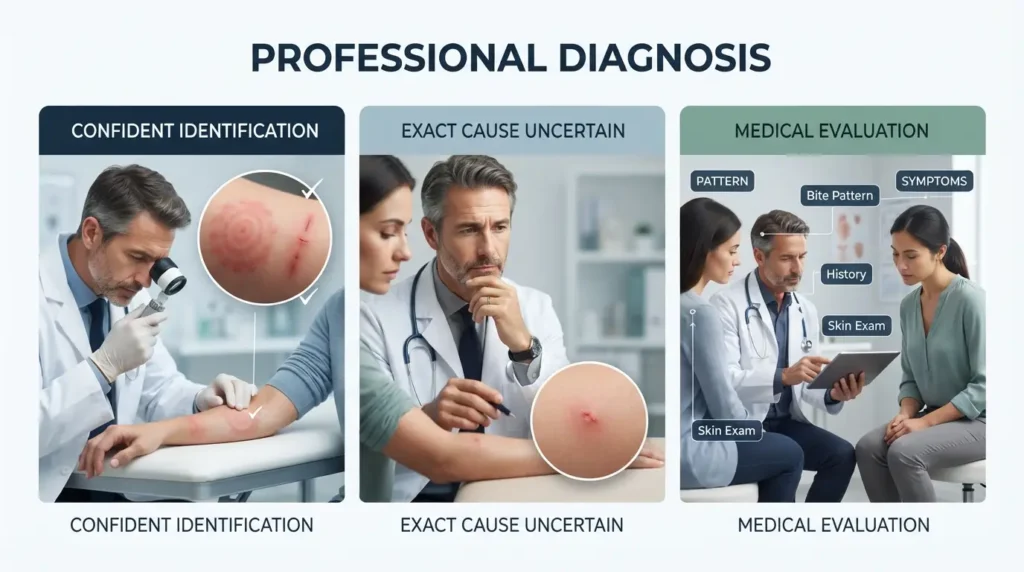
Doctors can often identify a bite confidently when the pattern, timing, and location align clearly with a well-known cause, such as a classic bullseye rash pointing to a tick bite or a line of bites matching typical bed bug behavior.
When They Cannot Identify the Exact Cause
In many cases, particularly with an isolated, healed bite and no insect available for examination, even an experienced doctor cannot determine the exact species responsible with full certainty, since many bites simply look too similar once initial swelling has faded.
How Dermatologists Evaluate Bites
Dermatologists typically evaluate a bite based on its pattern, distribution across the body, associated symptoms, and relevant exposure history, sometimes using a skin biopsy in unusual or persistent cases to rule out other skin conditions entirely. This combination of visual assessment and patient history generally provides a reliable working diagnosis even without directly observing the causative insect.
Common Mistakes When Identifying a Bug Bite
Assuming every itchy bump is a mosquito bite, without considering timing, pattern, or recent outdoor exposure, often leads to missing more specific causes like chiggers, fleas, or bed bugs. Ignoring a developing bullseye rash or delayed flu-like symptoms following a tick bite, rather than seeking prompt evaluation, allows a treatable early-stage infection more time to progress.
Attempting to identify a spider bite based on the bite mark alone, without seeing or capturing the actual spider, frequently leads to incorrect assumptions, since spider bites often look similar to other insect bites in their early stages. Waiting too long to seek care for a bite showing genuine warning signs, in hopes it will resolve on its own, is one of the more consequential mistakes covered throughout this guide.
Frequently Asked Questions
Conclusion
Identifying a bug bite accurately comes down to reading several clues together: how quickly it hurt or started itching, whether it appeared alone or in a pattern, where it happened on the body, and what symptoms developed in the days that followed. Covering the full range from common mosquito and flea bites to rarer but genuinely dangerous encounters with black widows, kissing bugs, and scorpions gives a far more complete picture than focusing on just the bites people search for most often. Basic home care resolves the overwhelming majority of bites, while a handful of specific warning signs, a bullseye rash, spreading muscle cramping, or a severe allergic reaction, clearly signal when professional medical care matters more than any home remedy. Running a photo of a suspected insect or spider through our bug identifier tool adds one more layer of confirmation, turning an uncertain, worrying mark into a clear answer and the right next step.