How to Identify a Brown Recluse Spider
Very few spiders cause as much concern on sight as the brown recluse, and for good reason, since it is one of the small handful of species capable of a medically significant bite. Confirming an actual identification matters far more than guessing, since several harmless spiders share a similar brown color and get mistaken for this species constantly.
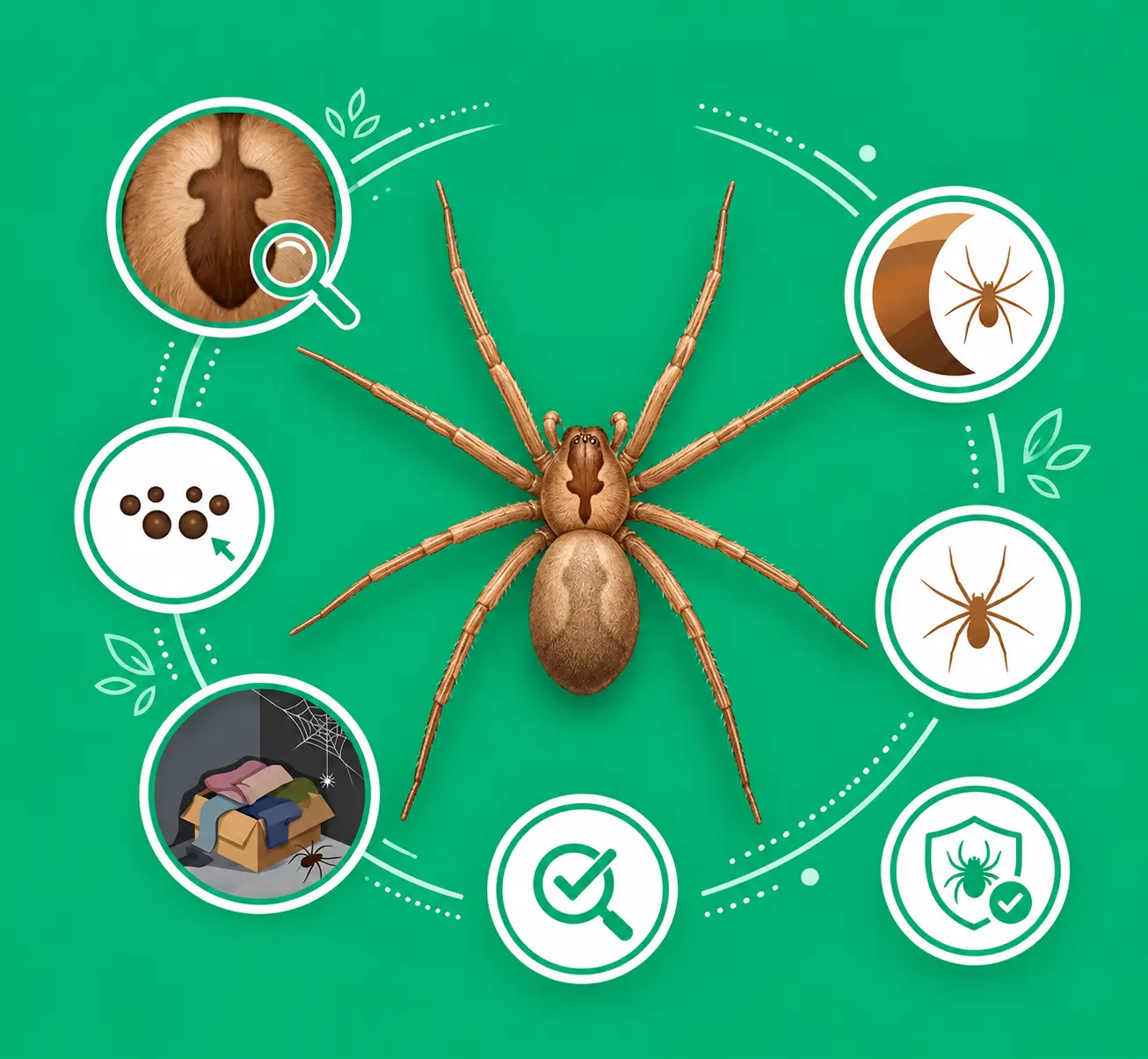
Our bug identifier tool can confirm a match from a clear photo in seconds, but knowing the specific traits yourself means you can assess a sighting immediately, before ever reaching for your phone.
This article walks through every reliable feature used to identify a brown recluse, from its markings and eye arrangement to its typical hiding spots and web style. It also covers what to do if you find one, how to treat a suspected bite, and the specific look-alikes that account for most misidentifications.
Quick Identification Checklist
A brown recluse is a small, light to medium brown spider with a distinct dark violin-shaped marking on the top of its body, pointing toward the abdomen. It has six eyes arranged in three separate pairs, unlike the eight eyes found on most other spiders, along with fine hairs rather than spines covering its legs. Its legs and body are uniformly colored without banding or patterning, and it typically measures under half an inch in body length, with a leg span reaching about an inch.
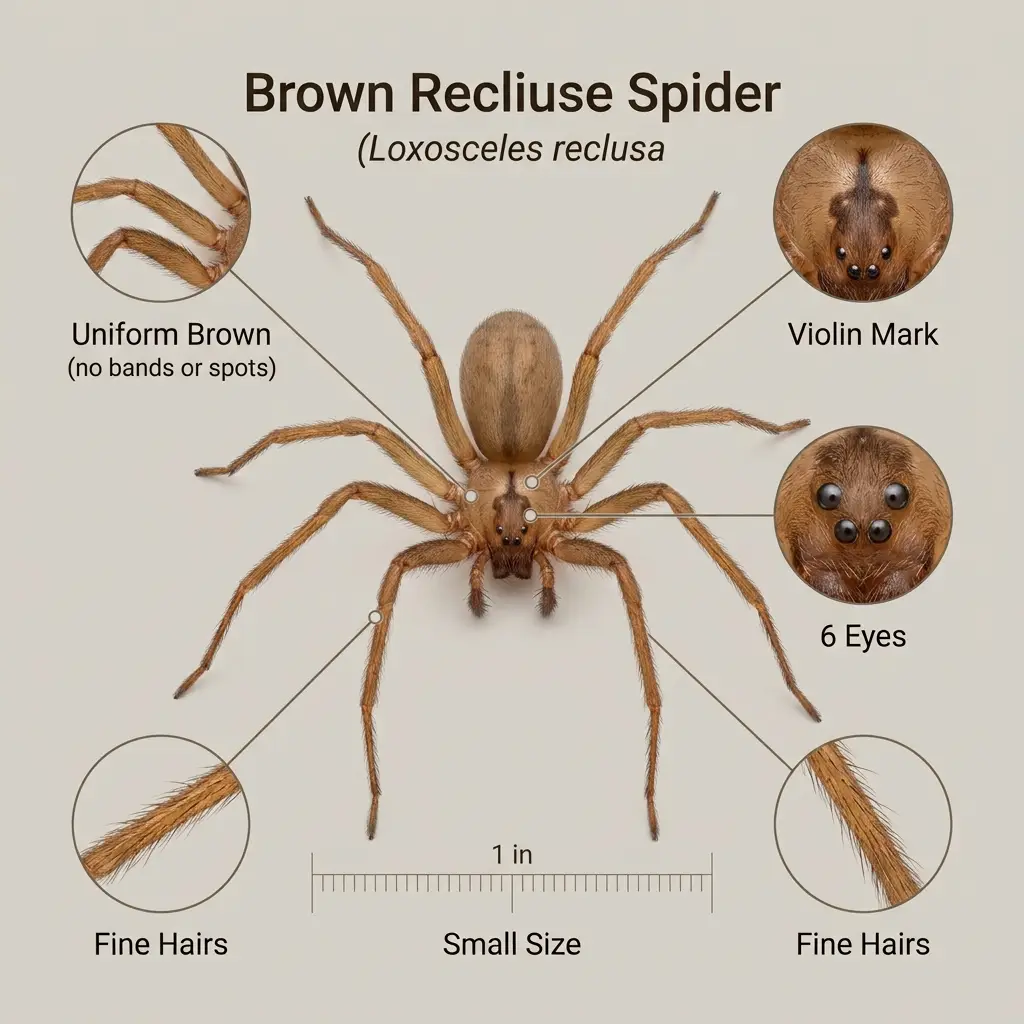
If several of these traits line up together, especially the violin marking and the six-eye arrangement, the identification is reliable. A single matching feature, particularly color alone, is not enough on its own, since several harmless species share a similar brown tone without any of the other defining characteristics.
What Is a Brown Recluse Spider
The brown recluse, scientifically named Loxosceles reclusa, belongs to a small group of spiders known for venom capable of causing tissue damage at the bite site. As the name suggests, this species is reclusive by nature, actively avoiding contact with people and preferring to stay hidden in dark, undisturbed spaces rather than seeking out open areas.
Despite its reputation, a brown recluse rarely bites unless directly pressed against skin, which typically happens when it becomes trapped in clothing, bedding, or a shoe left undisturbed for an extended period. For a broader species overview, see our spiders identifier tool. Understanding this behavior helps explain why most bites occur accidentally rather than through any kind of aggressive encounter.
Key Identifying Features
Light-Brown Body and Legs
A brown recluse displays a light to medium brown color across both its body and legs, without the banding, spots, or patterning found on many other spider species. This uniform coloring, combined with the other features below, helps separate it from similarly colored spiders that show more variation in pattern.
Violin Marking
The most recognizable feature is a dark, violin-shaped marking located on the top of the cephalothorax, the front body segment just behind the eyes. The “neck” of the violin points backward toward the abdomen, and while this marking is usually clear on adults, it can appear faint or incomplete on younger spiders.
Six Eyes
Unlike most spiders, which have eight eyes, a brown recluse has only six, arranged in three distinct pairs in a semicircular pattern. This detail requires a fairly close, well-lit photo to see clearly, but it remains one of the most reliable confirming features once visible.
Fine Hair
The legs of a brown recluse are covered in fine, short hairs rather than the more pronounced spines seen on several look-alike species. This subtle difference is easiest to notice in a close-up photo rather than a quick glance, since the hairs are not immediately obvious at a distance.
Small Size
Brown recluses are relatively small spiders, with a compact body that makes them easy to overlook in dim, cluttered environments. Their small size, combined with a preference for dark hiding spots, is part of why they often go unnoticed until an accidental encounter occurs.
How Big Is a Brown Recluse
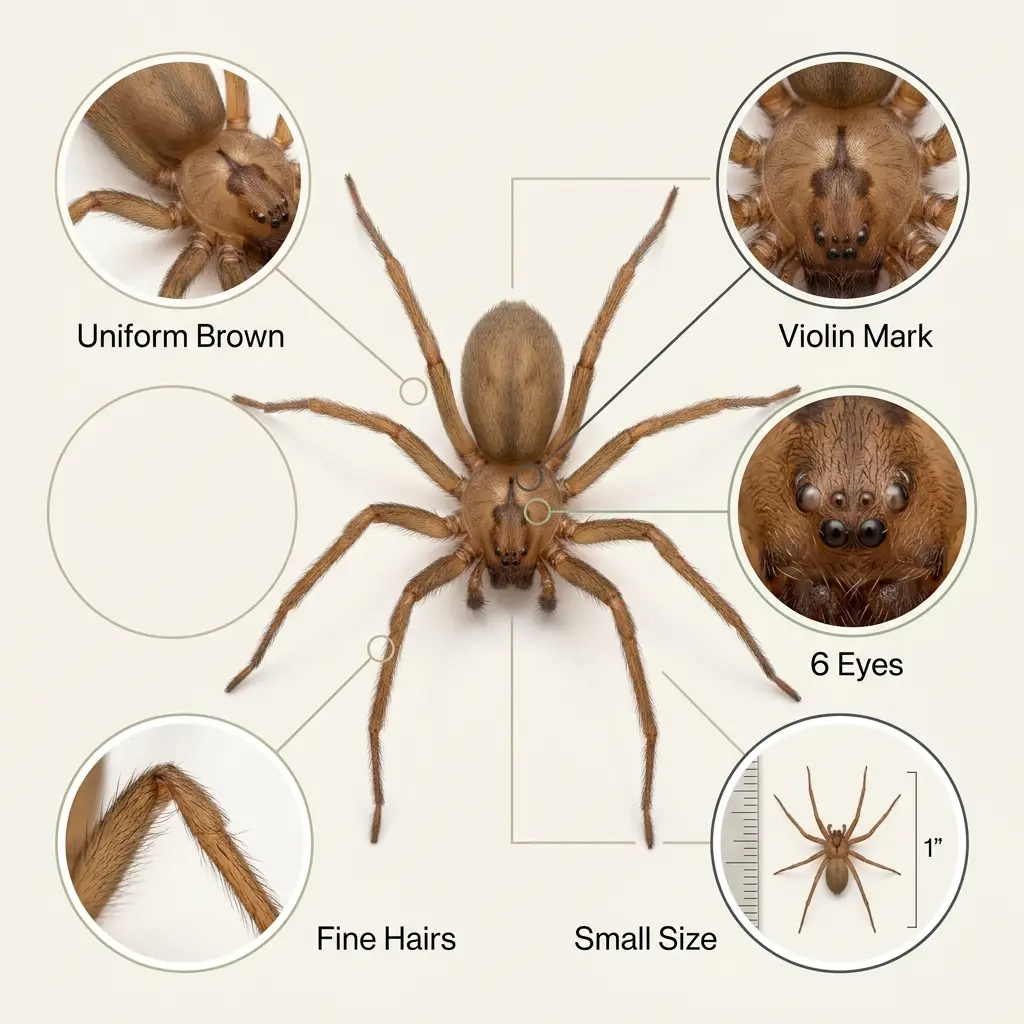
An adult brown recluse typically measures between a quarter inch and half an inch in body length, with a leg span that can reach close to an inch when fully extended. This puts it on the smaller side compared to more commonly recognized spiders, which is part of why size alone is not a reliable way to rule the species in or out.
Juveniles are smaller still and often show a fainter violin marking, making early-stage identification more difficult without checking the eye arrangement and leg texture as additional confirmation. A photo comparison against a coin or another familiar object for scale can help clarify size when documenting a suspected sighting.
Brown Recluse Habitat and Web
Preferred Regions
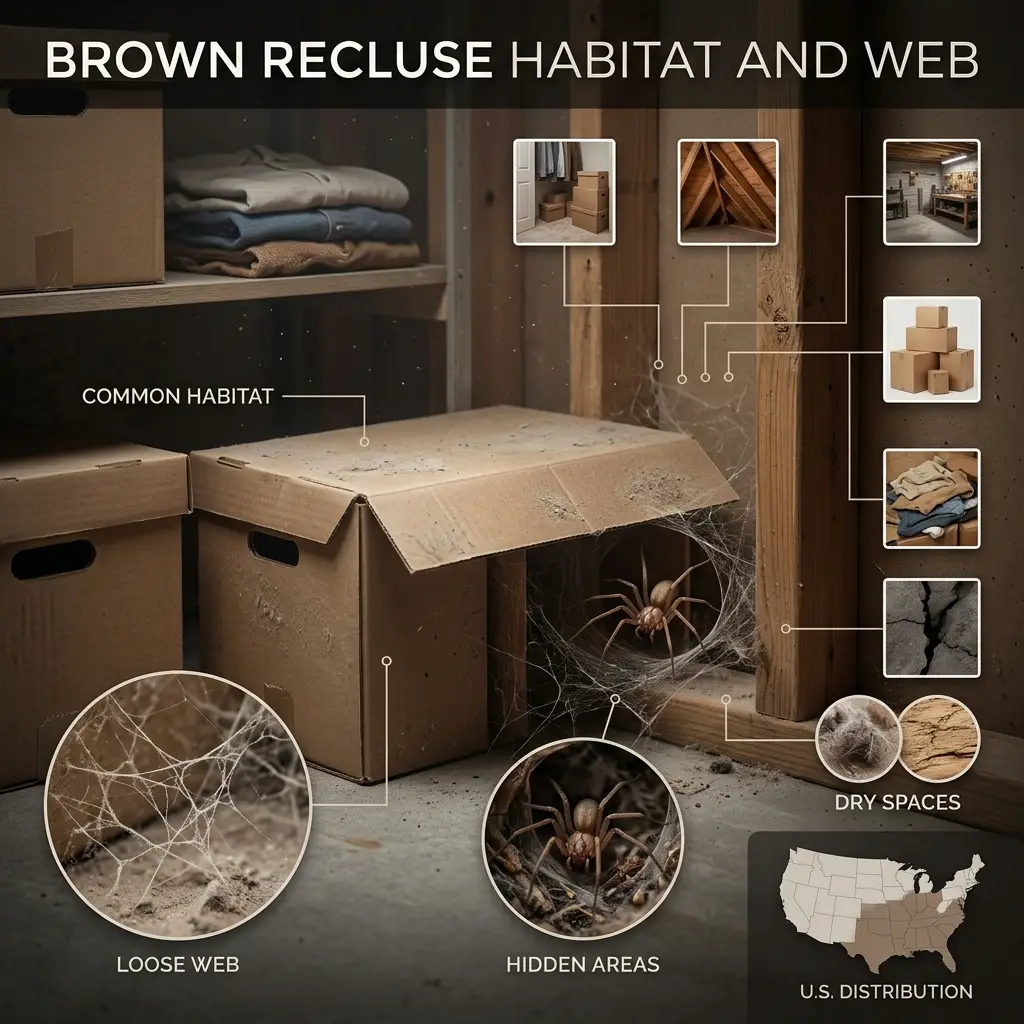
Brown recluses are most commonly found across the southeastern and midwestern regions, favoring climates that stay relatively warm and dry for much of the year. Sightings outside these core regions do occur, sometimes through accidental transport in furniture, boxes, or luggage, though established populations remain concentrated in their typical range.
Dry, Hidden Spaces
This species strongly prefers dry, undisturbed spaces such as closets, attics, basements, garages, and stacks of stored cardboard or clothing. Indoors, they favor areas that stay quiet and dark for extended periods, which is why an infestation can go unnoticed for a long stretch of time in a rarely used room or storage area. If you’ve been bitten, check our full bug bite identification guide.
Loose, Sticky Webs
Unlike the neat, symmetrical webs built by orb-weavers, a brown recluse builds a loose, irregular, off-white web used more for shelter than for actively catching prey. These webs are typically tucked into corners, behind stored items, or inside rarely disturbed cracks and crevices, and finding one is a useful clue even before spotting the spider itself.
How Brown Recluses Get Into a House
Clutter
Cluttered storage areas provide the dry, undisturbed conditions brown recluses need to establish a hiding spot, particularly stacks of cardboard boxes, old clothing, and rarely used furniture. Reducing clutter removes much of the appeal these spaces hold for a species that depends heavily on staying hidden and undisturbed.
Insects
Brown recluses feed on other small insects, so a home already dealing with a separate pest problem can indirectly attract recluses looking for a reliable food source. Addressing other insect issues promptly removes one of the underlying reasons a recluse population might settle into a space in the first place.
Spiders Often Mistaken for a Brown Recluse
Several common house spiders get flagged as potential brown recluses simply due to overall brown coloring, despite lacking the specific violin marking or six-eye arrangement. Wolf spiders, in particular, are frequently misidentified due to their brown, mottled pattern, even though they have eight eyes, a stockier build, and active hunting behavior rather than a hidden, web-based lifestyle.
Cellar spiders and certain young house spiders also get mistaken for recluses at a quick glance, especially in dim lighting where markings are harder to see clearly. Checking specifically for the violin shape, the eye count, and the uniform leg coloring resolves most of these mix-ups fairly quickly, and running an uncertain photo through an identifier tool settles any remaining doubt.
What to Do If You Find One
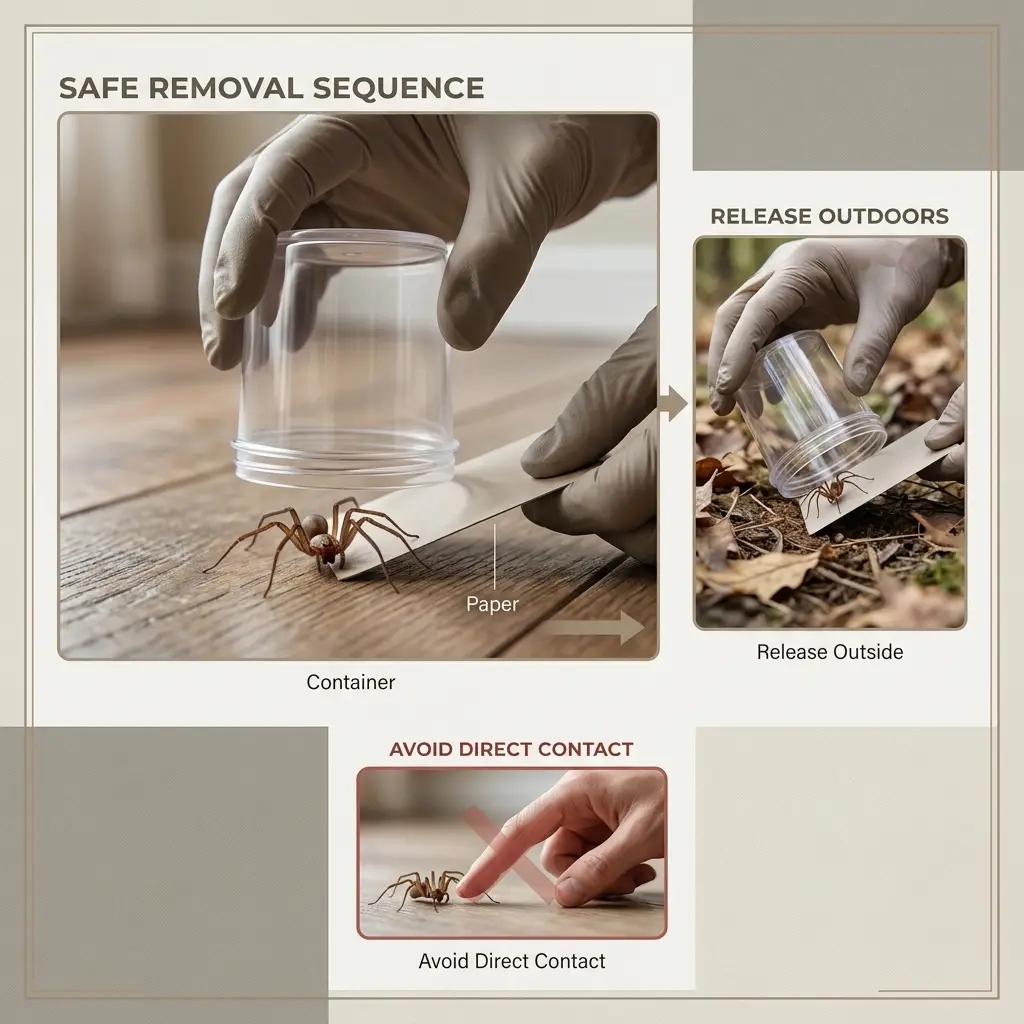
If a brown recluse is spotted in an open, accessible area, the safest removal method involves trapping it under a container and sliding a piece of paper underneath before releasing it outside. Avoid direct contact or attempting to swat it by hand, since this is when most accidental bites actually occur.
For a sighting in a storage area or cluttered space where handling items directly is unavoidable, wearing gloves and shaking out boxes, shoes, or clothing before use significantly reduces the risk of an accidental encounter. Multiple sightings in the same area over a short period suggest it is worth inspecting more thoroughly rather than assuming each one was an isolated incident.
Brown Recluse Bites: Symptoms and Treatment
Wash the Bite Area Immediately
If a bite is suspected, washing the area with soap and water right away helps reduce the risk of secondary infection while the situation is assessed further. This simple first step matters regardless of how the bite eventually develops, since keeping the area clean supports whatever treatment follows. If one is found indoors, here’s how to kill a spider safely.
Seek Medical Treatment as Soon as Possible
A brown recluse bite is often painless at first, then develops into a red, swollen area that can progress into a slow-healing, open sore over the following several days. Because delayed treatment tends to worsen outcomes, seeking medical care promptly rather than waiting to see how the bite develops gives the best chance at effective treatment.
Monitor Other Symptoms
Fever, nausea, chills, and general fatigue can accompany a more significant bite reaction and should be reported to a medical provider rather than managed at home alone. Bringing a photo of the spider, if it was captured or clearly seen, gives medical staff useful context for confirming the cause and choosing appropriate treatment.
How to Get Rid of Brown Recluses
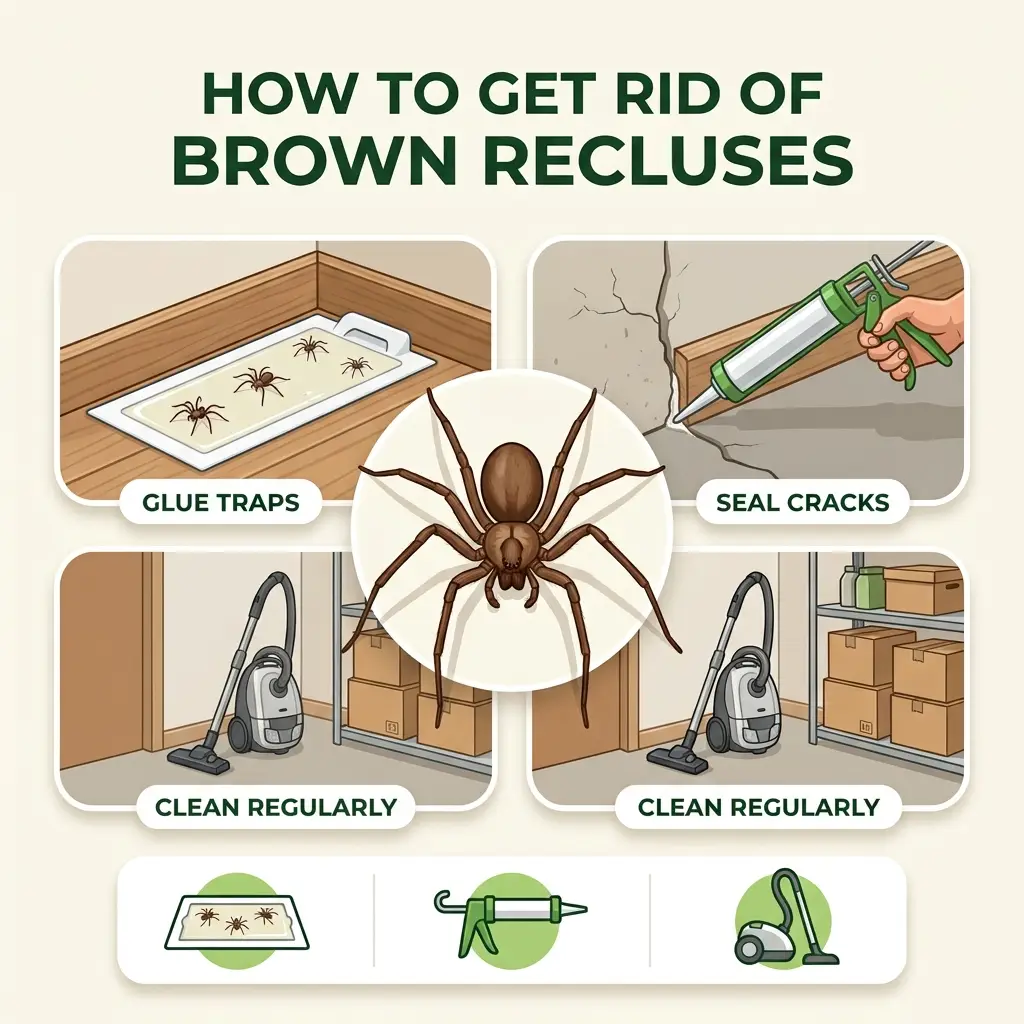
Set a Glue Trap
Glue traps placed along baseboards, inside closets, and near suspected hiding spots capture wandering recluses passively and help gauge how widespread a problem actually is. This method works well as both a monitoring tool and a direct reduction method without requiring chemical treatment for a limited infestation.
Seal Cracks
Sealing gaps around baseboards, utility penetrations, and foundation cracks removes many of the entry points recluses use to move between outdoor hiding spots and indoor shelter. This step also helps with general pest prevention beyond just this one species, since many insects and spiders share similar entry habits.
Clean Regularly
Reducing clutter and vacuuming rarely disturbed areas like closets, basements, and storage rooms removes the exact conditions brown recluses depend on most. Regular cleaning combined with periodic inspection catches a developing problem early, before it spreads into multiple rooms or storage areas.
Common Mistakes When Identifying a Brown Recluse
Relying on brown coloring alone as proof of a brown recluse sighting is one of the most frequent mistakes, since several harmless spiders share a similar shade without any of the other defining features. Skipping a close check of the eye arrangement is another common gap, since this single detail rules out a large number of look-alike species almost immediately once confirmed.
Assuming every violin-shaped marking is fully clear and obvious also leads to missed or incorrect identifications, since the marking can appear faint on younger spiders or when viewed at an awkward angle. Cross-checking a photo through an identifier tool, rather than relying on memory or a quick glance, catches most of these errors before they lead to either unnecessary panic or a missed risk.
Frequently Asked Questions
Conclusion
Identifying a brown recluse comes down to checking several features together rather than relying on brown coloring alone: the violin marking, the six-eye arrangement, uniform leg color, and fine hair instead of spines. Knowing its preferred habitat, dry, undisturbed spaces like closets and storage areas, also helps explain both where sightings happen and how to reduce the chances of an accidental encounter. Running a clear photo through our bug identifier tool settles any remaining uncertainty quickly, especially for tricky cases involving a young spider or a faint marking. Acting on a confirmed identification, whether that means careful removal, prompt medical care after a bite, or simply sealing up entry points, turns an unsettling discovery int