Are the Tiny Red Spiders Dangerous? What They Really Are
A cluster of tiny red specks crawling across a windowsill or brick wall gets called a “tiny red spider” more often than not, though the creature behind that description is almost never an actual spider at all. These pinhead-sized red pests belong to the mite family, a group closely related to spiders but distinct enough to have very different habits, risks, and treatment needs.

Our bug identifier tool can confirm exactly which type you are dealing with from a clear photo, which matters since the four most common culprits behave quite differently from one another.
This article breaks down what these tiny red pests actually are, whether any of them pose a real risk to people or pets, and what actually works to get rid of them depending on which type has shown up. It also covers the seasonal patterns behind sudden appearances and separates a few persistent myths from what these pests are actually capable of.
What Are These Tiny Red “Spiders” Really?
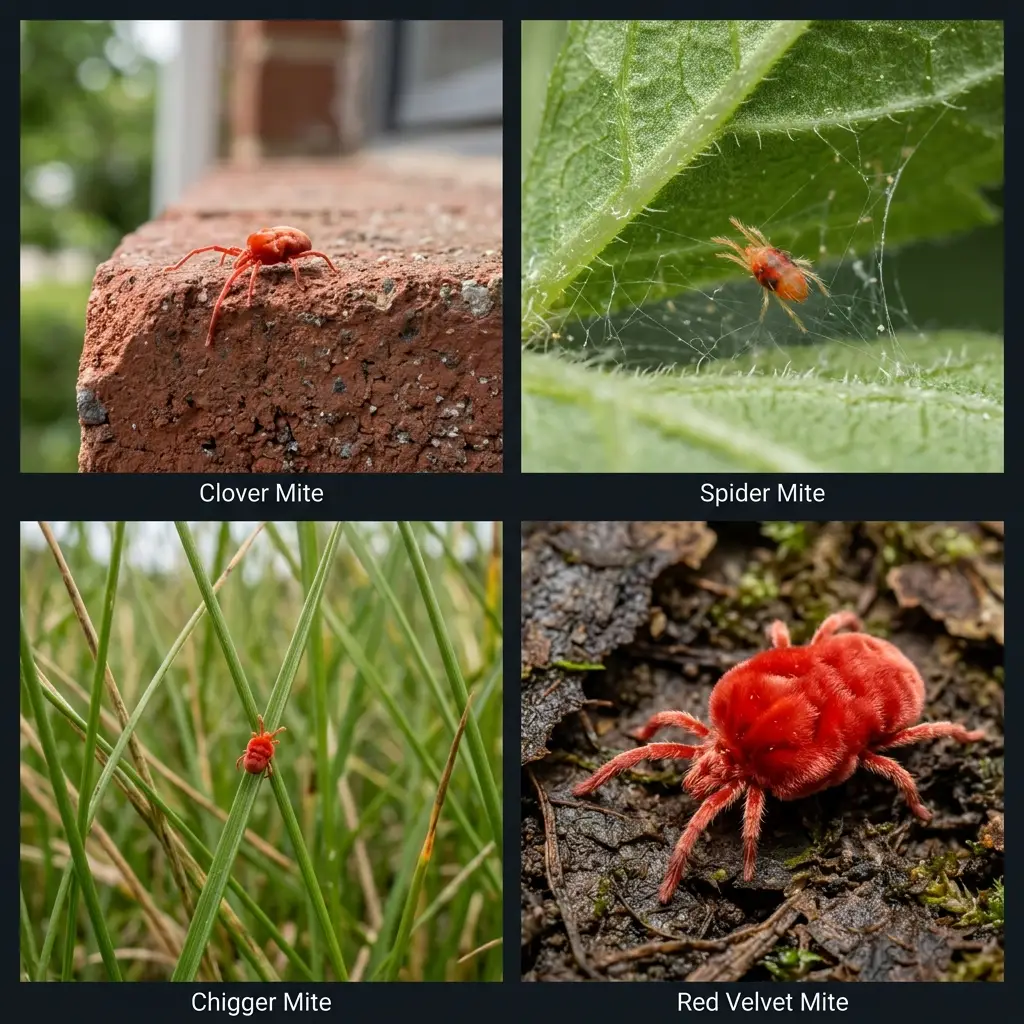
The tiny red “spiders” people find on windowsills, brick walls, or garden plants are almost always mites rather than true spiders, most commonly clover mites, spider mites, chigger mites, or red velvet mites. Of these four, only chigger mites bite people, and even that bite causes nothing worse than an itchy welt rather than any serious health risk. The others are either harmless nuisances or, in the case of red velvet mites, genuinely beneficial predators that pose no threat at all.
Clover Mites: The Most Common Culprit
Clover mites are by far the most frequent cause of “tiny red spider” sightings around homes, appearing as reddish-brown specks about the size of a pinhead with a pair of noticeably long front legs. They feed exclusively on plants, particularly clover, grass, and other lawn vegetation, and they never bite people or pets despite showing up in large numbers indoors during certain seasons.
Spider Mites: Garden Pests, Not House Invaders
Spider mites are a separate group that primarily affects garden plants and houseplants rather than invading living spaces in large numbers. They are typically more yellow, green, or red depending on the species and season, and their presence is usually first noticed through fine webbing and stippled, discolored leaves rather than the mites themselves.
Chigger Mites: The Only Biters
Chigger mites are the one type in this group actually capable of biting people, though they do not burrow under the skin as commonly believed and instead feed briefly on skin cells before dropping off. Bites typically occur after walking through tall grass or wooded areas and result in intensely itchy welts that develop over several hours rather than immediately.
Red Velvet Mites: The Beneficial Giants
Red velvet mites are noticeably larger than the other three types, sometimes visible without magnification, and covered in a distinctive soft, velvety red coating. Far from being a pest, this species actually preys on other small insects and mite eggs, making it a beneficial presence in gardens rather than something worth treating at all.
How to Identify Them Around Your Home
Size and Appearance Clues
Clover mites and spider mites are both extremely small, typically under a millimeter, requiring close inspection or a magnified photo to see clearly, while chigger mites are similarly tiny but nearly invisible without magnification. Red velvet mites stand out by comparison, reaching several millimeters in length with a fuzzy, almost plush appearance that is hard to mistake for anything else.
Location and Behavior Patterns
Clover mites tend to appear in large numbers on sun-warmed exterior walls, windowsills, and around window frames, often leaving a reddish stain if crushed. Spider mites stay concentrated on plant leaves and stems, rarely wandering onto walls or indoor surfaces the way clover mites do, while chigger mites are found in tall grass, leaf litter, and wooded edges inside a home at all.
Are They Dangerous to You, Your Family, or Pets
Clover mites, spider mites, and red velvet mites pose no danger whatsoever to people or pets, since none of them bite, sting, or carry disease of any kind. If you’ve been bitten, check our full bug bite identification guide. Their presence is a nuisance at worst, and for spider mites specifically, the real concern is plant health rather than any risk to the household.
Chigger mites are the exception, since their bite causes an intensely itchy, red welt that can persist for several days, occasionally leading to secondary skin irritation from scratching. Even chigger bites, while uncomfortable, do not transmit disease in most regions and typically resolve on their own with basic itch relief rather than requiring medical treatment.
Seasonal Activity Patterns
Spring Activity
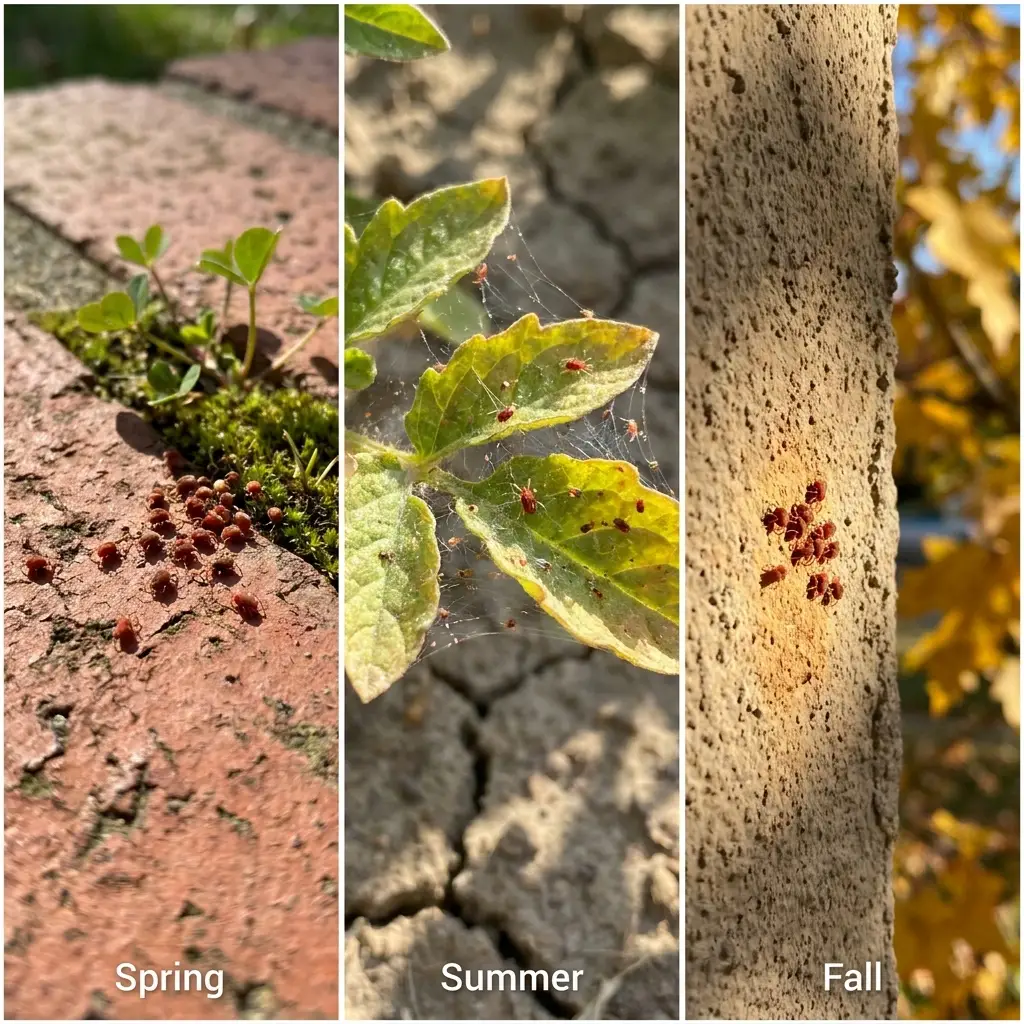
Clover mite populations often surge in spring as overwintering eggs hatch and mites become active on sun-warmed surfaces, frequently leading to the first noticeable indoor sightings of the year. This spring emergence tends to be the most dramatic seasonal spike, sometimes bringing hundreds of mites onto a single exterior wall within a short window.
Summer Patterns
Spider mite activity typically peaks during hot, dry summer months, since these conditions favor rapid reproduction on garden plants and houseplants alike. Chigger mites also become most active during warm summer weather, particularly in areas with tall grass or dense vegetation where outdoor activity increases their contact with people.
Fall Resurgence
Clover mites often show a second, smaller population surge in fall as temperatures cool and mites seek warmth on sun-facing exterior walls before winter. This fall activity, while usually less dramatic than the spring emergence, still accounts for a noticeable share of the sightings people report each year. Learn the proper steps for how to identify a spider before assuming the worst.
How to Get Rid of Tiny Red Mites
Clover Mite Control Strategies
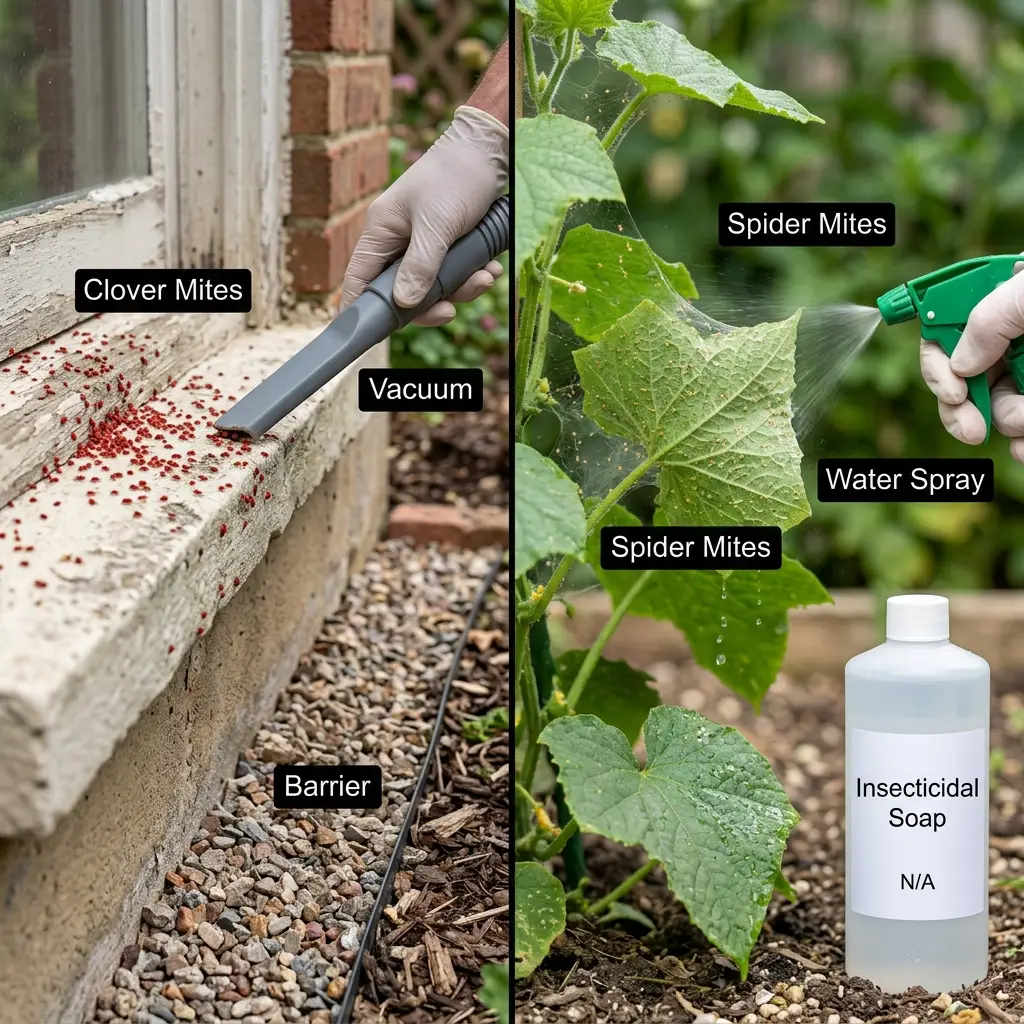
Vacuuming visible clover mites rather than crushing them prevents the reddish staining that occurs when their bodies are squashed against a wall or windowsill. Creating a barrier of gravel, mulch-free space, or trimmed vegetation between grassy areas and the foundation removes the direct pathway mites use to migrate toward a building’s exterior walls.
Spider Mite Management
For garden or houseplants affected by spider mites, a strong spray of water can dislodge a significant portion of the population, particularly when applied to the undersides of leaves where mites tend to concentrate. Insecticidal soap or neem oil applied according to label instructions offers a more thorough treatment for persistent infestations that water alone does not resolve.
Professional Treatment Approaches
For a severe clover mite surge covering large sections of an exterior wall, a professional perimeter treatment applied by a pest control service often provides more reliable, longer-lasting results than repeated home treatments. Chigger mite exposure is typically managed through personal prevention rather than home treatment, since the mites themselves live outdoors in vegetation rather than inside a structure.
Prevention Tips
Landscape Management
Keeping grass trimmed short and removing clover from lawns directly reduces the food source clover mites depend on most, particularly near building foundations. Creating a plant-free buffer zone of at least a foot or two around the exterior walls further limits how easily mites can migrate from vegetation onto the structure itself.
Structural Modifications
Sealing gaps around windows, doors, and siding prevents clover mites from finding their way indoors even when large numbers are present on exterior walls. Reducing direct sun exposure on foundation walls, where practical, also discourages the warm surface conditions that draw clover mites toward a building in the first place.
When to Call Professional Pest Control
A large, recurring clover mite surge that continues despite landscape changes and sealed entry points is a reasonable point to bring in professional treatment, particularly for surges covering extensive exterior wall space. Persistent spider mite damage on multiple plants that does not respond to water treatment or insecticidal soap may also benefit from a professional consultation, especially for valuable landscaping or greenhouse plants.

Chigger bites rarely require professional pest control at all, since the issue is personal exposure in outdoor vegetation rather than a structural infestation. Repeated exposure in the same yard area, however, might warrant a professional opinion on vegetation management to reduce future contact.
Common Myths About Tiny Red Mites
A persistent myth holds that these tiny red pests are baby spiders, when in fact they belong to an entirely different group and never grow into anything resembling a spider at all. Another common misconception assumes all four types bite, when only chigger mites are actually capable of feeding on skin, while the rest are either exclusively plant feeders or entirely harmless predators.
Some people also believe crushing clover mites is the best removal method, though this actually creates a reddish stain that can be harder to clean than simply vacuuming them up intact. A final myth suggests these mites indicate a dirty or poorly maintained home, when in reality their presence relates far more to nearby vegetation and seasonal weather than to cleanliness.
Common Mistakes People Make Dealing With Them
Crushing clover mites directly on painted surfaces or fabric is one of the most common mistakes, since this leaves a reddish stain that requires extra cleaning effort compared to vacuuming. Treating spider mite damage with a general insecticide rather than one labeled specifically for mites often produces disappointing results, since many standard insect treatments are not formulated to affect mites effectively. For a broader species overview, see our spiders identifier tool.
Assuming a chigger bite requires the same treatment as a mosquito bite is another frequent misunderstanding, since chigger bites tend to itch more intensely and for longer, benefiting from a dedicated anti-itch approach. Ignoring the seasonal pattern behind clover mite surges, and only responding after the population has already peaked, also makes treatment noticeably less effective than addressing landscape conditions ahead of the spring emergence.
Frequently Asked Questions
Conclusion
Those tiny red “spiders” showing up on a windowsill or garden plant are almost always mites rather than true spiders, and knowing which of the four common types you are dealing with changes both the risk level and the right response. Clover mites and red velvet mites are harmless nuisances at worst, spider mites are a plant health issue rather than a household concern, and chigger mites are the only type actually capable of an itchy bite. Vacuuming instead of crushing, trimming vegetation near the foundation, and sealing entry points handle most clover mite surges without needing professional help. Running a clear photo through our bug identifier tool clears up any remaining uncertainty quickly, turning a startling cluster of red specks into a confirmed, manageable answer.