How Big Can a Wolf Spider Get? Size, Look, and What It Means
A wolf spider sprinting across the garage floor at full speed is startling enough without the added shock of realizing just how large some species can get. Size varies significantly depending on the exact species involved, ranging from barely noticeable to a leg span that rivals a small hand.
This article breaks down exactly how big wolf spiders get, what makes them easy to identify once you know what to look for, and whether their size and appearance actually translate into any real danger. It also covers behavior, habitat, prevention, and the specific signs that suggest more than one wolf spider is sharing a space with you.
How Big Wolf Spiders Get
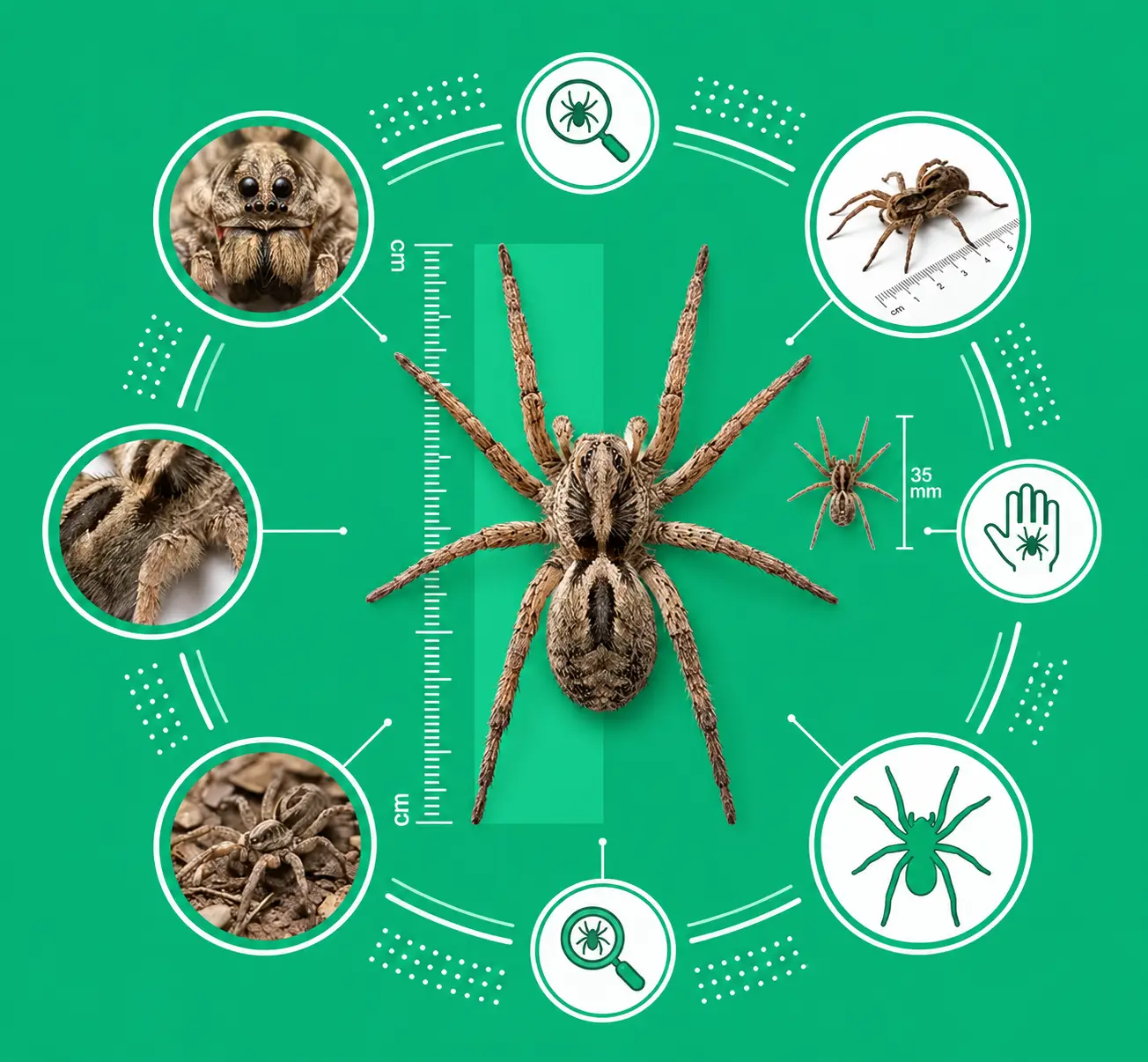
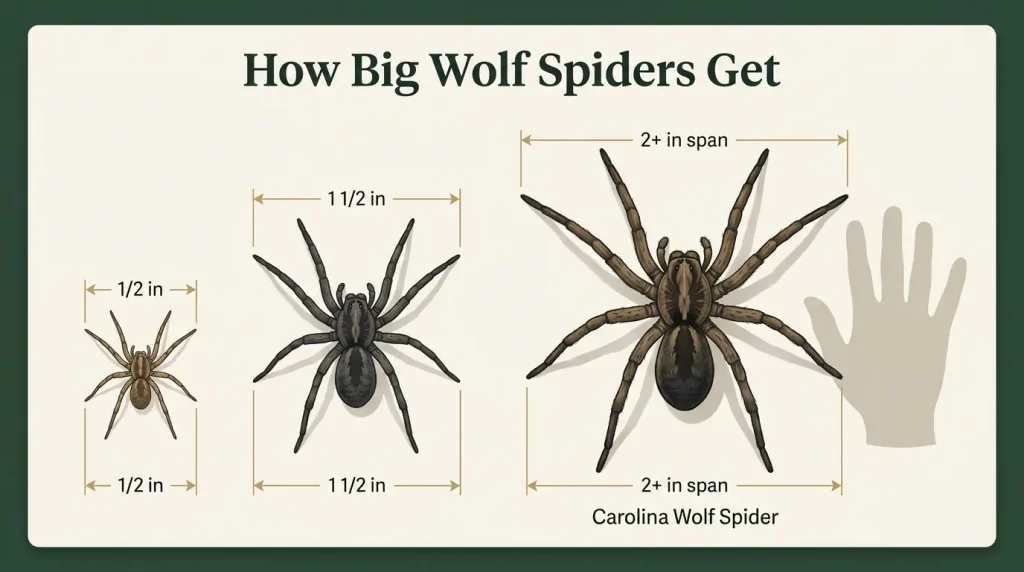
Wolf spiders typically range from about half an inch to over an inch and a half in body length, with a leg span that can reach two inches or more in the largest species. Size varies significantly across the many wolf spider species found worldwide, with some staying quite small and others, like the Carolina wolf spider, growing large enough to appear genuinely intimidating at first glance. For a full breakdown of spider species, see our spiders identifier tool. Despite their size, even the largest wolf spiders are not considered dangerous to people.
What Wolf Spiders Look Like
Wolf spiders have a robust, muscular build covered in a mottled brown, gray, and black pattern that provides excellent camouflage against soil, leaf litter, and concrete. Their eyes are arranged in three distinct rows, with a noticeably large pair of eyes positioned prominently on top of the head, giving them sharper vision than most other spider families.
Females often carry a round, silk egg sac attached directly to their spinnerets at the rear of the abdomen, a detail unique enough to confirm the species on sight. Once spiderlings hatch, the mother carries dozens of them clustered on her back for a period of time, another behavior distinctive enough to rule out confusion with other species entirely.
Identifying Wolf Spiders From Other Spiders
The combination of a stocky body, long spiny legs, and that distinctive triple row of eyes separates wolf spiders from most look-alikes fairly quickly. Unlike web-building species, wolf spiders do not spin a web to catch prey and are instead found moving actively across floors, baseboards, and outdoor ground cover while hunting.
Wolf spiders are frequently confused with brown recluses due to overlapping brown coloring, though a recluse has six eyes rather than eight and a distinct violin-shaped marking that a wolf spider never displays. They are also sometimes mistaken for tarantulas because of their size and hairy legs, despite tarantulas being considerably larger and generally slower moving by comparison.
Are Wolf Spiders Poisonous or Dangerous
Wolf spiders do have venom, since virtually all spiders do, but their venom is not considered medically significant to people and typically causes only mild, localized symptoms similar to a bee sting. A bite results in redness, minor swelling, and some itching that usually resolves within a day or two without any specific treatment.
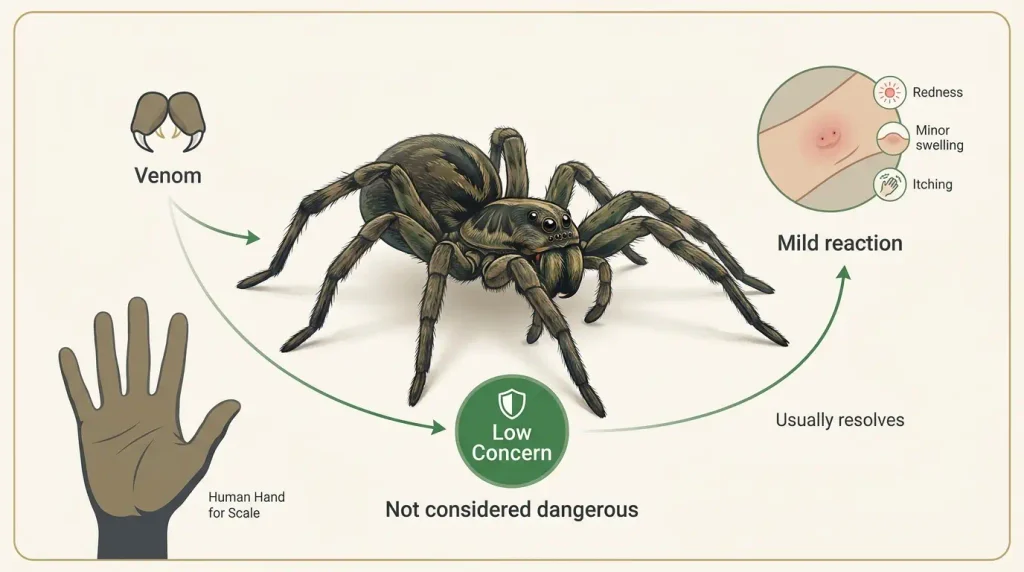
Wolf spiders are not aggressive and will typically flee rather than bite, reserving that response for situations where they feel directly trapped or threatened, such as being pressed against skin inside clothing or bedding. Their intimidating size and speed lead to a reputation that far outweighs any actual medical risk they pose. Learn the general steps for how to identify a spider accurately.
Biology and Life Cycle
Female wolf spiders lay their eggs in a silk sac that they carry attached to their body until the eggs are ready to hatch, providing active protection throughout the incubation period. Once hatched, spiderlings climb onto the mother’s back and remain there for one to several weeks before dispersing to hunt independently, a parenting behavior uncommon among most other spider families.
Wolf spiders reach maturity within a year in most species, though lifespan varies considerably, with some living only a single season and others surviving multiple years under favorable conditions. Growth happens gradually through a series of molts, with size increasing noticeably at each stage until the spider reaches its full adult dimensions.
Behavior and Habitat
Wolf spiders are ground-dwelling hunters that rely on speed and keen eyesight to chase down prey rather than trapping it in a web. They favor habitats with plenty of ground cover, including gardens, leaf litter, mulch beds, and grassy areas, where their camouflage and hunting style work most effectively.
Indoors, wolf spiders typically enter through gaps around doors, foundation cracks, or open garage doors while chasing insects that have already made their way inside. They tend to stay low, favoring baseboards, basements, and garage floors rather than climbing walls or ceilings the way some other species do.
How Wolf Spider Size Compares to the Biggest Spiders on Earth
Even the largest wolf spiders remain modest compared to the biggest spider species on Earth, a title held by the Goliath birdeater tarantula, which can reach a leg span of nearly a foot. Wolf spiders, by comparison, top out at roughly two to two and a half inches across, making them noticeably intimidating up close but far from record-setting in the broader spider world.
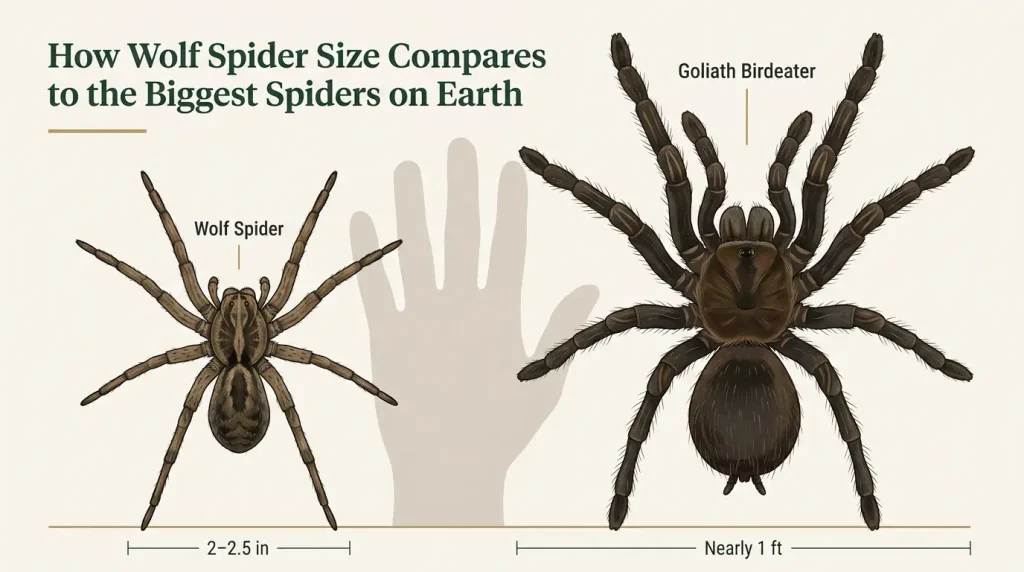
This comparison helps put a startling wolf spider encounter into perspective, since even the largest individuals found indoors represent a small fraction of what spiders are capable of growing to elsewhere. Understanding this size range also helps separate reasonable caution from unnecessary alarm when one shows up unexpectedly.
Signs of a Wolf Spider Infestation
A single wolf spider sighting rarely indicates an infestation, since these spiders are solitary hunters that do not form colonies or nests the way some insects do. Repeated sightings in the same general area, particularly around a specific entry point or a consistently damp basement corner, suggest an ongoing pattern rather than a single wandering individual.
Finding a female carrying an egg sac or spiderlings is a stronger sign that a breeding population has established itself nearby, since this behavior indicates the spider has settled rather than simply passed through. Increased insect activity in the same area is also worth checking, since wolf spiders follow their food source and a rise in their numbers often points to an underlying insect problem drawing them in.
How to Deal With Wolf Spiders Indoors
For an individual wolf spider found indoors, a container-and-paper method works well for capturing and releasing it outside without direct contact. A vacuum with a hose attachment also removes a spider quickly and effectively, particularly for one found in a hard-to-reach corner or behind furniture.
For repeated sightings suggesting an established population, sticky traps placed along baseboards and near entry points help both monitor and reduce activity over time. Addressing the underlying insect population that wolf spiders are hunting often resolves the root cause more effectively than repeatedly removing individual spiders as they appear. Wolf spiders are common in warmer regions — see our guide on house spiders in Texas.
Prevention Tips
Sealing gaps around doors, windows, and foundation cracks removes the easiest entry points wolf spiders use to move indoors from outdoor ground cover. Keeping garage doors closed when not in use and reducing exterior lighting near entrances both help limit the insects that attract wolf spiders toward the house in the first place.
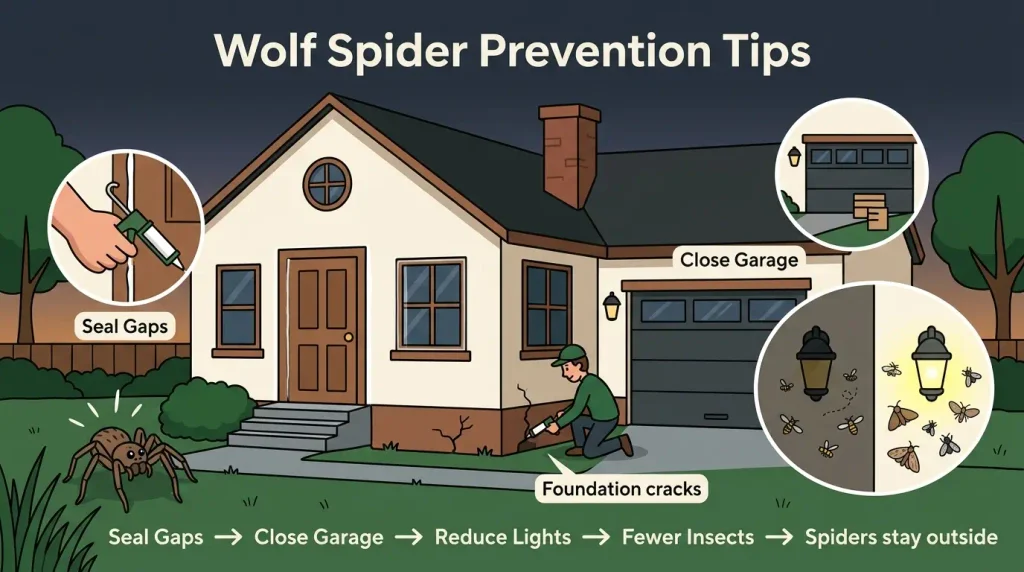
Trimming vegetation and reducing mulch or leaf litter directly against the foundation removes the sheltered, ground-level habitat wolf spiders prefer most. Reducing indoor humidity in basements and crawl spaces with a dehumidifier also discourages both wolf spiders and the insects they hunt from settling into those areas long-term.
Human Interaction: Should You Be Worried
Most human encounters with wolf spiders end without incident, since these spiders prioritize fleeing over confrontation whenever given the option. Bites do occasionally happen, almost always accidentally, when a spider becomes trapped against skin inside a shoe, glove, or piece of clothing left undisturbed for a while.
Checking shoes and gloves before putting them on, particularly items stored in a garage or basement, meaningfully reduces the already low chance of an accidental encounter. Beyond this simple precaution, wolf spiders are generally best left alone or gently relocated outside rather than treated as a serious threat.
Common Mistakes People Make With Wolf Spiders
Assuming every large, fast-moving spider must be dangerous is one of the most common mistakes, since wolf spiders look far more intimidating than their actual venom potency would suggest. Confusing a wolf spider with a brown recluse due to shared brown coloring is another frequent error, overlooking the clear differences in eye count and body pattern between the two.
Attempting to kill a female carrying spiderlings without realizing what the cluster on her back represents can also cause unnecessary alarm, since this parenting behavior is entirely normal rather than a sign of a broader infestation. Checking the specific identifying features covered earlier, rather than reacting to size and speed alone, resolves most of these misunderstandings quickly.
Frequently Asked Questions
Conclusion
Wolf spiders can grow large enough to startle almost anyone, with the biggest species reaching a leg span of two inches or more, but their size says little about actual risk to people. Learning the specific traits covered here, the mottled coloring, the triple row of eyes, and the egg-carrying behavior, makes identification straightforward and helps separate genuine caution from unnecessary panic. Running a quick photo through our bug identifier tool clears up any remaining uncertainty, especially when a wolf spider gets confused with a brown recluse due to overlapping brown tones. Sealing entry points and addressing outdoor insect activity handles most wolf spider encounters before they start, leaving the occasional indoor sighting as a minor, easily managed situation rather than a real concern.