What Do Exterminators Use for Roaches? A Full Breakdown
A cockroach sighting that keeps recurring despite store-bought sprays usually means the problem has outgrown what a single can of insecticide can solve.
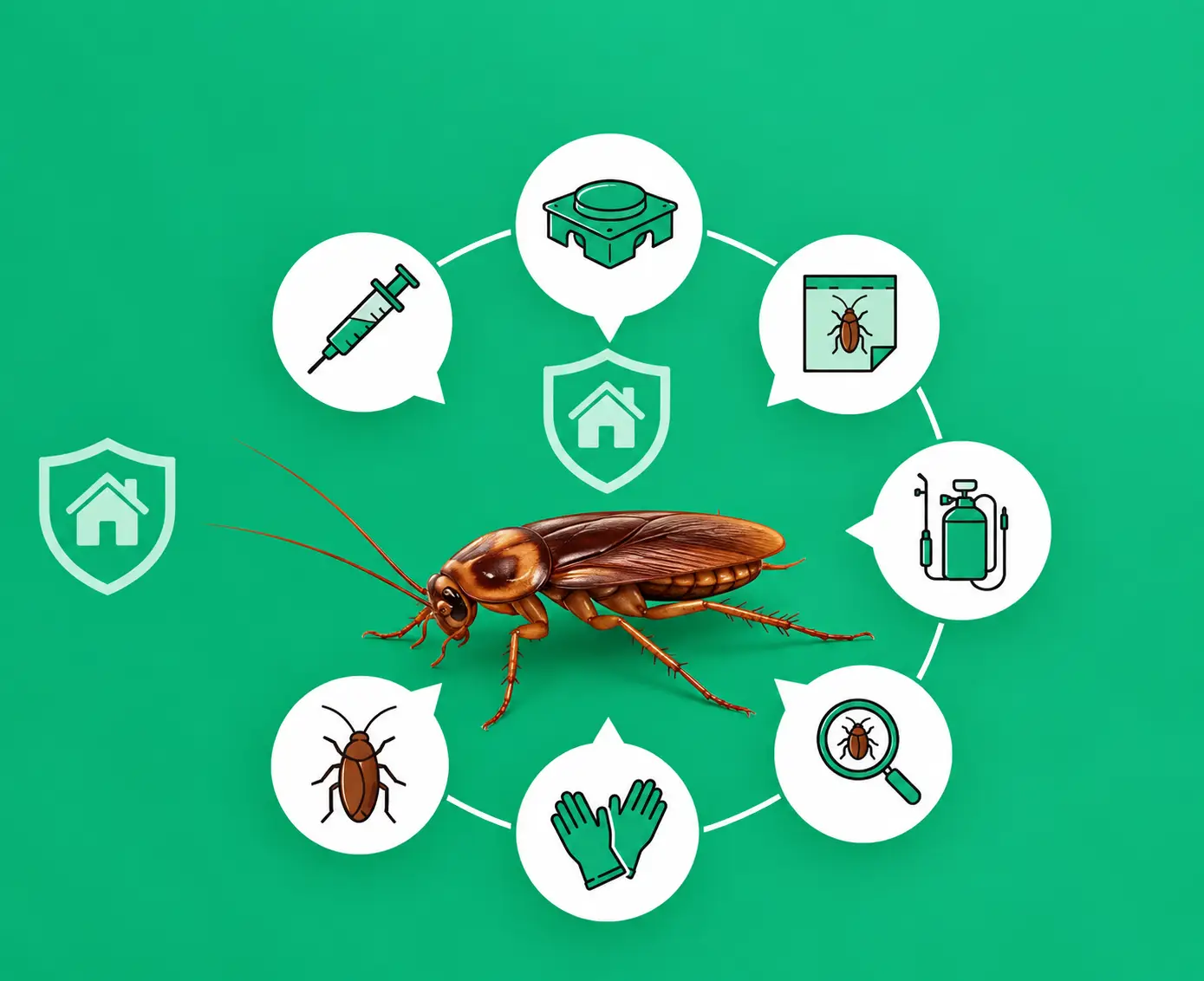
Our bug identifier tool can confirm exactly which roach species is present from a photo, which matters since professionals often adjust their product choice based on the specific species involved.
This article breaks down exactly what professional exterminators use, the specific active ingredients behind those products, and why their approach tends to outperform DIY methods for anything beyond a minor, isolated sighting. It also covers what a professional visit actually looks like, realistic costs and timelines, and how to choose a reputable exterminator if home methods have not resolved the problem.
Understanding the Cockroach Problem
Cockroach infestations are difficult to resolve through visible treatment alone, since roaches spend most of their time hidden in wall voids, behind appliances, and inside cracks rather than out in the open where a spray can reach them. A single female can produce dozens of offspring over her lifetime, meaning even a small, unnoticed population can grow substantially within a few weeks if left untreated.
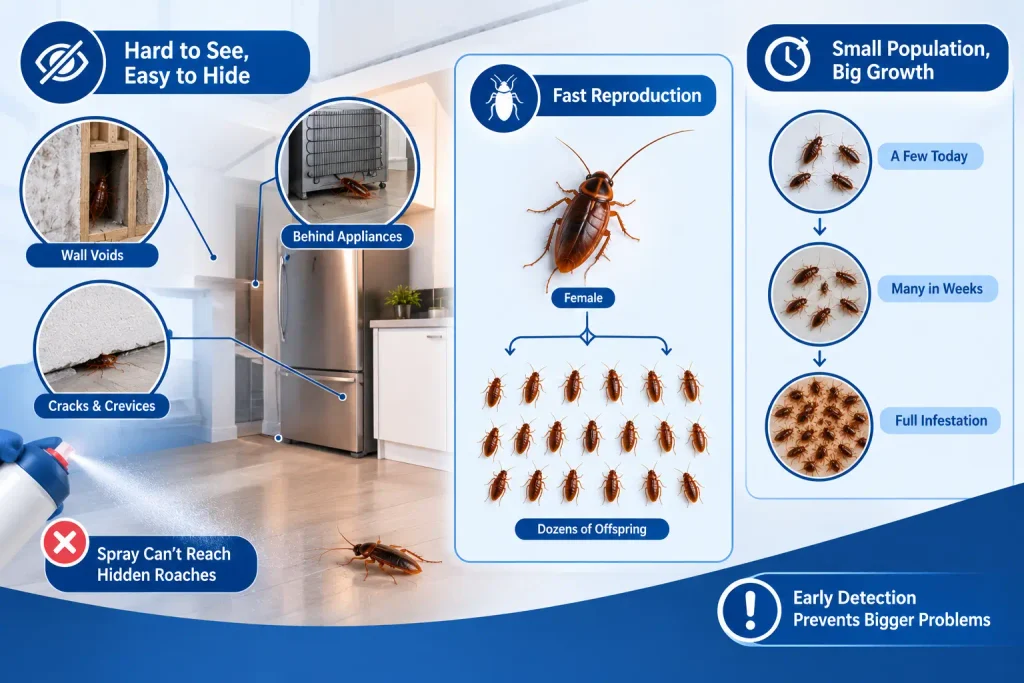
This combination of hidden behavior and rapid reproduction explains why DIY sprays, which primarily kill roaches on contact, often provide only temporary relief rather than a lasting solution. Professional treatment addresses this gap specifically by targeting the hidden population and its reproductive cycle rather than relying solely on visible, contact-based elimination.
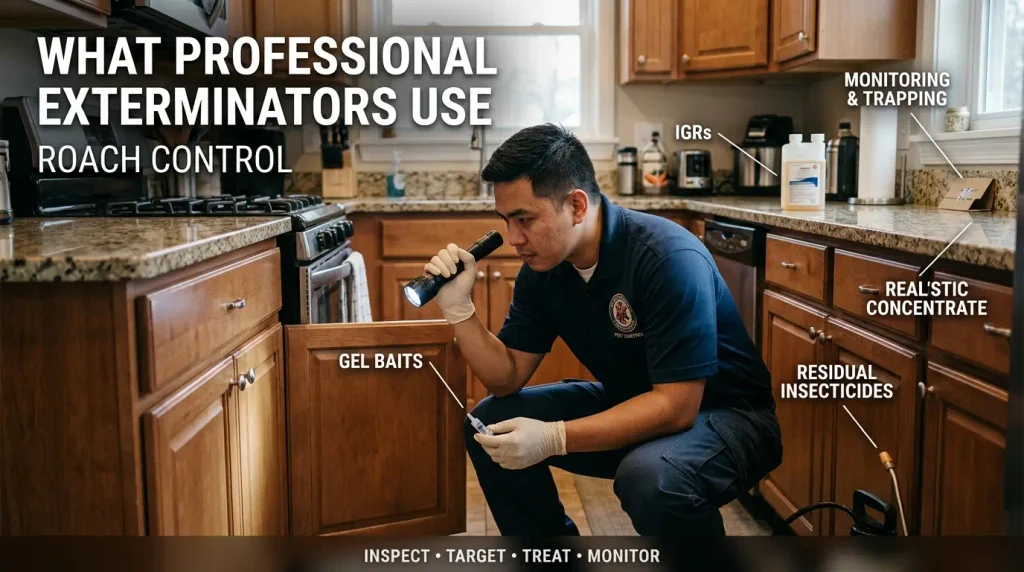
Professional exterminators primarily rely on gel baits containing active ingredients like fipronil or indoxacarb, insect growth regulators that prevent roaches from reaching reproductive maturity, and targeted residual insecticides applied to cracks and hiding spots rather than open surfaces. This combination addresses both the visible adult population and the reproductive cycle driving new roaches to appear, which is the main reason professional treatment tends to produce more lasting results than a single spray application. Most residential treatments involve an initial visit followed by one or two follow-up visits over several weeks to fully break the infestation cycle. For DIY methods first, see our full guide on how to get rid of cockroaches.
How Professional Exterminators Work
Professional pest control begins with a thorough inspection to identify the specific roach species present, locate primary hiding spots, and assess the overall severity of the infestation before any treatment begins. This identification step matters significantly, since German roaches, American roaches, and other common species respond differently to certain products and require different placement strategies for baits and residual treatments.
Based on this inspection, an exterminator develops a targeted treatment plan combining gel baits, growth regulators, and residual insecticides applied specifically to cracks, crevices, and other hidden areas roaches actually travel through. Follow-up visits then monitor progress and adjust the treatment plan as needed, addressing any remaining activity from eggs that survived the initial application.
What Professional Exterminators Use for Roaches
Professional-Grade Gel Baits
Gel baits combine a food-based attractant with a slow-acting active ingredient, allowing roaches to carry the bait back to shared hiding spots before dying, which spreads the effect to others that never directly contacted the treatment. Professional-grade baits are generally more concentrated and effective than consumer versions, placed precisely in cracks and along known travel paths identified during inspection.
Insect Growth Regulators (IGRs)
Insect growth regulators disrupt a roach’s development, preventing nymphs from reaching reproductive adulthood even if they survive initial exposure to other treatments. This approach specifically targets the reproductive cycle driving new roaches to appear, making IGRs a key component in achieving longer-term population control rather than just killing currently visible adults.
Residual Insecticides
Residual insecticides remain active on treated surfaces for an extended period, continuing to kill roaches that make contact well after the initial application. Professionals apply these specifically to cracks, baseboards, and other hidden travel routes rather than open surfaces, maximizing contact with roaches while minimizing unnecessary chemical exposure in living spaces.
Monitoring and Trapping
Sticky monitoring traps placed in key areas help track treatment progress and identify any remaining activity that might require an adjusted approach during a follow-up visit. This ongoing monitoring distinguishes professional treatment from a one-time DIY spray, since it provides concrete data on whether the current treatment plan is actually working.
Treatment Comparison at a Glance
| Method | How It Works | Best For |
|---|---|---|
| Gel Bait | Attracts and spreads slow-acting poison | Hidden, established populations |
| IGR | Blocks reproductive development | Long-term population control |
| Residual Insecticide | Kills on contact for weeks after application | Cracks, crevices, travel routes |
| Monitoring Traps | Tracks activity, no direct kill | Assessing treatment progress |
Specific Chemicals Used by Pest Control Companies
Pyrethrin and Pyrethroids
Pyrethrin, derived from chrysanthemum flowers, and its synthetic counterpart pyrethroid both attack a roach’s nervous system on contact, making them common choices for residual sprays applied to cracks and baseboards. These compounds break down relatively quickly compared to some other options, which is why they are often combined.
Piperonyl Butoxide
Piperonyl butoxide is not an insecticide on its own but functions as a synergist, blocking a roach’s ability to break down pyrethrin or pyrethroid compounds and significantly extending their effectiveness. This combination allows professionals to use lower overall pesticide concentrations while still achieving reliable results.
Fipronil
Fipronil disrupts a roach’s central nervous system and is commonly used in professional-grade gel baits due to its effectiveness at very low concentrations. Its slow-acting nature allows treated roaches to return to shared hiding spots and spread the effect to others before dying, a mechanism central to how gel baits achieve broader population control.
Boric Acid
Boric acid works differently from most chemical insecticides, damaging a roach’s exoskeleton and digestive system when the roach walks through it and later ingests it during grooming. While available for home use as well, professional application typically involves more precise, targeted placement in specific hiding spots identified during inspection.
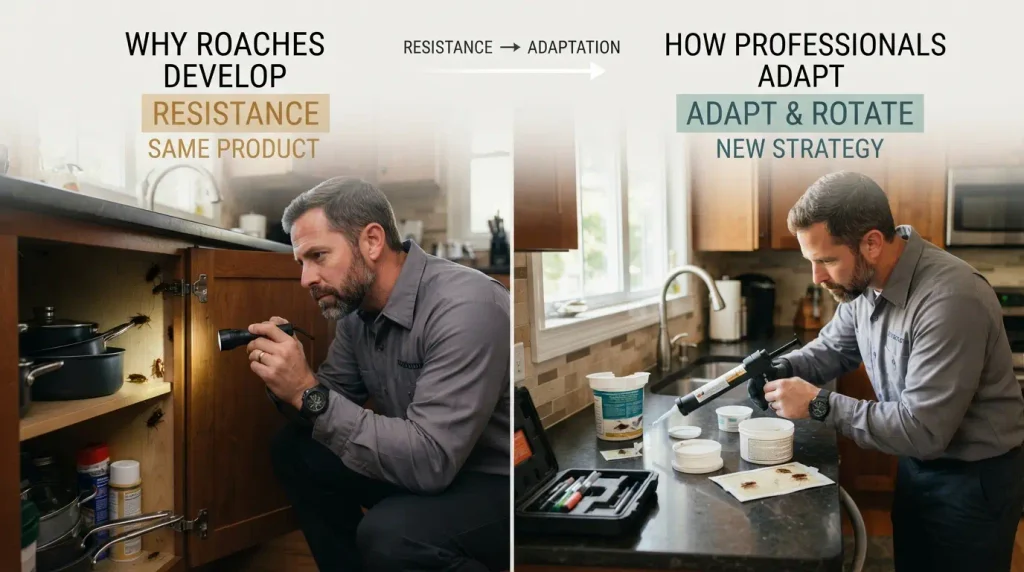
Why Roaches Develop Resistance and How Professionals Adapt
Cockroach populations can develop resistance to a specific insecticide over time, particularly when the same product is used repeatedly without variation, allowing naturally resistant individuals to survive and reproduce. This is a well-documented challenge in pest control, particularly with older insecticide classes that have been in widespread use for decades. It’s also worth understanding whether cockroach droppings are dangerous to your health.
Professional exterminators address this by rotating between different active ingredients and mechanisms, such as alternating between fipronil-based baits and indoxacarb-based options, which reduces the chance of a resistant population establishing itself. This rotation strategy is one of the more significant advantages professional treatment offers over repeated use of the same single consumer product purchased off a store shelf.
DIY Sprays vs Professional Treatments
Consumer sprays typically kill roaches on contact but leave no lasting residual effect and rarely reach the hidden cracks and wall voids where most of a population actually lives. Professional treatments combine multiple approaches, gel bait, IGRs, and targeted residual application, addressing both the visible population and the reproductive cycle sustaining it.
DIY methods can work reasonably well for a very minor, isolated sighting caught early, particularly when combined with thorough sanitation and sealed entry points. For an established infestation, however, professional treatment’s combination of species-specific product selection, precise placement, and follow-up monitoring generally produces more reliable, longer-lasting results than repeated DIY attempts.
Family and Pet Safety During Treatment
Professional exterminators use products registered for residential use, applied according to specific safety guidelines regarding placement, concentration, and required drying or ventilation time before an area is safe for family and pet contact. Gel baits are generally placed in areas inaccessible to curious pets or young children, such as inside cracks or behind appliances, specifically to minimize accidental exposure risk.
Communicating any specific health concerns, pregnancy, respiratory sensitivities, or pets with particular vulnerabilities, to the exterminator before treatment allows for adjustments to product selection or application timing where appropriate. Following any post-treatment instructions regarding ventilation or delayed re-entry into treated areas further reduces unnecessary exposure risk for the household.
What to Expect Before, During, and After a Visit
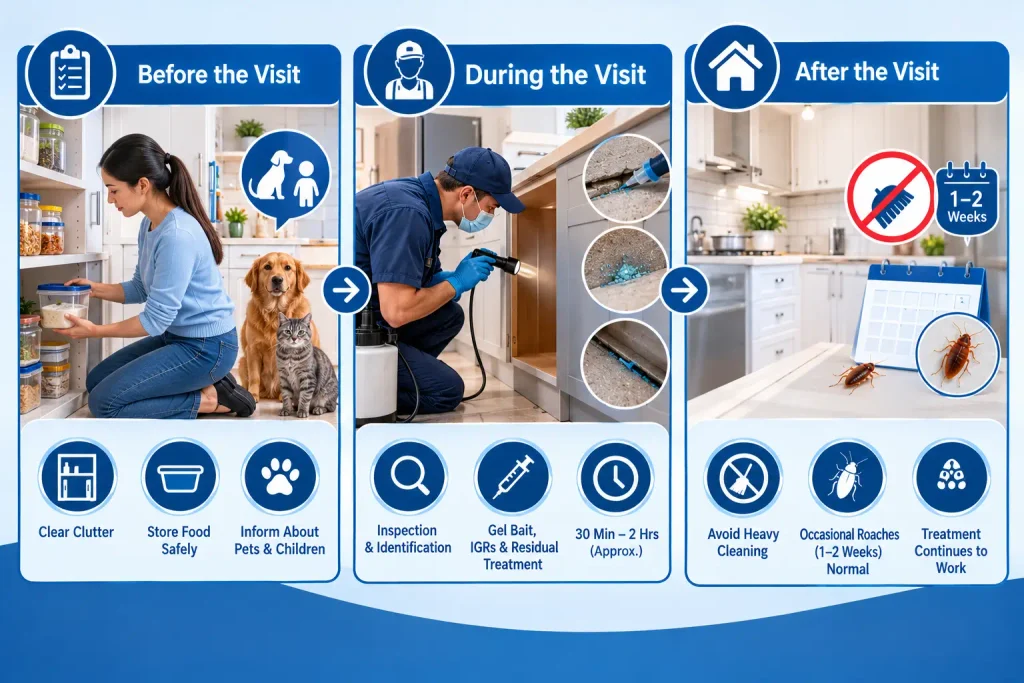
Before the Visit
Clearing clutter from cabinets, countertops, and floors, and storing food in sealed containers, helps an exterminator access all relevant areas and improves treatment effectiveness. Informing the company in advance about pets, children, or specific areas of concern allows them to plan the visit accordingly. Prevention matters too — learn how to keep insects away naturally.
During the Visit
The exterminator typically conducts a thorough inspection first, identifying the species and key hiding spots, before applying gel bait, IGRs, and residual treatment specifically to cracks, crevices, and other identified travel routes. This process usually takes between thirty minutes and a couple of hours depending on the size of the space and severity of the infestation.
After the Visit
Most companies recommend avoiding heavy cleaning of treated areas for one to two weeks, since scrubbing away gel bait or residual treatment reduces its effectiveness before it has had time to work through the population. Continuing to see occasional roaches for the first week or two after treatment is normal and expected, as remaining individuals encounter the treatment and as any surviving eggs hatch.
How Much Professional Cockroach Treatment Costs
Professional cockroach treatment costs vary considerably based on the severity of the infestation, the size of the property, and whether the plan includes a single visit or an ongoing maintenance schedule with periodic follow-ups. A moderate, single-treatment infestation typically costs less than a severe, multi-room problem requiring several follow-up visits and more extensive product application.
Requesting a detailed quote that specifies what is included, whether that means a single visit or a set number of follow-ups, helps avoid unexpected costs partway through treatment. Comparing quotes from a couple of licensed providers, while confirming exactly what each price includes, gives a clearer picture of value rather than comparing the headline price alone.
How Long Treatment Takes and How Many Visits Are Needed
A single, moderate infestation typically requires an initial treatment followed by one or two follow-up visits spaced two to three weeks apart, allowing time for eggs present during the first visit to hatch and encounter the treatment as well. More severe or long-established infestations spanning multiple rooms can require a longer treatment schedule, sometimes extending over one to two months before activity is fully resolved.
Visible improvement often becomes noticeable within the first one to two weeks, though complete elimination typically requires the full recommended treatment schedule rather than stopping once initial signs of activity decrease. Skipping scheduled follow-up visits, even when the problem appears resolved, is one of the more common reasons an infestation returns sooner than expected.
Signs You Need a Professional Exterminator
Seeing roaches during daylight hours, when these naturally nocturnal insects are typically hidden, often indicates a population large enough that competition for resources has pushed individuals into the open. Finding roach droppings, egg cases, or a persistent musty odor despite consistent home cleaning and DIY treatment attempts also suggests the problem has outgrown what store-bought products can effectively address.
A recurring infestation that returns within weeks of a DIY treatment, or one spanning multiple rooms rather than a single isolated area, is a clear sign that professional intervention will likely produce more reliable results. Waiting too long after these signs appear typically allows the population to grow further, making eventual professional treatment take longer and cost more than addressing it promptly.
What to Look for When Hiring an Exterminator
Confirming that a pest control company holds proper state licensing and certification provides some assurance of trained, accountable service rather than an unregulated operator. Asking specifically about the products and methods planned for use, including whether gel baits, IGRs, and residual treatments are all part of the standard approach, helps gauge whether a company follows a comprehensive strategy rather than relying on a single spray application.
Checking reviews or asking for references from past customers dealing with a similar cockroach problem offers additional insight beyond a company’s own marketing claims. A reputable exterminator should also be willing to explain their proposed treatment plan clearly and answer specific questions about safety, timeline, and expected costs before any work begins.
Integrated Pest Management for Long-Term Elimination
What Integrated Pest Management Involves
Integrated Pest Management combines chemical treatment with sanitation improvements, structural repairs like sealing entry points, and ongoing monitoring rather than relying on pesticide application as the sole solution. This broader approach addresses the underlying conditions allowing roaches to thrive, rather than only treating the visible symptom of their presence.
Follow-Up Treatments
Scheduled follow-up visits allow an exterminator to assess whether the initial treatment is working, adjust product placement or type if needed, and address any new activity from eggs that survived the first application. Skipping these follow-ups significantly increases the likelihood that a seemingly resolved infestation returns within a few months.
Education for Homeowners
Reputable pest control companies typically provide specific guidance on sanitation practices, food storage, and moisture control that homeowners can maintain between visits to support the overall treatment plan. This educational component matters because even the most effective professional treatment can be undermined by ongoing conditions, like consistent food residue or excess moisture, that continue attracting new roaches.
Common Mistakes to Avoid
Cleaning treated areas too soon after a professional visit removes gel bait and residual treatment before it has had time to work through the population effectively. Assuming a single visit fully resolves a moderate to severe infestation, and skipping recommended follow-up appointments, is one of the most frequent reasons professional treatment appears to fail when it actually just needed the full recommended schedule.
Choosing a provider based solely on the lowest quoted price, without confirming what products and methods are included, can result in a less comprehensive treatment plan that requires additional visits later regardless of the initial savings. Continuing to use unrelated store-bought sprays alongside a professional treatment plan, without checking with the exterminator first, can sometimes interfere with the products they have specifically placed for gradual, targeted effect.
Frequently Asked Questions
Conclusion
Professional exterminators rely on a specific combination of gel baits, insect growth regulators, and targeted residual insecticides, backed by species identification and rotating active ingredients to counter resistance, that consistently outperforms a single DIY spray for anything beyond a minor sighting. Understanding what products like fipronil, indoxacarb, and boric acid actually do, and why follow-up visits matter as much as the initial treatment, sets realistic expectations for cost, timeline, and results. Choosing a licensed, transparent provider and following their sanitation guidance between visits protects the investment made in professional treatment. Running a photo through our bug identifier tool before that first call confirms the exact species involved, giving any exterminator a head start on selecting the right products from day one.