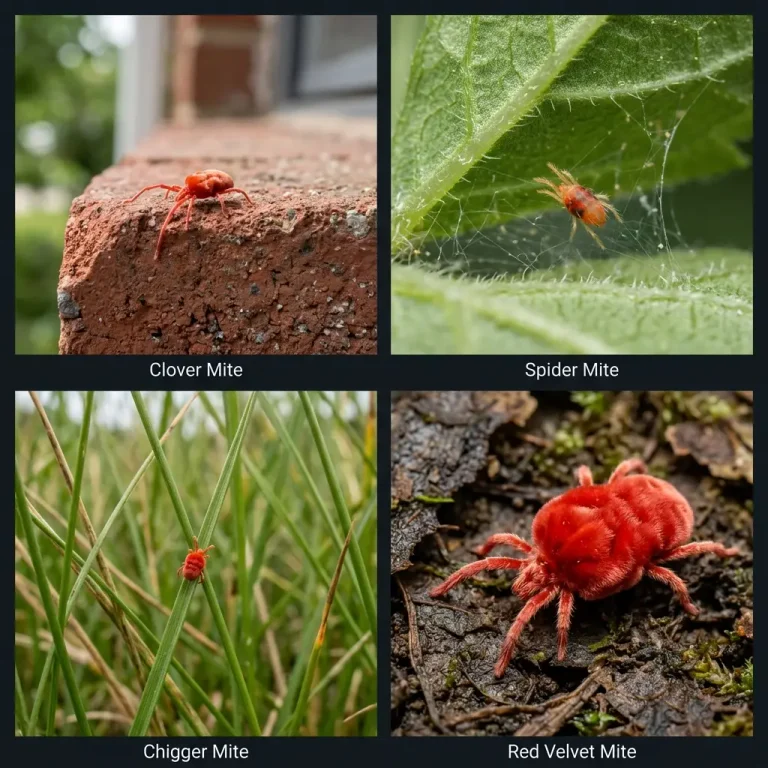
Small Black Bugs in House
Spotting a small black bug crawling across a windowsill, hiding in a pantry, or clustered near a drain rarely narrows things down on its own, since at least ten different pests fall under that same vague description.
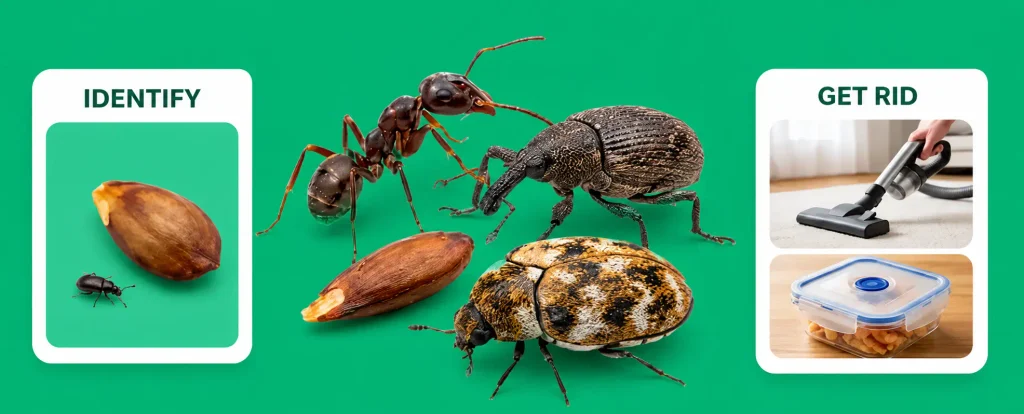
Getting the right identification matters more than most people expect, since a treatment aimed at pantry weevils does nothing against fleas, and a spray meant for ants will not touch drain flies. Our bug identifier tool can confirm exactly which small black bug has shown up from a clear photo, which saves considerable time compared to guessing based on size and color alone.
This article covers the most common small black bugs found indoors, where each one tends to show up, and how to tell them apart using a few simple observations. It also covers what specifically attracts each type, how to treat an infestation once identified, and the natural and professional options available depending on how established the problem has become.
Common Small Black Bugs Found Indoors
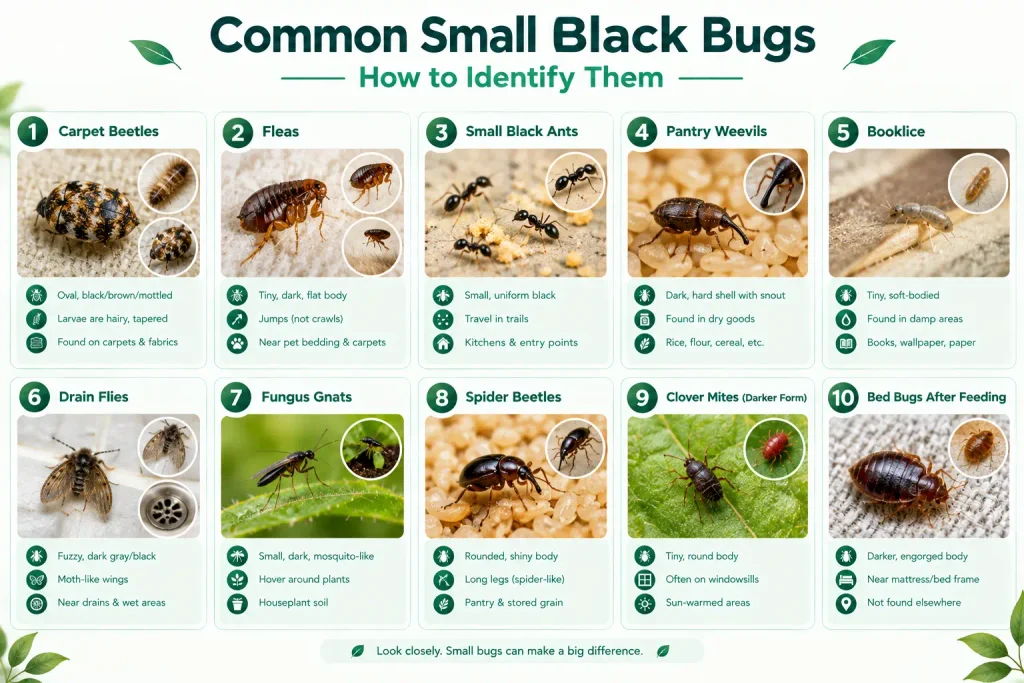
Small black bugs in a house are most often carpet beetles, fleas, small ants, pantry weevils, booklice, drain flies, fungus gnats, spider beetles, or occasionally clover mites and bed bugs in their darker, engorged state. Location matters more than color for identification, since pantry pests, carpet pests, drain-dwelling flies, and crawling insects each concentrate in very different areas of a home. Most of these pests respond well to targeted cleaning and either a natural or store-bought treatment matched specifically to the type identified.
Carpet Beetles
Carpet beetles are small, oval-shaped bugs that can appear black, dark brown, or mottled depending on the species, typically found on carpets, upholstery, and stored fabric. Their larvae, which do the actual damage to fabric and fibers, look distinctly different from the adults, appearing as small, bristly, tapered worms rather than the rounder adult beetle shape.
Fleas
Fleas are tiny, dark reddish-brown to black insects that move in quick, erratic jumps rather than crawling steadily, most commonly found near pet bedding, carpets, and upholstered furniture. Their flattened body shape, adapted for moving through fur and fabric fibers, distinguishes them from most other small black bugs found indoors.
Small Black Ants
Odorous house ants and pavement ants both appear as small, uniformly dark insects traveling in visible trails leading to a food source, typically in kitchens or near entry points. These ants are among the easiest small black bugs to identify without a photo, given their distinctive trail-following behavior toward crumbs or spilled liquids.
Pantry Weevils
Weevils are small, dark, hard-shelled beetles with a distinctive elongated snout, typically found infesting rice, flour, cereal, and other dry stored goods. Their presence is usually first noticed through small holes in packaging or the bugs themselves crawling on pantry shelves rather than a sighting elsewhere in the home.
Booklice
Booklice, despite the name, are not true lice and instead feed on mold and mildew, appearing as tiny, soft-bodied, pale to dark insects found in damp books, wallpaper, or stored paper goods. Their presence often signals a humidity issue in the specific area where they are found, rather than any direct threat from the insects themselves.
Drain Flies
Drain flies are small, fuzzy, dark gray to black insects with a distinctive moth-like wing shape, commonly found resting on walls near bathroom or kitchen drains. Their larvae develop in the organic buildup inside drain pipes, which is why sightings cluster so consistently around sinks, showers, and floor drains.
Fungus Gnats
Adult fungus gnats are small, dark, mosquito-like flying insects most often seen hovering around houseplant soil, drawn to the moist, organic-rich conditions their larvae need to develop. Unlike drain flies, fungus gnats concentrate specifically around potted plants rather than plumbing fixtures.
Spider Beetles
Spider beetles have a rounded, dark, shiny body and long legs that give them a passing resemblance to a small spider, typically found in pantries, stored grain, or areas with accumulated debris. They feed on a wide range of stored organic material, making them a less specific but still occasional pantry pest concern.
Clover Mites in Their Darker Form
While clover mites are usually described as reddish, certain lighting conditions or slightly different life stages can make them appear notably darker, leading to occasional confusion with true black bugs. They are typically found in large numbers on sun-warmed windowsills and exterior walls rather than scattered throughout a home’s interior.
Bed Bugs After Feeding
A bed bug that has recently fed appears noticeably darker, sometimes nearly black, compared to its lighter reddish-brown color before a blood meal. Finding a dark, engorged insect specifically near a mattress seam or bed frame, rather than elsewhere in the home, points toward this possibility more than the other bugs on this list.
Where You Are Most Likely to Find Them
Kitchen and pantry sightings most often point toward small ants, pantry weevils, or spider beetles, all drawn to stored food and crumbs left in cabinets or on counters. Bathroom sightings, particularly near drains, strongly suggest drain flies, given their larvae’s dependence on the organic buildup found in plumbing.
Carpet, upholstery, and closet sightings typically point toward carpet beetles or fleas, both of which favor fabric and fiber-rich environments for feeding or laying eggs. Understanding what attracts silverfish can help you identify similar pests. Houseplant soil sightings point clearly toward fungus gnats, while windowsill clusters, especially on sun-warmed exterior walls, most often indicate clover mites rather than any of the other bugs covered here.
How to Identify Which Bug You Actually Have
Movement pattern offers one of the fastest identification clues, since fleas jump erratically, ants travel in organized trails, and drain flies or fungus gnats fly in short, hovering bursts rather than crawling steadily. Size and shape narrow things down further, with weevils showing a distinctive snout, spider beetles resembling tiny spiders, and carpet beetle larvae looking like bristly worms rather than rounded adult beetles.
Cross-referencing the specific location of a sighting against the summary above resolves most cases quickly, since very few of these pests overlap in habitat. For any case that remains uncertain, particularly when the stakes involve potential bed bugs or a pantry infestation affecting stored food, running a clear photo through an identifier tool provides quick, reliable confirmation.
Are Small Black Bugs Harmful to Humans or Pets
Most small black bugs found indoors, including carpet beetles, weevils, booklice, drain flies, fungus gnats, and spider beetles, pose no direct health risk to people or pets and are considered property or food-contamination nuisances rather than a safety concern. Fleas are the clear exception among common indoor pests, since they bite both people and pets and can transmit tapeworms to animals that ingest an infected flea while grooming.
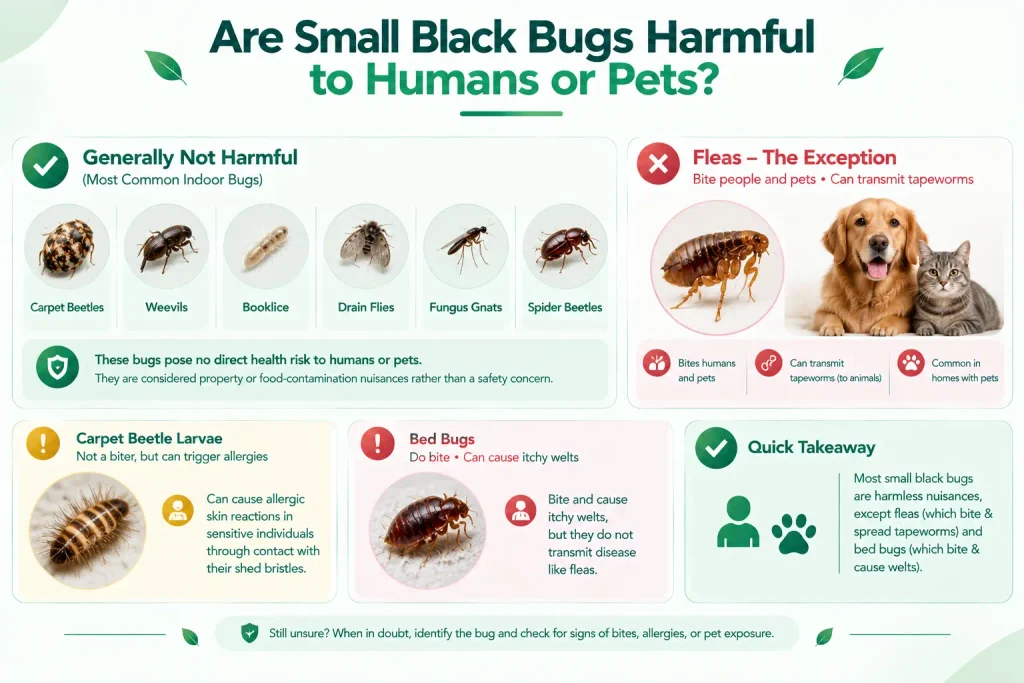
Carpet beetle larvae, while not biting or stinging, can trigger allergic skin reactions in sensitive individuals through contact with their shed bristles rather than through any bite. Bed bugs, if that turns out to be the actual cause of a dark-colored sighting, do bite and can cause itchy welts, though they do not transmit disease in the way fleas can through pets.
What Attracts Small Black Bugs Indoors
Food residue and improperly sealed dry goods attract ants, weevils, and spider beetles, all of which depend on accessible crumbs or stored pantry items to sustain a growing population. Excess moisture and humidity draw in booklice and fungus gnats specifically, since both depend on damp conditions, whether in stored paper goods or overwatered houseplant soil. If confirmed, here’s how to get rid of silverfish and similar bugs.
Pet bedding and carpeted areas that go uncleaned for extended periods create ideal conditions for fleas and carpet beetles to establish a population undisturbed. Clogged or infrequently cleaned drains provide the organic buildup drain flies need to complete their life cycle, explaining why sightings cluster so reliably around specific plumbing fixtures rather than spreading evenly throughout a home.
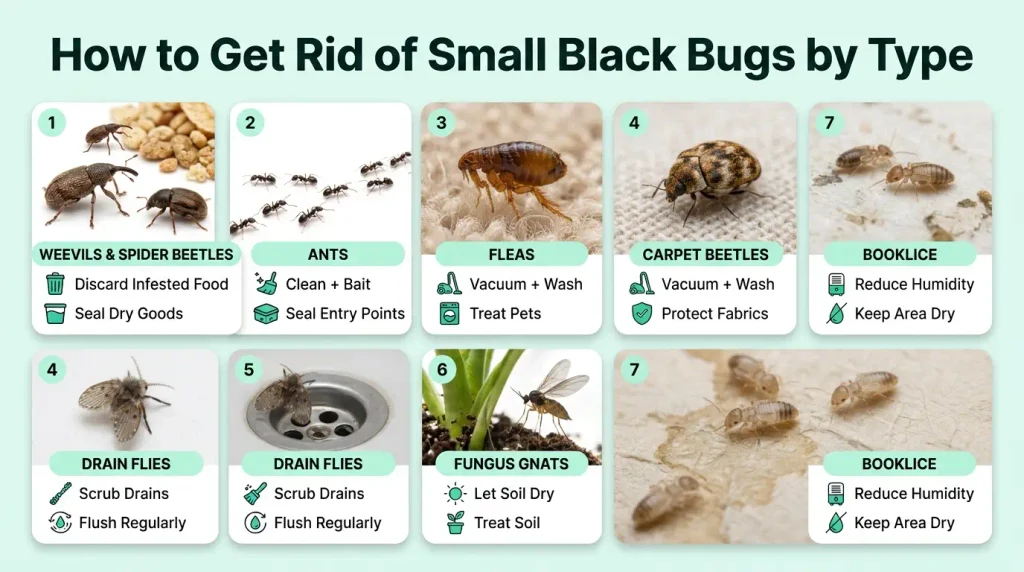
How to Get Rid of Small Black Bugs by Type
Crawling Pantry Pests (Weevils and Spider Beetles)
Discarding infested dry goods and thoroughly cleaning pantry shelves removes both the current population and the food source drawing new pests in. Storing remaining dry goods in sealed, airtight containers prevents a recurring infestation from an item that may already carry hidden eggs.
Small Ants
Wiping down counters and sealing food containers removes the food source ants are following, while a bait station placed along an observed trail addresses the colony at its source rather than just the visible workers. Sealing entry points around windows and doors further reduces how easily new ants can establish a trail indoors.
Fleas
Vacuuming carpets, upholstery, and pet bedding thoroughly, followed by washing pet bedding in hot water, addresses both adult fleas and the eggs and larvae hidden in fibers. Treating pets directly with a veterinarian-recommended flea treatment is essential, since untreated pets will continue reintroducing fleas even after a thorough home cleaning.
Carpet Beetles
Vacuuming carpets, upholstery, and closets thoroughly removes both adult beetles and the bristly larvae responsible for fabric damage. Washing or dry cleaning affected clothing and textiles, combined with cedar or lavender sachets in storage areas, both treats a current infestation and helps deter future activity.
Drain Flies
Using a drain brush to physically scrub the buildup inside affected pipes removes the organic material drain fly larvae depend on, which is more effective than a chemical drain cleaner alone. Running hot water through the drain regularly afterward helps prevent the buildup from reaccumulating and drawing in a new generation.
Fungus Gnats
Allowing the top inch or two of houseplant soil to dry out between waterings disrupts the moist conditions fungus gnat larvae need to survive, often resolving a mild infestation without additional treatment. A layer of diatomaceous earth on the soil surface addresses more persistent cases where adjusting watering habits alone is not enough.
Booklice
Reducing humidity in the affected area, using a dehumidifier if necessary, removes the damp conditions booklice depend on to survive. Discarding severely affected paper items and thoroughly drying the surrounding area typically resolves the problem once the underlying moisture issue is addressed. For general prevention, learn how to keep insects away naturally.
Natural Remedies for Small Black Bugs
Diatomaceous earth works mechanically against several of these pests, including ants, spider beetles, and fungus gnat larvae, by damaging their exoskeleton through microscopic sharp edges that cause dehydration over time. Peppermint and cedar oils offer a natural deterrent effect against ants and carpet beetles respectively, disrupting the scent trails or fabric appeal that draw each pest toward specific areas.
Vinegar solutions used for regular cleaning remove the food residue and scent trails that attract ants, while also serving as a general household disinfectant with no added cost beyond a household staple. These natural approaches work best as prevention and mild treatment for smaller populations rather than a guaranteed solution for a significant, established infestation.
When to Call Professional Pest Control
A flea infestation that persists despite thorough cleaning and veterinary treatment for household pets often benefits from professional treatment, since fleas can survive in carpet fibers for extended periods without a host present. A carpet beetle infestation causing significant, ongoing damage to clothing or upholstery, particularly one that returns after cleaning and natural deterrents, also warrants a professional evaluation.
Recurring drain fly activity despite thorough drain cleaning may indicate a deeper plumbing issue requiring professional attention beyond a simple pipe brush treatment. If a dark-colored sighting near a bed turns out to be a confirmed bed bug rather than another small black bug on this list, professional treatment is generally the more reliable path given how difficult bed bugs are to fully eliminate through home methods alone.
Preventing Small Black Bugs Long-Term
Storing all dry pantry goods in sealed, airtight containers removes the food source that draws in weevils, spider beetles, and ants alike. Regular vacuuming of carpets, upholstery, and pet bedding, combined with periodic washing of removable fabric items, prevents both fleas and carpet beetles from establishing an unnoticed population.
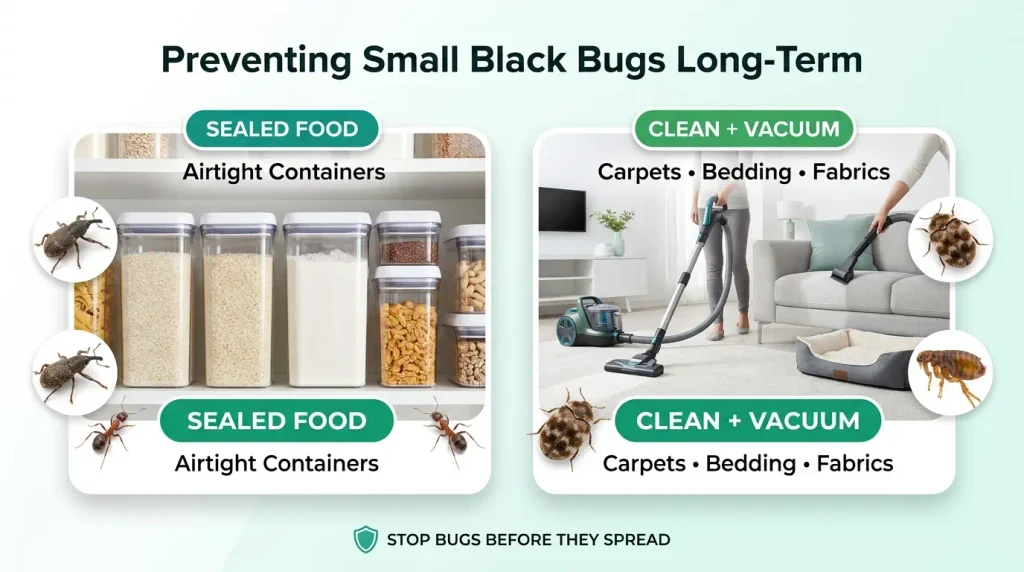
Fixing leaks and maintaining reasonable indoor humidity levels addresses the underlying conditions that attract booklice and fungus gnats specifically. Running water through infrequently used drains periodically, and cleaning them on a regular schedule, keeps drain flies from finding the buildup they need to complete their life cycle in the first place.
Common Mistakes When Dealing With Small Black Bugs
Applying a general insecticide without first identifying the specific pest often produces disappointing results, since treatments effective against ants do little against fleas, drain flies, or pantry weevils. Treating only the visible adult bugs while ignoring eggs or larvae already established in carpet fibers, stored food, or drain buildup allows a population to rebound within a short period.
Assuming every small black bug found near pets is a flea, without confirming through closer inspection or a photo, can lead to unnecessary or ineffective treatment if the actual cause is a carpet beetle or another pest entirely. Overlooking the underlying attractant, whether food storage, moisture, or drain buildup, while focusing only on visible bugs, frequently leads to a recurring problem despite repeated treatment attempts.
Frequently Asked Questions
Conclusion
Small black bugs in a house cover a much wider range of pests than the description alone suggests, from pantry weevils and small ants to fleas, carpet beetles, drain flies, and fungus gnats, each with its own specific hiding spot and attractant. Correctly identifying which pest is actually present, based on location, movement, and shape, changes both the urgency of the problem and which treatment will actually work. Targeted cleaning, sealed food storage, and addressing moisture or drain buildup handle most infestations without needing professional help, while fleas and persistent carpet beetle activity are the clearest signs that outside help may be worth considering. Running a clear photo through our bug identifier tool settles any remaining uncertainty quickly, so the right treatment gets applied from the start rather than after several rounds of trial and error.