Keep Insects Away From Home Naturally What Actually Works
Reaching for a chemical spray at the first sign of a bug is not the only option, and plenty of natural methods genuinely reduce insect activity without the strong smell or safety concerns that come with synthetic products.

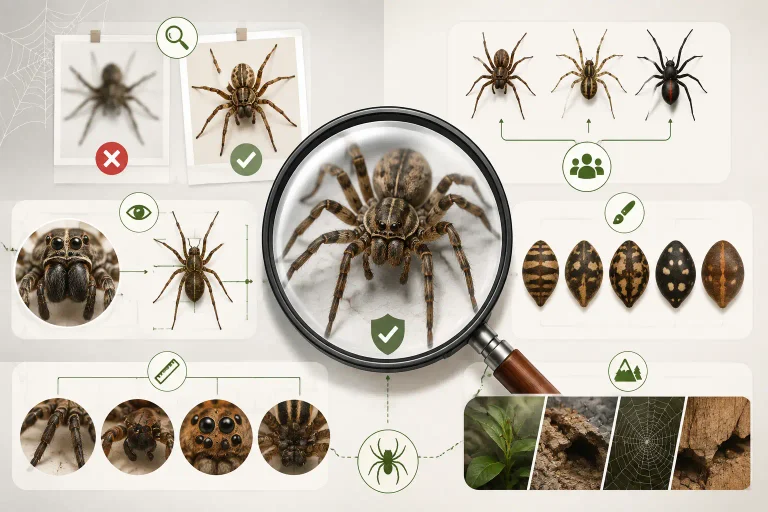
The key is understanding which natural methods actually work, since some popular suggestions online do very little beyond smelling pleasant. Our bug identifier tool can confirm exactly which insect you are dealing with, which helps since different bugs respond to different natural deterrents.
This article covers the natural repellents, plants, and habits that consistently reduce insect activity around a home, along with the sealing and sanitation basics that make any natural approach actually work. It also covers safety considerations for households with kids or pets, and when it makes sense to move beyond natural methods entirely.
What Insects Actually Works
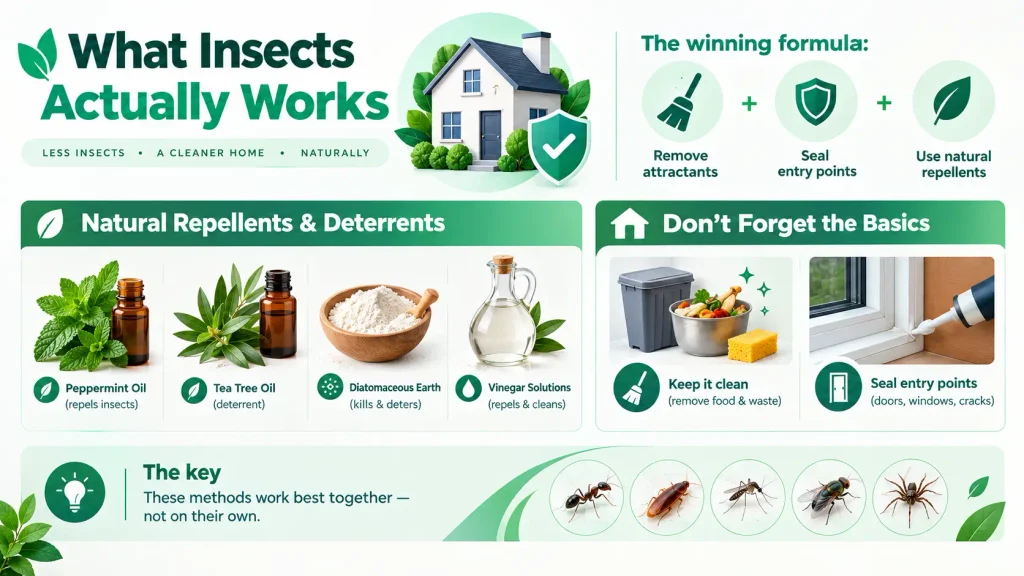
The most effective natural approach combines three things: removing what attracts insects in the first place, sealing the entry points they use to get inside, and applying targeted natural repellents in high-activity areas. Essential oils like peppermint and tea tree, diatomaceous earth, and vinegar-based cleaning solutions all have genuine repellent or deterrent properties when used correctly. None of these methods work as well in isolation as they do combined with basic sanitation and sealed entry points.
Why Natural Methods Alone Are Not Always Enough
Natural repellents work primarily by deterring insects from crossing a treated area, rather than eliminating an existing population the way a targeted insecticide might. This distinction matters, since a heavy, established infestation typically needs more than a spray of peppermint oil to resolve completely. These same methods can help you get rid of silverfish without chemicals.
Natural methods perform best as a combination of prevention and mild deterrence, particularly for occasional invaders like ants, flies, and spiders rather than deeply established colonies. Setting realistic expectations from the start, treating natural methods as one part of a broader approach rather than a single fix, leads to better results and less frustration.
Essential Oils That Repel Insects
Peppermint Oil
Peppermint oil is one of the most consistently effective natural repellents, disrupting the scent trails ants use to navigate and discouraging spiders from crossing treated surfaces. Diluting about ten to fifteen drops in a spray bottle of water and applying it around windowsills, doorframes, and baseboards provides a simple, low-cost treatment that can be reapplied weekly.
Tea Tree Oil
Tea tree oil works similarly to peppermint, with a strong scent that many insects, including ants and flies, tend to avoid when it is fresh. It also has mild antimicrobial properties, which offers a small added benefit when used in kitchen and bathroom cleaning solutions alongside its repellent effect.
Eucalyptus and Citronella
Eucalyptus oil and citronella are particularly effective against mosquitoes, making them a useful addition to outdoor spaces like patios and porches where mosquito activity tends to concentrate. Citronella candles or diffused oil create a localized barrier that reduces mosquito presence during outdoor use, though the effect diminishes with distance from the source.
Lavender
Lavender oil offers a milder repellent effect against moths and flies, and its pleasant scent makes it a popular choice for closets and linen storage where moth activity is a common concern. While less potent than peppermint or tea tree against a broader range of insects, lavender adds a useful, low-intensity option for specific problem areas.

Plants That Naturally Keep Bugs Away
Certain plants release natural compounds that insects tend to avoid, making them a practical addition to windowsills, entryways, or garden borders close to the house. Basil, planted near kitchen windows or doorways, has a reputation for deterring flies and mosquitoes while also serving a practical culinary purpose.
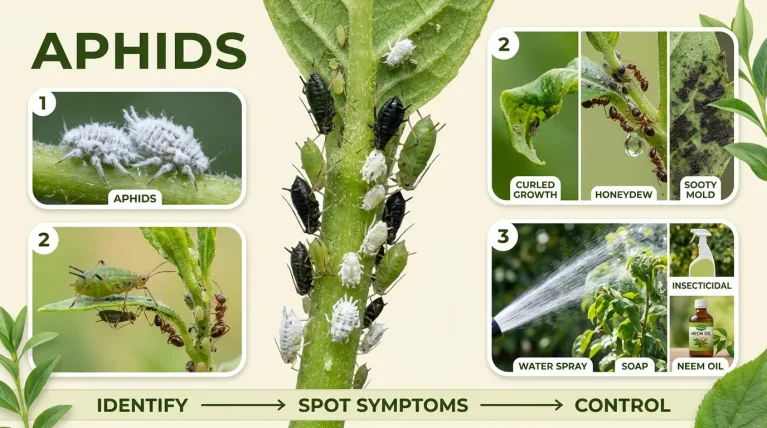
Marigolds are commonly planted around garden borders and entryways for their ability to deter aphids and certain garden pests, thanks to a compound in their roots and leaves that many insects find unappealing. Lemongrass, which contains citronella naturally, works well in outdoor pots near patios and seating areas where mosquito activity is a concern.
Mint, grown in a contained pot rather than directly in garden soil, deters ants and spiders effectively, though its aggressive growth habit makes containment important to avoid it overtaking a garden bed. They’re also useful if you’re trying to get rid of cockroaches naturally. Combining a few of these plants near entry points and outdoor living spaces creates a layered natural barrier that works alongside other repellent methods.
Household Ingredients That Work as Natural Repellents
Vinegar
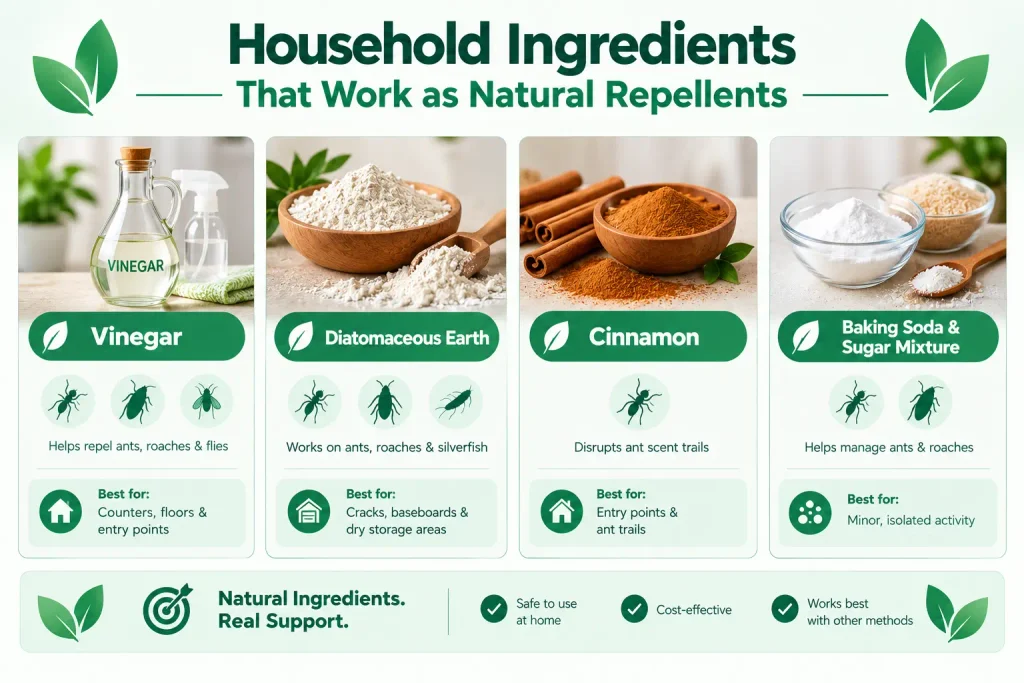
A vinegar and water solution used for regular cleaning disrupts ant scent trails and removes food residue that attracts a range of insects, making it a genuinely useful dual-purpose cleaning and repellent option. Wiping down counters, floors, and entry points with this solution regularly helps maintain both cleanliness and a mild deterrent effect.
Diatomaceous Earth
Food-grade diatomaceous earth works mechanically rather than through scent, damaging the exoskeleton of crawling insects like ants, roaches, and silverfish through microscopic sharp edges that cause dehydration over time. It needs to stay dry to remain effective, making it best suited for cracks, baseboards, and dry storage areas rather than damp locations.
Cinnamon
Ground cinnamon, sprinkled near entry points or ant trails, can disrupt their scent-based navigation similarly to peppermint, offering a low-cost option using an ingredient most households already have. It works best as a supplementary measure alongside other methods rather than a standalone solution for an established ant problem.
Baking Soda and Sugar Mixtures
A mixture of baking soda and sugar can help manage small ant or roach activity by disrupting digestion when ingested, though results tend to be slower and less consistent compared to more targeted treatments like boric acid. This approach works best for minor, isolated activity rather than a significant existing infestation.
Sealing and Sanitation: The Foundation of Any Natural Method
No natural repellent performs well if insects have an easy path indoors and a reliable food source waiting once they arrive. Sealing gaps around doors, windows, utility penetrations, and foundation cracks removes the most common entry points insects use to move from outside to inside.
Cleaning up food residue promptly, storing dry goods in sealed containers, and taking out trash regularly eliminate the food sources that draw insects toward a kitchen in the first place. Fixing minor leaks and reducing standing water, both indoors and in gutters or plant saucers outdoors, removes the moisture many insects depend on to survive and reproduce.
Room-by-Room Natural Prevention Tips
Kitchen
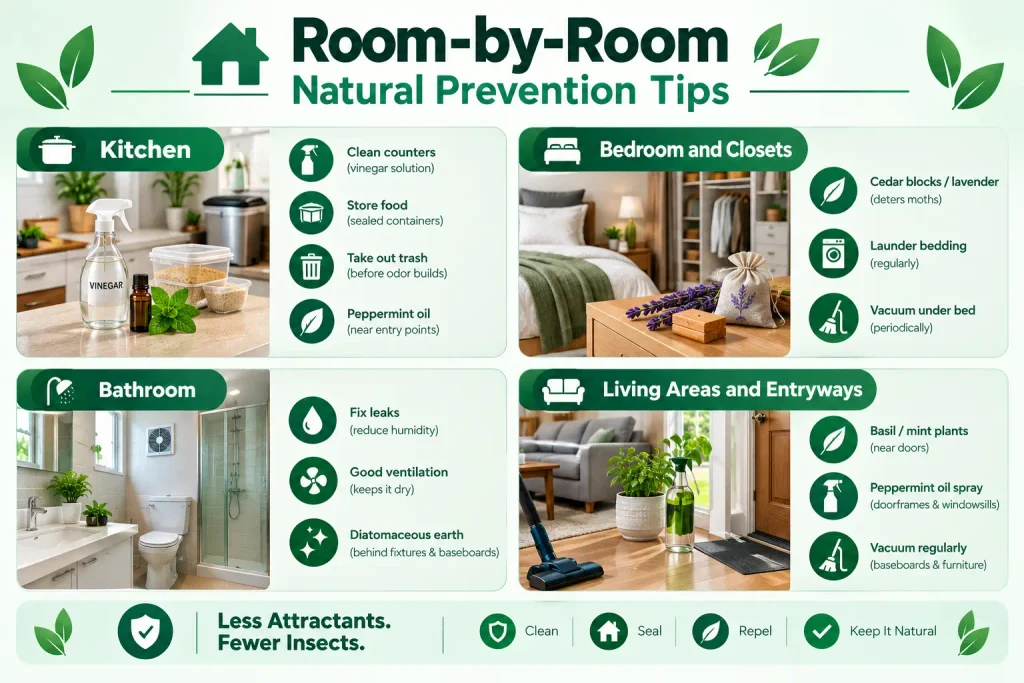
Wiping counters with a vinegar solution, storing food in sealed containers, and taking out trash before it accumulates odor all reduce the main attractants that draw ants, flies, and roaches toward this high-traffic area. Placing a small dish of diluted peppermint oil near entry points under the sink or behind appliances adds an extra layer of deterrence.
Bedroom and Closets
Cedar blocks or sachets filled with dried lavender help deter moths in closets and drawers, protecting stored clothing and linens without synthetic mothballs. Keeping bedding laundered regularly and vacuuming under the bed periodically reduces the hidden buildup that can attract dust mites and occasional insect activity.
Bathroom
Fixing any leaks promptly and ensuring good ventilation reduces the humidity that attracts silverfish and other moisture-loving insects. A light dusting of diatomaceous earth behind fixtures and along baseboards, kept dry, adds a passive layer of protection in this typically damp space.
Living Areas and Entryways
Placing potted basil or mint near entry doors, combined with a peppermint oil spray along doorframes and windowsills, creates a natural barrier at the points insects are most likely to attempt entry. Regular vacuuming, particularly along baseboards and behind furniture, catches early activity before it becomes a more noticeable problem.
Natural Outdoor Barriers
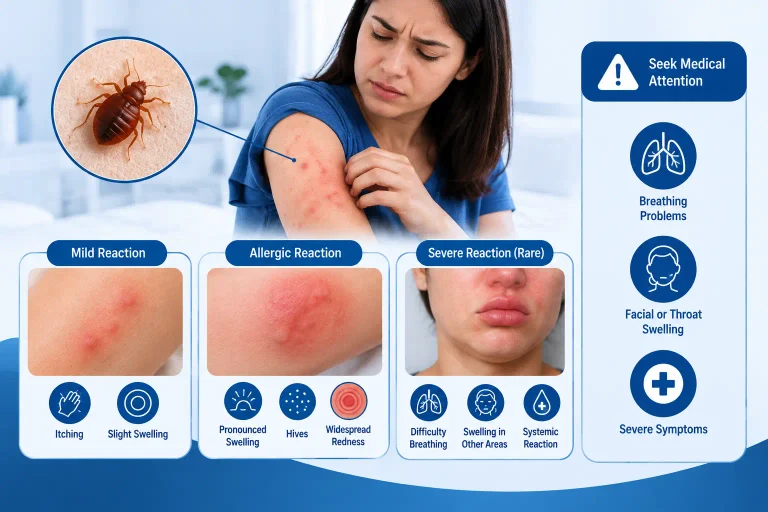
Trimming vegetation and tree branches away from the exterior walls removes bridges that many insects and spiders use to reach windows and rooflines directly. Keeping mulch and leaf litter a short distance from the foundation reduces the sheltered, moisture-retaining conditions that attract insects toward the base of a home. For bed bugs specifically, pair this with what kills bed bugs instantly.
Planting a border of naturally repellent plants like marigolds, lemongrass, and mint around the perimeter creates a layered outdoor barrier that works alongside indoor prevention methods. Maintaining gutters to prevent standing water, and addressing any drainage issues near the foundation, removes one of the most common outdoor breeding sites for mosquitoes specifically.
Safety Considerations for Kids and Pets
Essential oils, while natural, are concentrated compounds that can cause skin irritation or digestive upset in pets if ingested directly or applied undiluted. Keeping diluted sprays out of reach of curious pets and children, and avoiding direct application to skin without proper dilution guidance, keeps these natural methods safe for the whole household.
Certain plants used for insect deterrence, including some varieties of mint and specific essential oil sources, can be mildly toxic to cats or dogs if chewed or ingested in quantity. Checking a specific plant or oil against a reliable pet safety resource before introducing it into a home with animals avoids an unintended health risk while still benefiting from the repellent effect.
When Natural Methods Are Not Enough
A large, established infestation, particularly involving termites, bed bugs, or a significant cockroach population, typically requires more than natural repellents to resolve completely. Natural methods work best as prevention and mild deterrence, and recognizing when a problem has moved beyond that scope saves time compared to repeatedly trying home remedies against a population that has already taken hold.
Signs that professional treatment is worth considering include repeated sightings despite consistent natural prevention, visible structural damage, or evidence of a large, established colony rather than occasional wandering insects. Combining natural prevention with a single, targeted professional treatment often produces more reliable long-term results than relying on either approach exclusively.
Common Mistakes People Make With Natural Repellents
Expecting a single application of an essential oil spray to solve an ongoing infestation is one of the most common mistakes, since natural repellents work through consistent, repeated application rather than a one-time fix. Skipping the sealing and sanitation steps while relying entirely on scent-based deterrents also limits effectiveness, since insects will keep finding new paths in if entry points remain open.
Using undiluted essential oils directly on skin, furniture, or surfaces that pets frequently contact risks irritation without adding any meaningful benefit over a properly diluted solution. Spiders can also be deterred using similar techniques — see how to kill a spider safely if needed. Assuming every natural method works equally well against every insect is another frequent oversight, since a repellent effective against ants may do very little against a moth or roach problem.
Frequently Asked Questions
Conclusion
Keeping insects away from home naturally works best as a layered approach rather than relying on any single spray, plant, or oil to do all the work. Sealing entry points and removing food and moisture sources form the real foundation, while essential oils, deterrent plants, and household ingredients like vinegar and diatomaceous earth add meaningful, if secondary, reinforcement. Matching the right method to the right insect, and reapplying consistently rather than expecting a one-time fix, makes the difference between a natural approach that actually works and one that only smells nice. For anything beyond occasional, manageable activity, running a photo through our bug identifier tool helps confirm exactly what you are dealing with, so the right combination of natural prevention and, if needed, professional treatment can be applied with confidence.