What Do Ladybugs Eat? Their Diet in the Wild and at Home
Ladybugs are one of the few insects most people are happy to see, and their diet is a big part of why. A single ladybug can eat dozens of aphids in a day, which makes it one of the most effective natural pest controllers available to any garden or farm.
Our bug identifier tool can confirm whether the spotted beetle on your plant is actually a true ladybug or a similar-looking species, which matters more than people expect since diet and behavior differ slightly between them.
This article covers exactly what ladybugs eat at every stage of life, what to feed one if you catch it, and how their diet explains why gardeners actively try to attract them. It also covers the difference between true ladybugs and Asian lady beetles, since the two are often confused despite some real differences in habit and appearance.
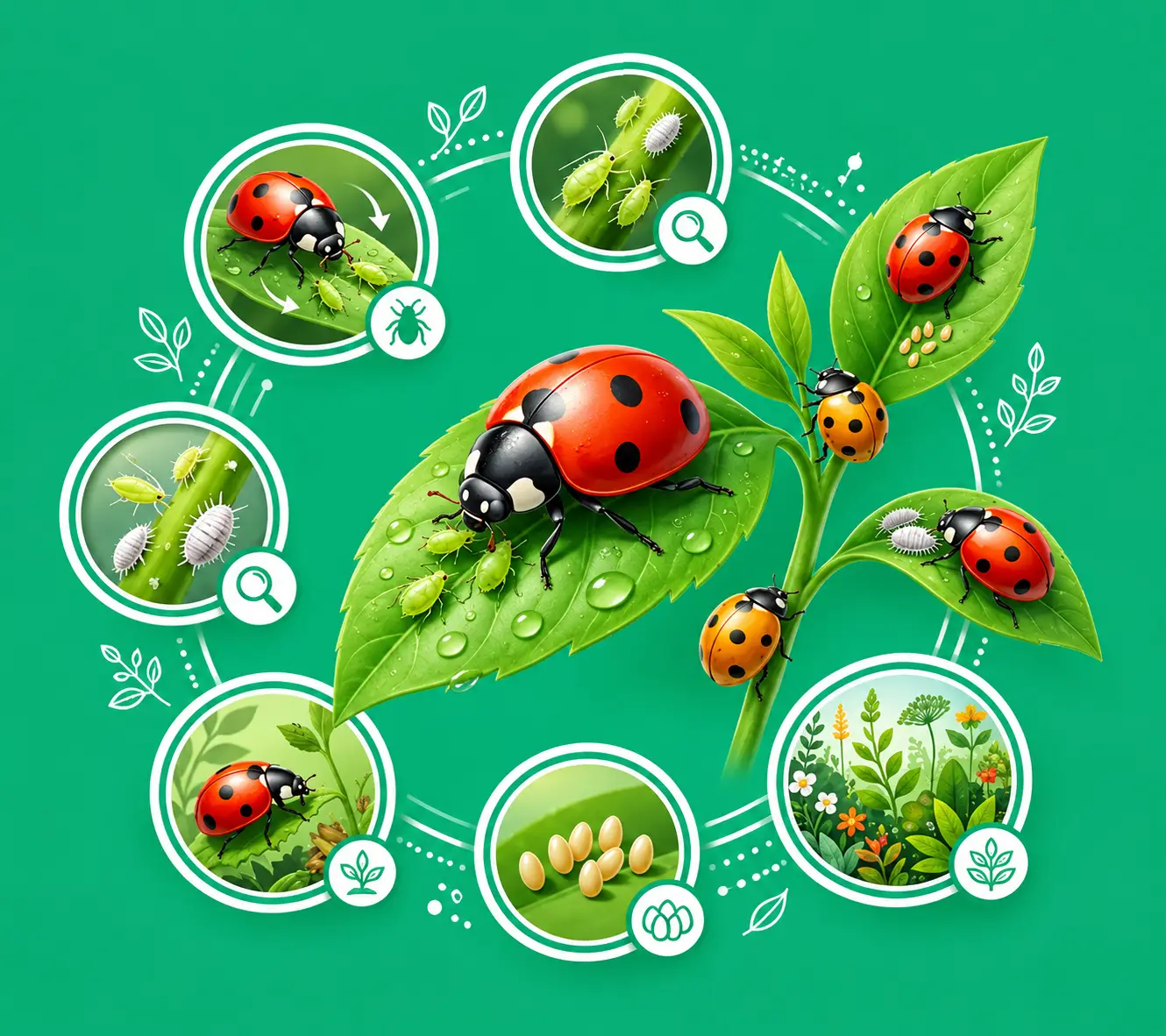
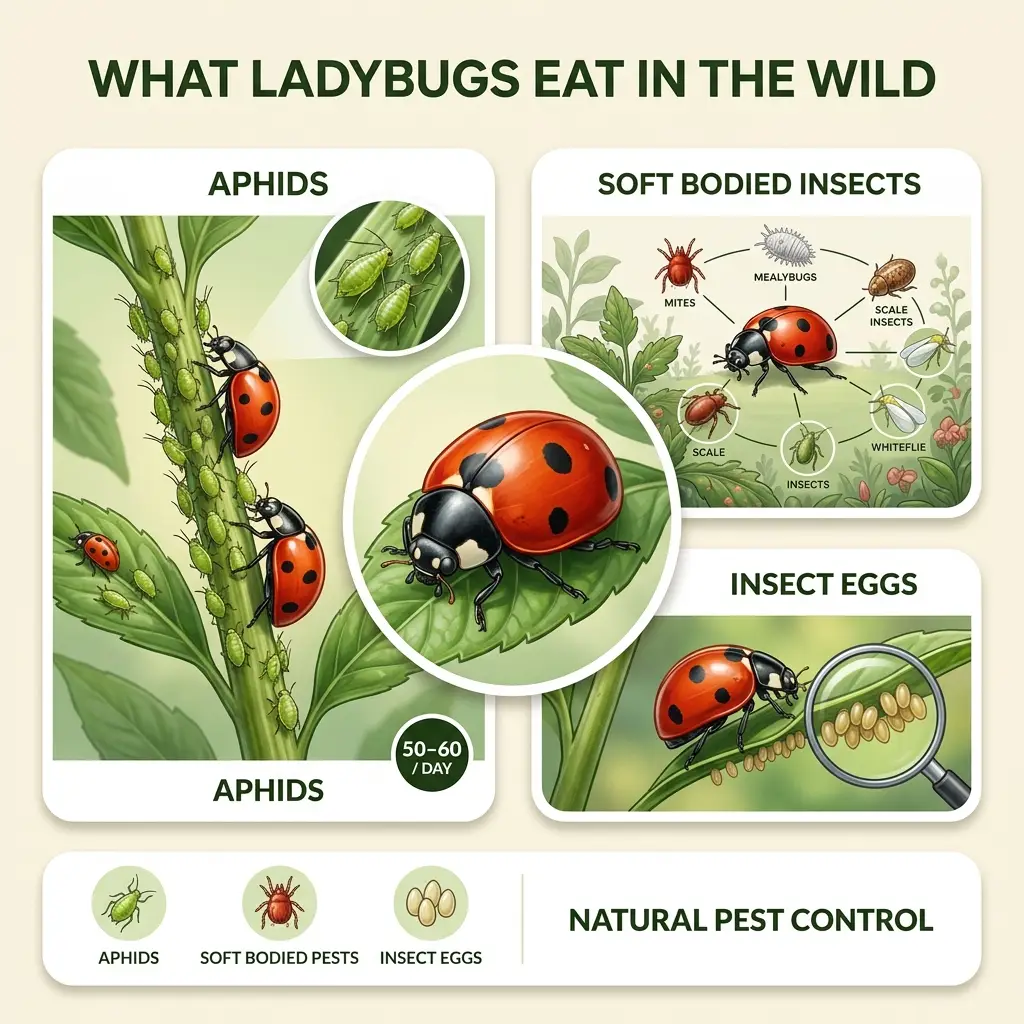
Ladybugs primarily eat aphids, along with other small, soft-bodied insects like mites, scale insects, and mealybugs. A single adult ladybug can consume dozens of aphids per day, and over its lifetime that number can reach into the thousands. This appetite for plant-damaging pests is the main reason ladybugs are considered beneficial insects rather than a nuisance in most gardens.
What Ladybugs Eat in the Wild
Aphids
Aphids make up the bulk of a typical ladybug’s diet, since these small, sap-sucking insects are abundant on garden plants and easy for a ladybug to catch and consume. A single ladybug can eat between 50 and 60 aphids in a single day, and some particularly hungry individuals eat even more when aphid populations are dense.
Other Soft-Bodied Insects
Beyond aphids, ladybugs feed on mites, mealybugs, scale insects, and whiteflies, all of which share a similarly soft body that makes them easy prey. This varied diet means ladybugs remain useful in a garden even during periods when aphid numbers happen to be low, since they simply shift toward whatever soft-bodied pest is most available. They’re often found near tiny white bugs on plants, which they help control.
Insect Eggs
Ladybugs also eat the eggs of other insects, including some moth and beetle species, which adds another layer to their usefulness as a natural pest control option. This egg-eating habit helps reduce future pest populations before they even have a chance to hatch and cause additional plant damage.
What Ladybug Larvae Eat
Ladybug larvae eat the same general diet as adults, focusing heavily on aphids and other small, soft-bodied insects, though their appearance looks nothing like the familiar round, spotted adult form. Larvae have an elongated, somewhat alligator-shaped body, usually dark with orange or yellow markings, and many people mistake them for pests rather than recognizing them as beneficial ladybug offspring.
In fact, larvae are often even more voracious eaters than adults relative to their size, since they need substantial nutrition to fuel the rapid growth leading up to pupation. A garden with visible ladybug larvae is generally a strong sign that aphid populations are already being kept in check naturally.
Do Ladybugs Eat Plants
Most common ladybug species do not eat plants at all and rely entirely on other insects for nutrition, which is exactly why gardeners welcome them rather than treating them as pests. A small number of species, however, including the Mexican bean beetle, which is closely related and sometimes mistaken for a true ladybug, do feed on plant leaves and can cause noticeable damage to crops like beans and squash. You might also wonder if insects sleep between feeding cycles.
This distinction matters when identifying an unfamiliar beetle in a garden, since a plant-eating species found on damaged leaves is likely not a true, beneficial ladybug. Running a photo through an identifier tool clears up this kind of confusion quickly, especially when leaf damage is present alongside the beetle sighting.
What to Feed a Ladybug You Have Caught
Feeding Fresh Aphids
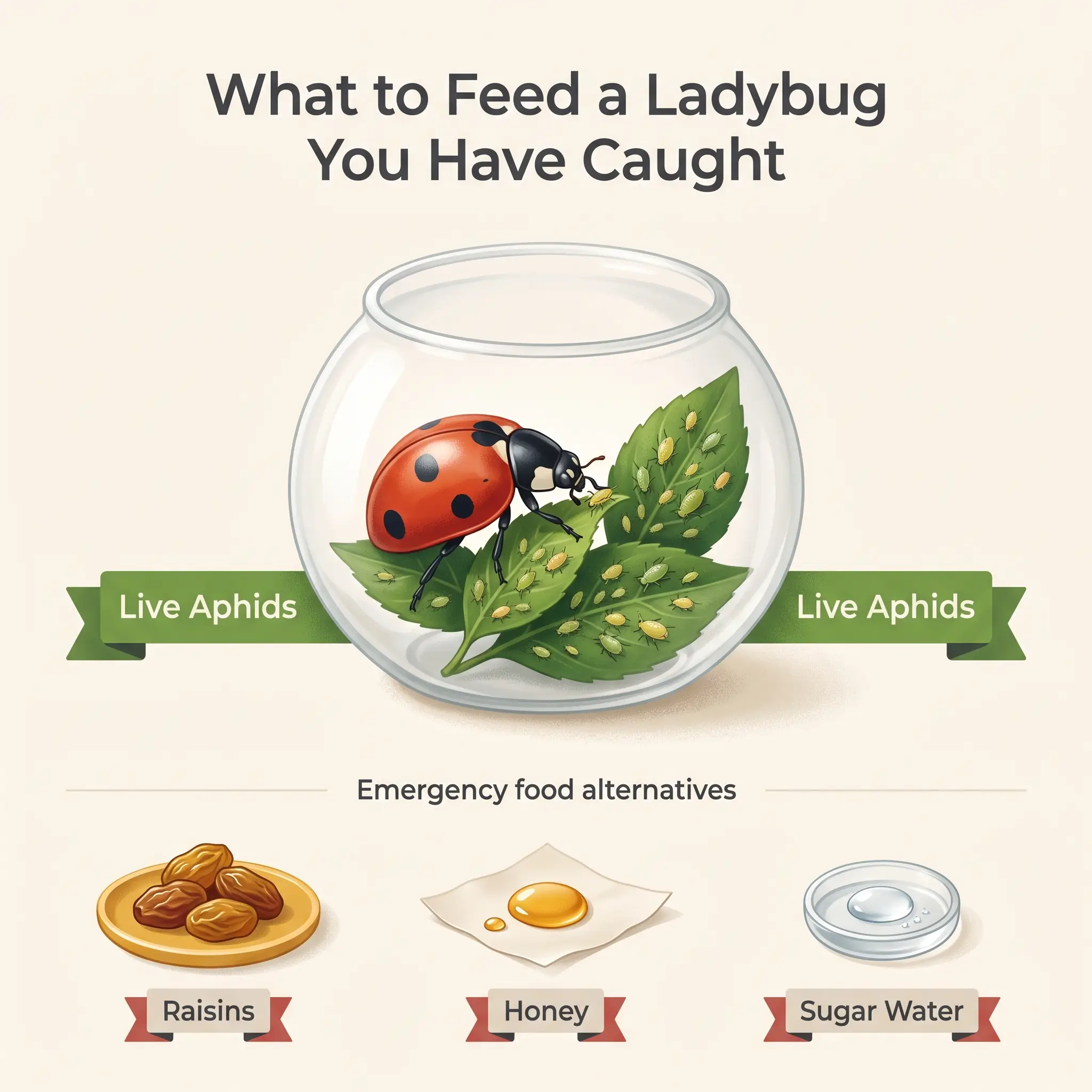
The most natural and effective food for a captured ladybug is a small supply of live aphids, which can often be found on nearby garden plants experiencing an infestation. Placing a few aphid-covered leaves inside a container with the ladybug provides both food and a familiar environment that closely matches its natural diet.
Alternative Foods
When aphids are not available, a few raisins soaked briefly in water to soften them can serve as an emergency food source, since the sugar content provides usable energy. A small drop of honey or sugar water placed on a piece of paper or cotton ball also works as a short-term substitute, though neither replaces the protein a ladybug gets from live insects over a longer period.
Keeping a captured ladybug for more than a day or two without access to actual prey insects is not ideal, since sugar-based substitutes lack the nutrients needed for long-term health. Releasing the ladybug back outdoors within a short window, once observation or a photo has been taken, is generally the better approach for the insect’s wellbeing.
How Often Ladybugs Need to Eat
Adult ladybugs need to eat regularly, often multiple times throughout the day, given how quickly their small bodies process food while hunting actively across leaves and stems. During periods of low prey availability, ladybugs can survive for a few days without eating by drawing on stored fat reserves, though prolonged shortages affect their ability to reproduce and remain active.
This need for a steady food supply is part of why ladybug populations naturally follow aphid populations closely, moving into areas with heavy infestations and dispersing once the food source declines. Gardeners hoping to keep ladybugs around benefit from maintaining at least a small, ongoing population of aphids or other prey rather than eliminating pests completely through other means.
What Ladybugs Drink
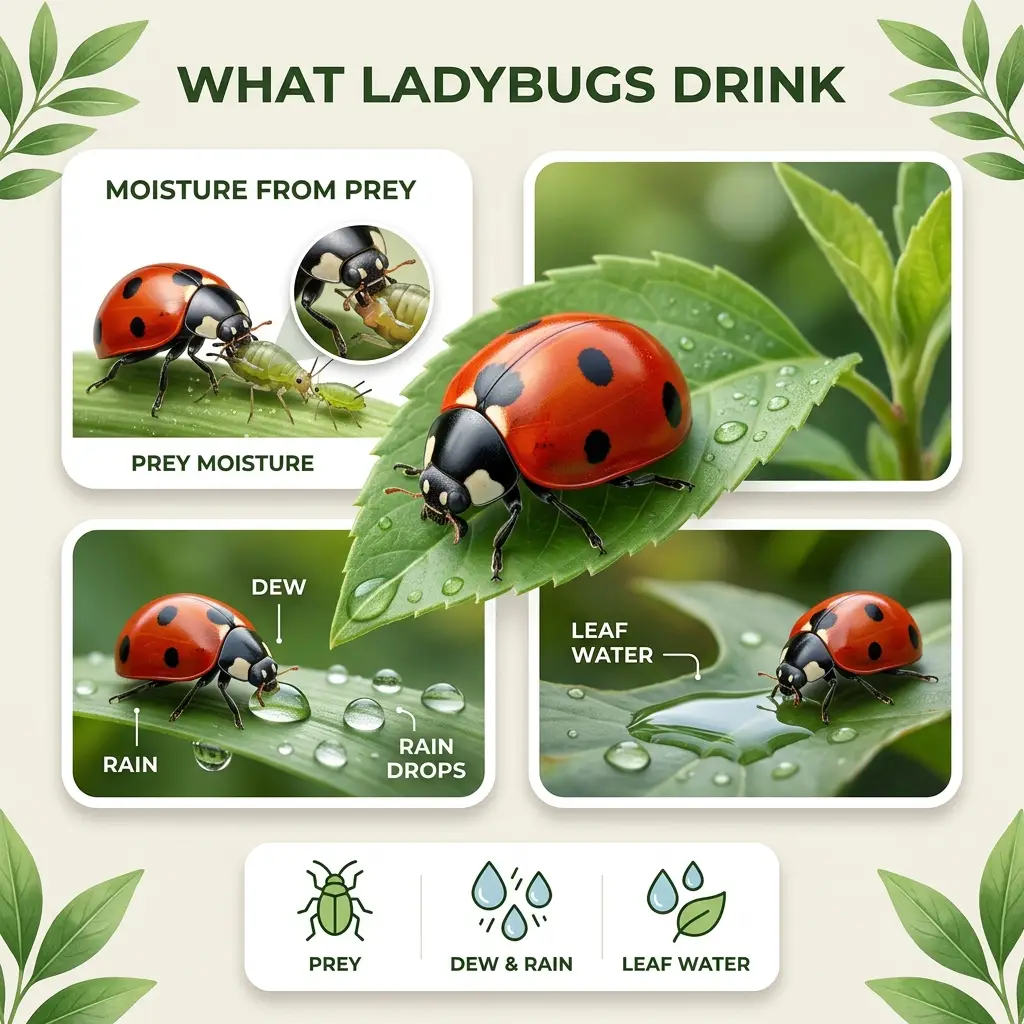
Ladybugs get most of their hydration from the body fluids of the insects they eat, since aphids and other soft-bodied prey contain a significant amount of moisture. In drier conditions, ladybugs will also drink from dew, rain droplets, or standing water on leaves when it is available nearby.
A shallow dish of water with small stones or marbles added, giving insects a safe place to land without drowning, can help support ladybug populations in a garden during particularly dry stretches. This kind of simple water source is often overlooked compared to food availability, despite playing a real role in keeping local ladybug populations active and healthy.
Why Ladybugs Are Considered Beneficial Insects
The combination of a large appetite and a strong preference for common garden pests is exactly why ladybugs are considered one of the most beneficial insects a garden can host. Farmers and gardeners alike often actively encourage ladybug populations specifically to reduce reliance on chemical pesticides for controlling aphids and similar pests.
A healthy ladybug population can meaningfully reduce aphid damage on vegetables, roses, and other commonly affected plants without any additional intervention. This natural pest control effect is strong enough that some gardening suppliers sell live ladybugs specifically for release in gardens dealing with aphid problems.
Asian Lady Beetles vs True Ladybugs: Diet Differences
Asian lady beetles, a closely related species often confused with true ladybugs, share a nearly identical diet centered on aphids and other soft-bodied insects. The main practical difference shows up in behavior rather than diet, since Asian lady beetles tend to gather indoors in larger numbers during cooler months, seeking shelter in wall voids and window frames.
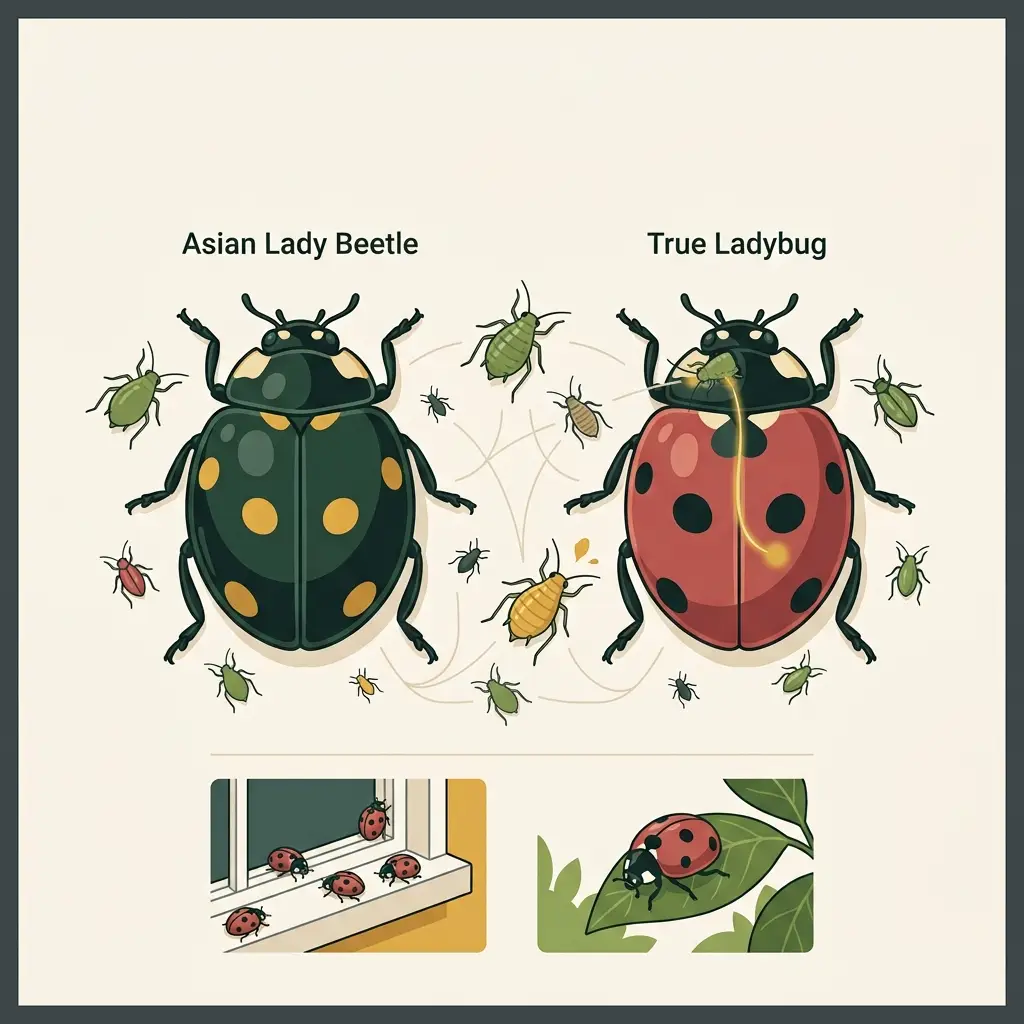
Physically, Asian lady beetles often show more variation in spot count and color, along with a small, white, M-shaped marking behind the head that true ladybugs typically lack. Since both species provide similar pest control benefits outdoors, the main reason to tell them apart usually comes down to managing indoor gatherings rather than any meaningful difference in what they eat.
How to Attract Ladybugs to a Garden
Planting flowers like dill, fennel, yarrow, and marigold provides both shelter and, in some cases, pollen that supplements a ladybug’s diet during periods when prey insects are scarce. Allowing a small, controlled aphid population to persist on a few plants, rather than eliminating every pest immediately, gives ladybugs a reason to stay rather than move on to a different area.
Avoiding broad-spectrum pesticides is essential, since these products kill ladybugs alongside the pests they are meant to target, undoing any natural pest control benefit already established. Providing a shallow water source and some ground cover for shelter rounds out the conditions that make a garden genuinely attractive to ladybugs looking for both food and a place to settle. Their diet is quite different from a praying mantis, which is a predator.
Common Mistakes When Feeding or Attracting Ladybugs
Assuming sugar water or honey can fully replace live prey over an extended period is one of the more common mistakes, since neither provides the protein ladybugs need for sustained health and reproduction. Eliminating every aphid in a garden immediately, rather than tolerating a small, manageable population, often removes the very food source that would keep ladybugs around long-term.
Using pesticides while simultaneously trying to attract ladybugs is a contradictory approach that undermines the entire goal, since most broad treatments harm ladybugs just as effectively as the pests they target. Confusing a plant-eating species, like the Mexican bean beetle, with a true ladybug can also lead to misplaced blame for leaf damage that a beneficial ladybug never actually caused.
Frequently Asked Questions
Conclusion
A ladybug’s diet, built almost entirely around aphids and other soft-bodied insects, explains both its usefulness in a garden and how to care for one if it ends up in a jar for a closer look. Fresh aphids remain the best food for a captured ladybug, with sugar water or a softened raisin serving only as a short-term backup rather than a long-term solution. Understanding this diet also clears up common confusion with look-alike species, since a plant-eating beetle found on damaged leaves is unlikely to be a true, beneficial ladybug. Whether the goal is identifying an unfamiliar beetle or simply attracting more natural pest control to a garden, knowing exactly what ladybugs eat turns a curious sighting into a genuinely useful piece of gardening knowledge.