How to Get Rid of Silverfish Insects for Good
A silverfish darting across the bathroom floor at night is easy to dismiss as a harmless oddity, until it starts showing up near books, clothing, or stored papers where it can actually cause damage.
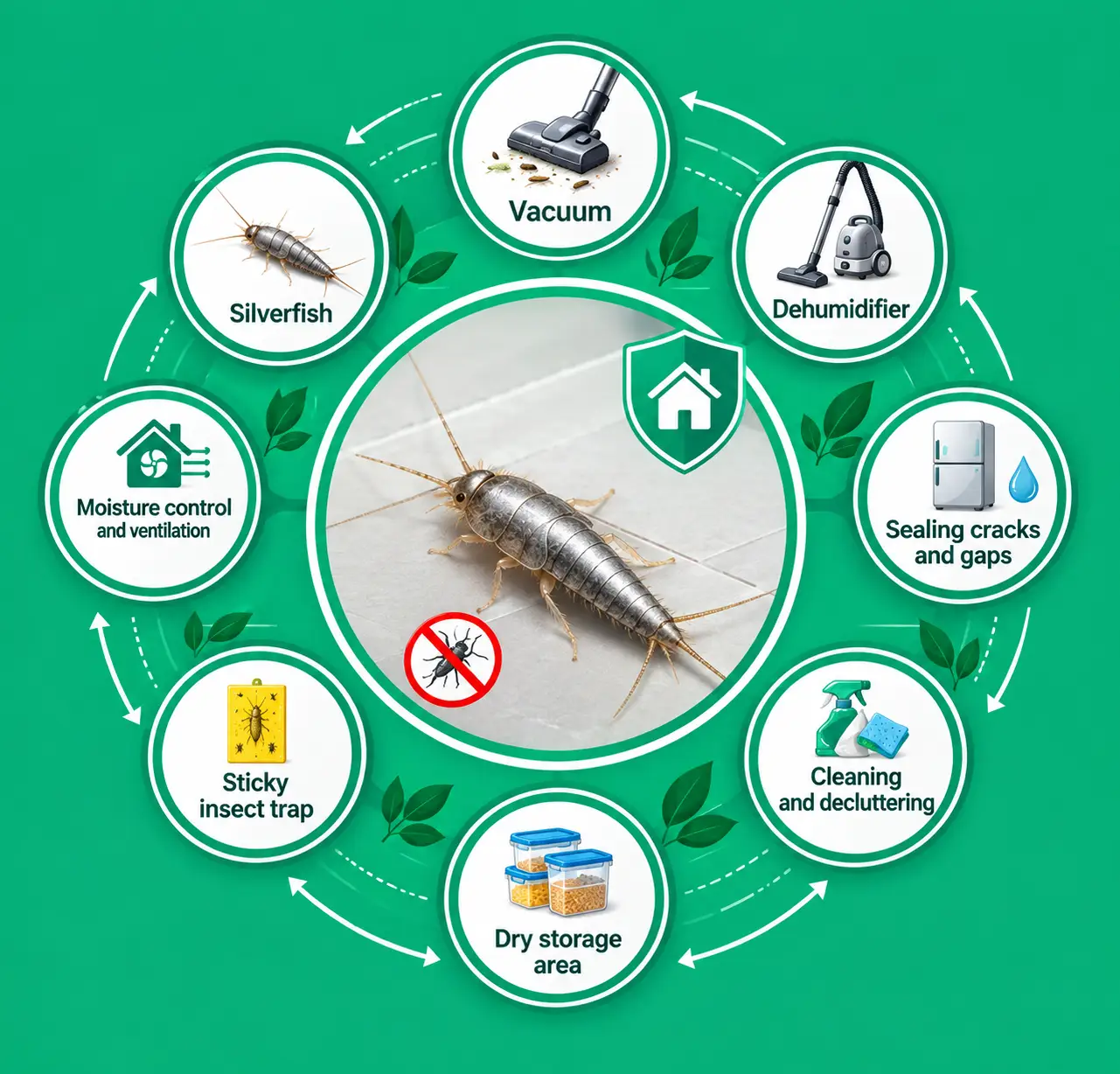
Getting rid of silverfish for good takes more than a single spray, since these insects thrive specifically on humidity and the starchy materials found in paper, glue, and certain fabrics. Our bug identifier tool can confirm a silverfish sighting from a photo, which helps rule out similar-looking insects before starting treatment.
This article covers every natural and instant-kill method that actually works against silverfish, along with how to protect vulnerable items like books and clothing and what keeps an infestation from coming back. It also answers the question people ask most often after a first sighting: whether silverfish pose any real risk to people at all.
What Are Silverfish and Are They Harmful
Silverfish are small, wingless insects with a distinctive silvery, tapered body and long antennae, moving in a quick, fish-like wriggle that gives them their name. They feed on starches and sugars found in book bindings, wallpaper glue, certain fabrics, and even dried food, making them a genuine concern for anyone storing paper goods or clothing long-term. If you’re also spotting other pests, see our guide on small black bugs in the house.
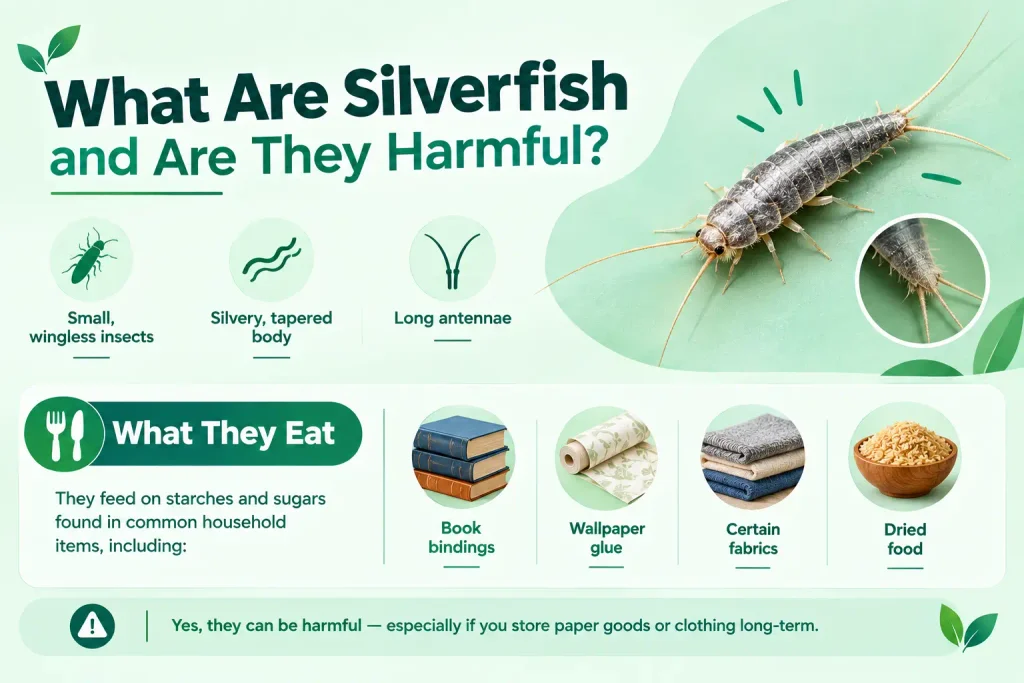
Despite their unsettling appearance, silverfish do not bite, sting, or transmit disease to people or pets, making them a property concern rather than a health risk. Their real damage shows up gradually, through chewed edges on paper, faint yellow staining on fabric, or small holes in stored clothing, rather than any direct harm to a person encountering one.
Natural Methods to Get Rid of Silverfish
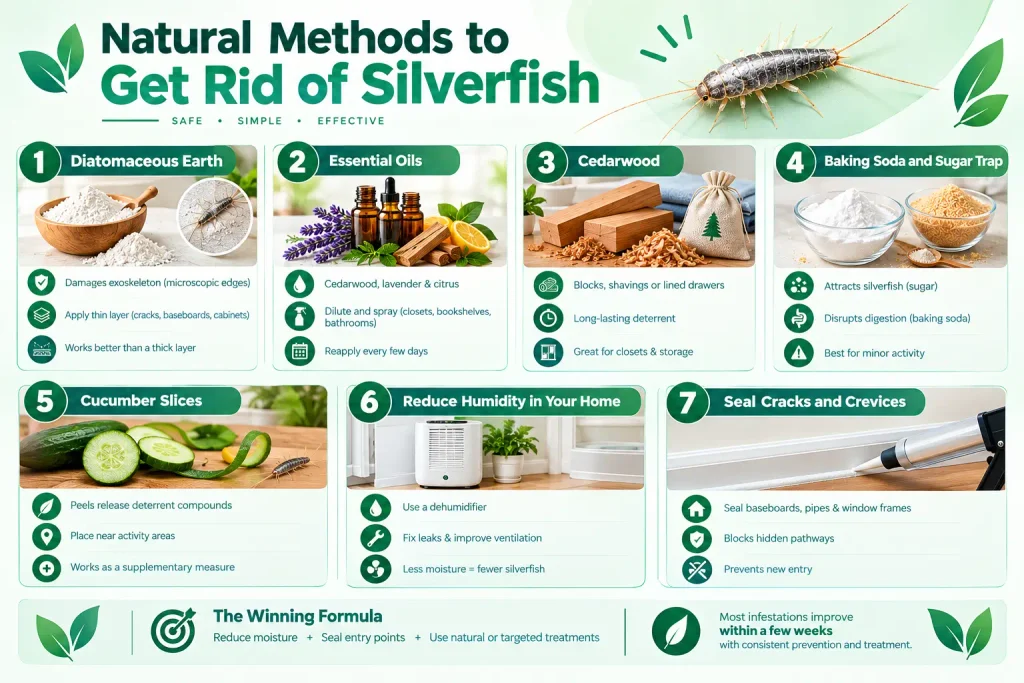
Diatomaceous Earth
Food-grade diatomaceous earth works mechanically rather than chemically, damaging a silverfish’s exoskeleton through microscopic sharp edges that cause dehydration over time. Applying a thin layer in cracks, along baseboards, and inside cabinets works better than a thick, visible layer, since silverfish need only light contact to be affected.
2. Essential Oils
Cedarwood, lavender, and citrus essential oils all have a repellent effect on silverfish, disrupting the humid, undisturbed conditions they prefer when diluted and sprayed around closets, bookshelves, and bathroom corners. Reapplying every few days maintains the effect, since the scent fades and loses potency over time.
3. Cedarwood
Beyond the essential oil form, cedar blocks, shavings, or lined drawers offer a longer-lasting, low-maintenance deterrent for closets and storage areas where clothing and papers are kept. This method works particularly well as ongoing prevention rather than an active treatment for a current infestation already established elsewhere in a home.
4. Baking Soda and Sugar Trap
Mixing baking soda with a small amount of sugar to attract silverfish can disrupt their digestive system when ingested, offering a low-cost trap using ingredients most households already have. Results tend to be slower than diatomaceous earth, making this method better suited to minor activity than an established infestation.
5. Cucumber Slices
Cucumber peels placed near suspected activity are sometimes used as a natural deterrent, since some silverfish appear to avoid the compounds released as the peel dries and curls. This method works best as a minor supplementary measure rather than a primary treatment, given the limited and inconsistent evidence behind its effectiveness.
6. Reduce Humidity in Your Home
Since silverfish depend heavily on moisture to survive, running a dehumidifier in basements, bathrooms, and other consistently damp areas removes one of their most essential survival conditions. Fixing leaky pipes and improving ventilation in poorly aired rooms addresses the root cause far more effectively than any single spray or trap.
7. Seal Cracks and Crevices
Sealing gaps around baseboards, pipes, and window frames removes the hidden pathways silverfish use to move between wall voids and living spaces. This step also limits how easily new silverfish can enter from outside, complementing whatever treatment is already addressing an existing population indoors.
Getting rid of silverfish combines reducing humidity, sealing entry points, and applying targeted natural or instant-kill treatments like diatomaceous earth or a direct spray. Silverfish are drawn to damp, dark areas and starchy materials, so addressing moisture and food sources matters just as much as any single treatment product. Most infestations respond well to natural methods within a few weeks when combined consistently with prevention steps.
What Kills Silverfish Instantly
Instant Kill Options
A direct spray labeled for silverfish or general household insects kills on contact within seconds, making it useful for an individual silverfish spotted in the open. Boric acid, applied as a thin dust in cracks and along baseboards, also kills effectively, though it works somewhat more gradually than a direct spray since it relies on contact and ingestion during grooming.
Use With Caution
Both sprays and boric acid should be kept away from areas where children or pets have direct access, and boric acid specifically should never be applied to surfaces where food is prepared. Ventilating the area during and after spray application, and washing hands after handling boric acid, keeps these instant-kill methods effective without introducing unnecessary risk.
How to Protect Clothes and Books From Silverfish
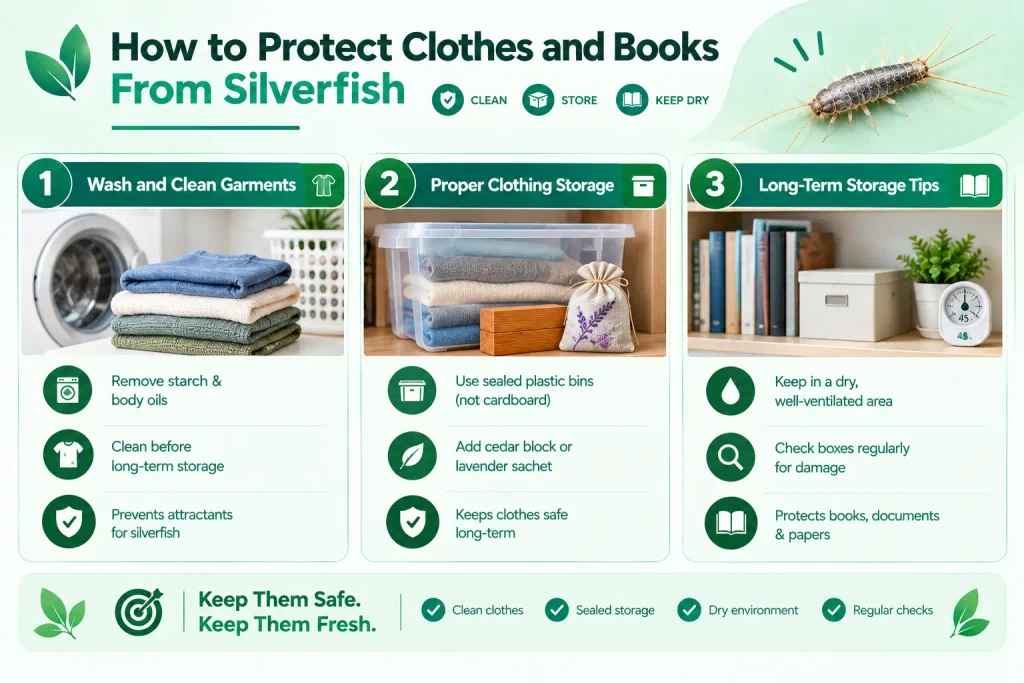
Wash and Clean Garments
Washing clothing before long-term storage removes the starch residue and body oils that attract silverfish in the first place, reducing the chance of damage during storage. This simple step matters more than people often realize, since even lightly soiled fabric left untouched for months becomes a more appealing target. Understanding what attracts silverfish in the first place will help prevent them from returning.
Proper Clothing Storage
Storing off-season clothing in sealed plastic bins rather than cardboard boxes prevents silverfish from chewing through the container itself to reach the fabric inside. Adding a cedar block or a sachet of dried lavender inside the bin provides an extra layer of deterrence for long-term storage.
Long-Term Storage Tips
Books, documents, and papers should be stored in a dry, well-ventilated area rather than a damp basement or garage, since humidity is the single biggest factor drawing silverfish toward paper goods. Periodically checking stored boxes for early signs of damage, rather than assuming long-term storage is maintenance-free, catches a developing problem before it spreads to additional items.
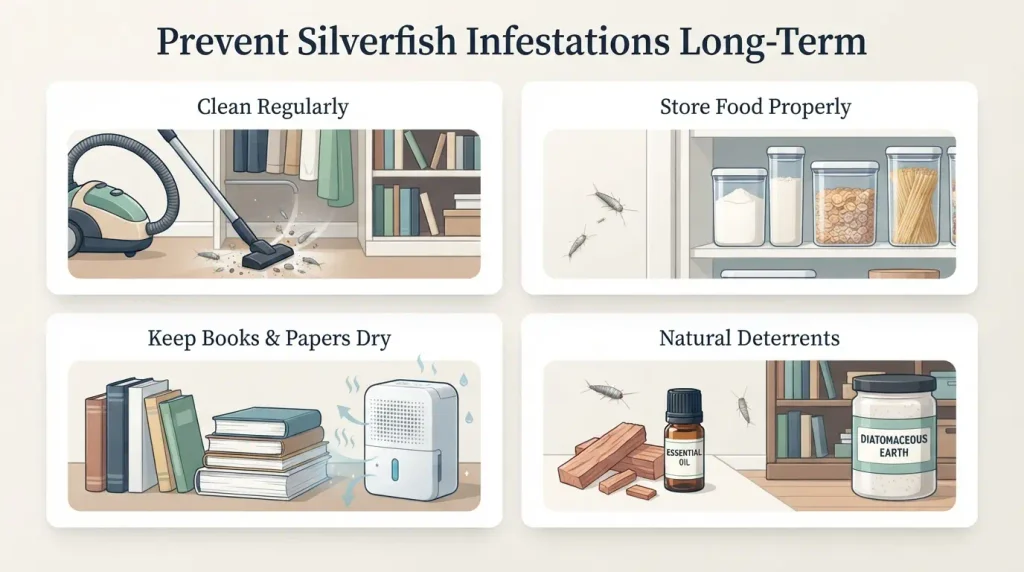
How to Prevent Silverfish Infestations Long-Term
Clean Regularly
Regular vacuuming of closets, bookshelves, and other rarely disturbed areas removes both silverfish and the dust and debris that support their food sources. This habit matters most in spaces that otherwise go untouched for weeks or months at a time.
2. Store Food Properly
Keeping dry goods like flour, cereal, and pasta in sealed containers removes an additional food source silverfish will exploit if given the chance. This step overlaps with general pantry pest prevention, offering a broader benefit beyond just silverfish control.
3. Keep Books and Papers Dry
Using a dehumidifier in rooms with significant paper storage, along with proper ventilation, protects both individual books and larger paper collections from the humidity silverfish rely on most. This preventive step is particularly important in climates or seasons prone to higher indoor humidity.
4. Use Natural Deterrents
Maintaining a light, ongoing presence of cedar, essential oils, or diatomaceous earth in vulnerable storage areas provides continued protection well after an initial infestation has been addressed. This ongoing layer of prevention is far easier to maintain than reacting to a new infestation after it has already taken hold.
Common Mistakes When Dealing With Silverfish
Treating only the visible silverfish while ignoring the humidity or moisture problem drawing them in usually leads to a recurring issue rather than a lasting solution. Storing valuable books, papers, or clothing in cardboard boxes in a damp basement, without any additional protection, significantly increases the risk of silverfish damage over time. Combine this with tips on how to keep insects away naturally for long-term results.
Applying boric acid or instant sprays without addressing entry points allows new silverfish to continue entering from outside even after an existing population has been treated. Assuming silverfish pose a health risk and reacting with excessive concern, rather than focusing on the practical property damage they can cause, also leads to more anxiety than the situation actually warrants.
Frequently Asked Questions
Conclusion
Getting rid of silverfish for good comes down to combining natural or instant-kill treatments with the humidity control and sealed entry points that remove their preferred living conditions entirely. Diatomaceous earth, essential oils, and reduced indoor humidity handle most infestations effectively, while proper storage protects vulnerable books and clothing from the specific damage silverfish are known for. Understanding that silverfish pose no real health risk, despite their startling appearance, helps put the situation in proper perspective as a property concern rather than something to fear. Running a quick photo through our bug identifier tool confirms the species with certainty, making sure the treatment plan actually matches the insect causing the problem.