Briefly and concisely explain what you do for your audience
Spotting a spider on the wall or tucked into a corner of the garage raises one question almost immediately: is this something to worry about? Most spiders are harmless, but a handful can deliver a bite serious enough to need medical attention, so telling them apart matters more than people usually assume.
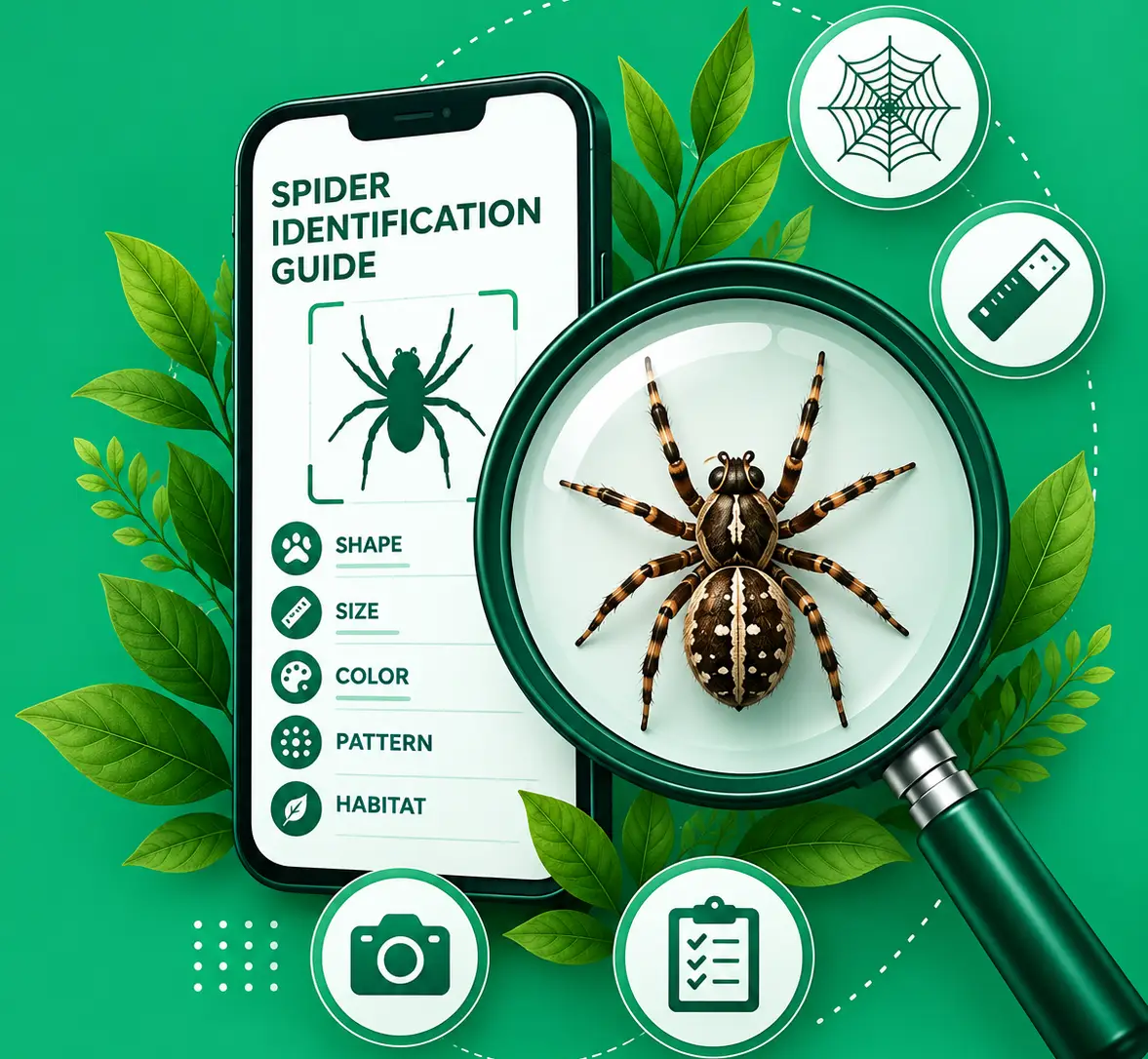
Our bug identifier tool makes this process fast by matching a photo of the spider against a detailed species database instead of leaving you to compare blurry pictures online.
This article breaks down exactly how spider identification works, which physical features actually matter, and how to recognize the species you are most likely to run into around a typical home. It also covers spider bites directly, since plenty of people search for this topic after noticing a mark on their skin rather than the spider itself. By the end, you should be able to look at a spider with real confidence instead of guessing.
What It Means to Identify a Spider Correctly
Identifying a spider correctly means matching it to its actual species, or at minimum narrowing it down to a small, closely related group, rather than relying on a vague impression like “big and brown.” For a full interactive breakdown, use our spiders identifier tool. Color alone rarely settles the question, since many unrelated species share similar shading and only differ in leg proportions, eye arrangement, or marking patterns.
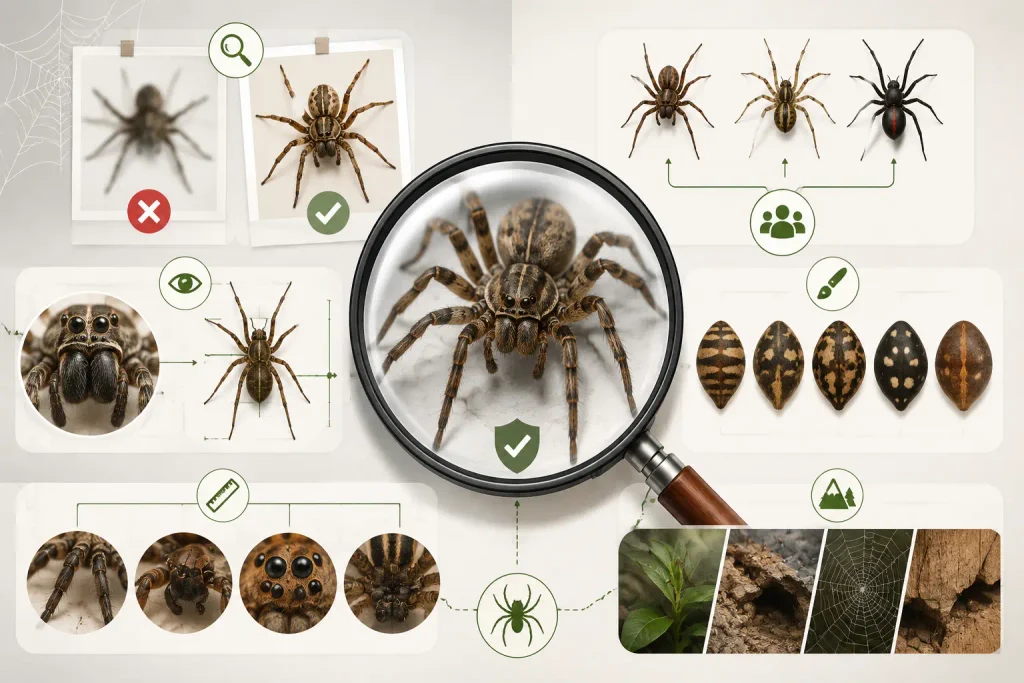
A correct identification changes what you actually do next. Mistaking a harmless wolf spider for something dangerous leads to unnecessary panic and wasted pest control spending, while dismissing a genuinely risky species as “just a spider” can delay treatment if a bite occurs. Getting the identification right the first time removes both of those risks.
How to Identify a Spider With Our Tool (Step-by-Step)
Our bug identifier handles spiders the same way it handles other insects, though a few extra details help narrow the result faster.
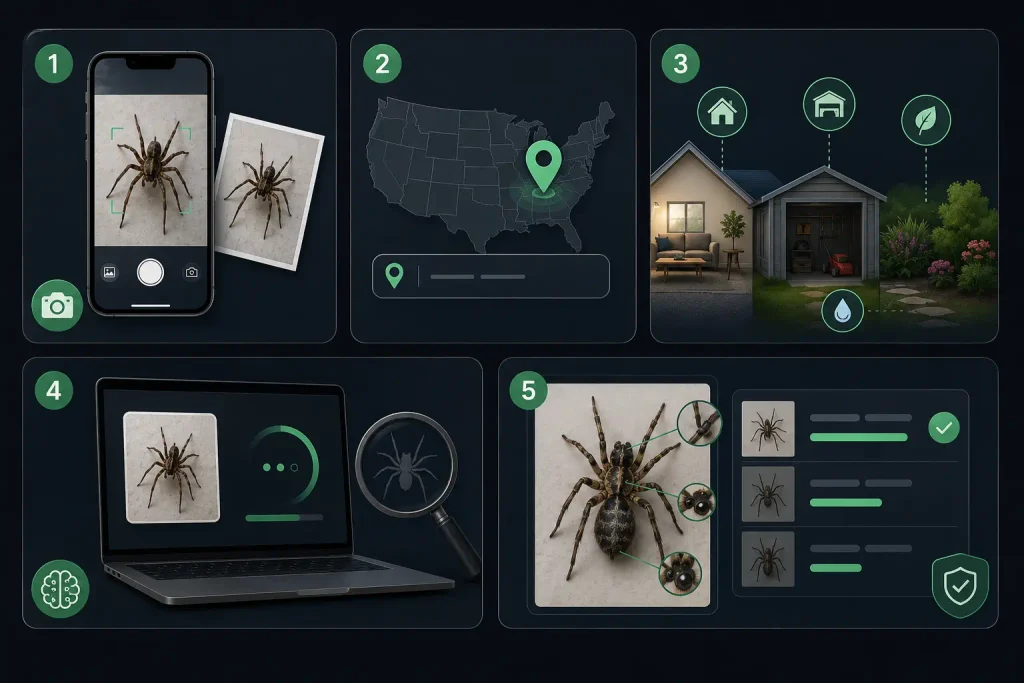
Step 1: Capture or Upload a Clear Photo
Open the tool and upload a photo, or take one directly if you are on mobile, keeping the spider as sharp and centered as possible. A top-down shot works best, since it clearly shows leg span, body shape, and any markings on the abdomen. Avoid using a flash directly on the spider, since it tends to wash out subtle color patterns that matter for accurate matching.
Step 2: Add Your Location
Enter your state or zip code when the tool asks for it, since spider species vary noticeably by region and climate. This narrows the results to species that actually live nearby rather than a global list that includes spiders you will never encounter.
Step 3: Note Where You Found It
Tell the tool whether the spider was indoors, in a garage or shed, in the garden, or near water, since habitat is one of the strongest clues for narrowing spider species. Some spiders only build webs in dry, undisturbed corners, while others hunt on the ground and never spin a web at all.
Step 4: Run the Identification
Submit the photo and details, and the tool returns a ranked list of likely matches along with a confidence score for each one. A high-confidence single match usually means the photo was clear enough to work with, while a spread of possibilities suggests trying a second angle.
Step 5: Review the Result Against the Photo
Compare the suggested species against your original photo, paying attention to leg thickness, body pattern, and eye arrangement rather than color alone. If a bite is involved or the spider was found in unusually large numbers, cross-check the result against the detailed species page the tool links to before deciding on next steps.
Key Physical Features That Separate One Spider From Another
A handful of physical traits do most of the work when telling spiders apart, and learning to spot them speeds up identification even before running a photo through any tool.
Body Shape and Size
Spiders generally split into two rough body types: those with a rounded, compact abdomen and those with a longer, more elongated one. Overall size matters too, since some species stay under a centimeter.
Leg Length and Thickness
Long, thin legs usually belong to spiders built for climbing walls and ceilings, while shorter, thicker legs often belong to ground hunters that rely on speed rather than webs. This single detail eliminates a large chunk of possible matches immediately.
Eye Pattern
Most spiders have eight eyes arranged in a specific pattern unique to their family, though this detail usually requires a fairly close, well-lit photo to see clearly. Species in the same family tend to share eye arrangements even when their coloring looks completely different.
Markings and Coloring
Distinct markings, like a violin shape, an hourglass, or a specific banding pattern on the legs, are often more reliable than overall color for narrowing down a species. Coloring can vary between individuals of the same species, but a marking pattern tends to stay consistent.
Web Type as an Identification Clue
The kind of web a spider builds, or whether it builds one at all, narrows the possibilities almost as much as the spider’s appearance. Orb weavers build the classic circular, wheel-shaped web most people picture when they think of a spider web, usually stretched between two fixed points outdoors.
Funnel-shaped webs, tapering into a hidden tunnel where the spider waits, point toward a different family entirely, often found in grass or low shrubs. Cobweb-style webs, made of irregular, tangled strands rather than a neat pattern, are typical of species that prefer dark corners indoors, including a few that carry a more serious bite risk. A shiny black body with a red hourglass points to an identified black widow spider.
Ground hunters, wolf spiders and jumping spiders among them, do not build webs to catch prey at all and instead rely on speed or a short pounce. Noting the web type, or its absence, alongside a photo gives our tool extra context that speeds up an accurate match.
Common Household Spiders and How to Recognize Them
A relatively small set of spiders account for most household sightings, and learning their basic look cuts down on how often a photo lookup is even necessary.
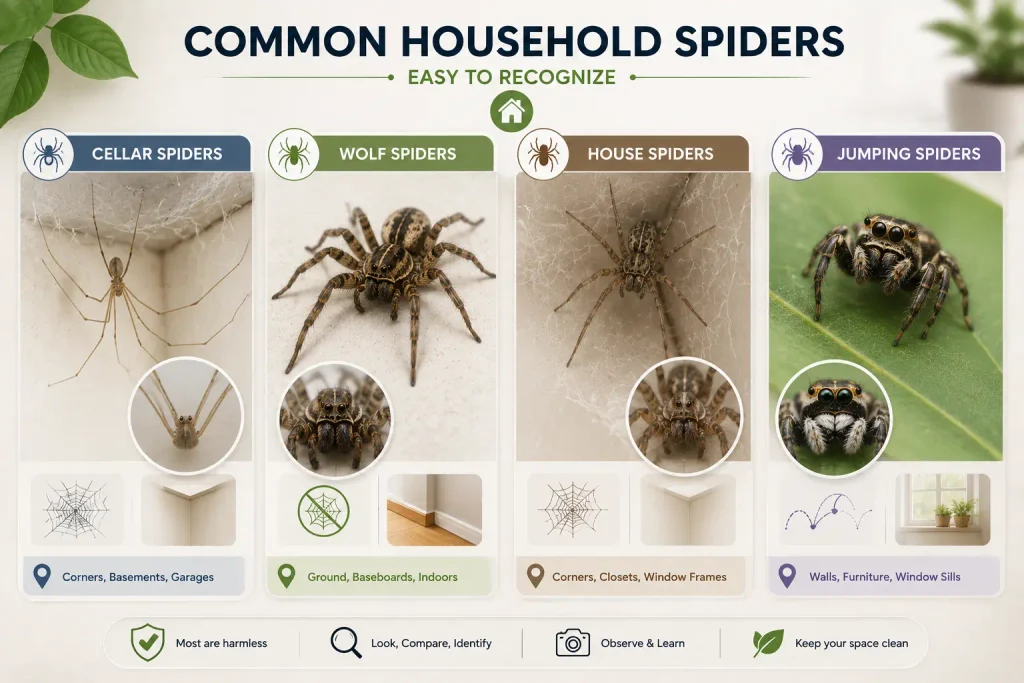
Cellar Spiders
Cellar spiders have long, thin legs and a small body, and they build loose, messy webs in corners, basements, and garages. They are harmless and often mistaken for daddy longlegs, though true daddy longlegs are not spiders at all and lack fangs entirely.
Wolf Spiders
Wolf spiders are stocky, fast-moving hunters with a mottled brown pattern, and they do not build webs to catch prey. They are often found on the ground or baseboards and can look intimidating due to their size, though they are not aggressive toward people.
House Spiders
Common house spiders are brown or tan with a rounded abdomen and build irregular cobwebs in undisturbed corners, closets, and window frames. They rarely bite and pose little risk even when a web appears overnight in a rarely used room.
Jumping Spiders
Jumping spiders are compact, fuzzy, and often have visible large front eyes, giving them a noticeably alert appearance compared to other species. They move in short, quick hops rather than crawling steadily, and they are curious but not dangerous to people.
Dangerous Spiders and Their Warning Signs
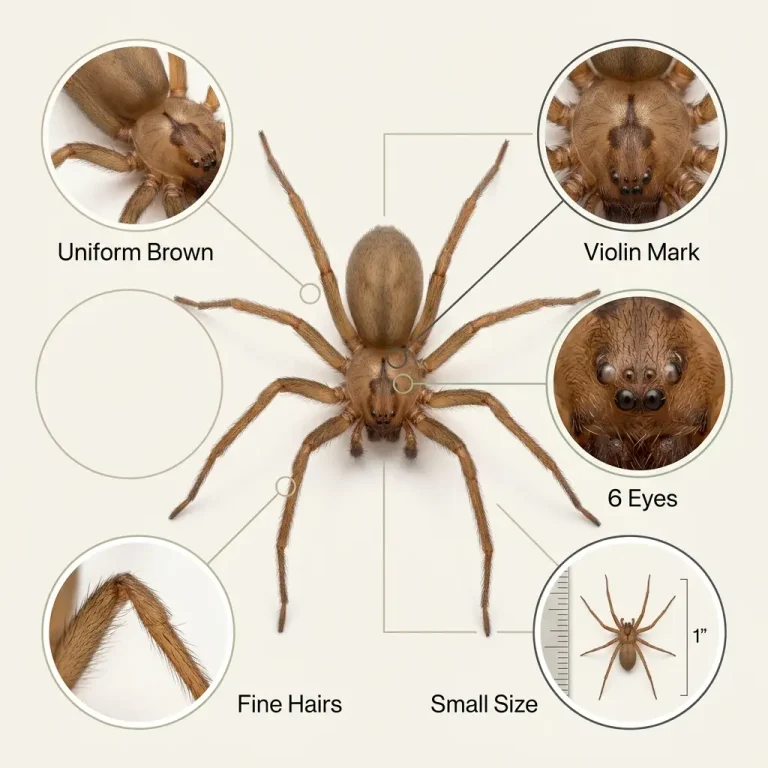
Only a small number of spiders pose a genuine health risk, but knowing their specific warning signs matters far more than being able to name every harmless species. A violin-shaped marking is a sign of an identified brown recluse.
Black Widow
A mature female black widow has a shiny, jet-black, rounded abdomen with a red hourglass marking on the underside, making her one of the more recognizable dangerous species once you know what to look for. Bites cause sharp pain followed by muscle cramping and stiffness that can spread from the bite site, and this combination calls for prompt medical evaluation rather than home treatment.
Brown Recluse
The brown recluse is light to medium brown with a distinct violin-shaped marking on its back, and it also has six eyes instead of the usual eight, arranged in three pairs. Its bite is often painless at first, then develops into a slow-healing sore over several days, which is why delayed treatment is a common and risky mistake with this species.
General Warning Signs
Any spider that causes spreading redness, significant swelling, or symptoms beyond the immediate bite site deserves medical attention rather than a wait-and-see approach. Both dangerous species tend to hide in undisturbed areas like woodpiles, storage boxes, and dark corners rather than seeking people out, so most bites happen when a hand or foot accidentally disturbs their hiding spot.
Spider vs Other Bugs: Common Mix-Ups
Spiders get confused with a few other creatures fairly often, usually because of superficial similarities that fall apart once you know what to check.
Daddy Longlegs
True daddy longlegs, sometimes called harvestmen, have a single fused body segment instead of the two-part body every spider has, and they lack venom glands entirely. They are frequently lumped in with spiders in casual conversation, but they belong to a completely different group.
Ticks
Ticks share a rounded body shape with some spiders but have only eight legs arranged closer together and a distinctly flatter profile before feeding. Unlike spiders, ticks attach to skin and feed on blood over an extended period rather than delivering a single quick bite.
Insects Mistaken for Spiders
Certain beetles and other insects get mistaken for spiders at a quick glance, usually due to dark coloring or a similarly rounded body. Counting legs settles this immediately, since every true spider has eight while every insect has six.
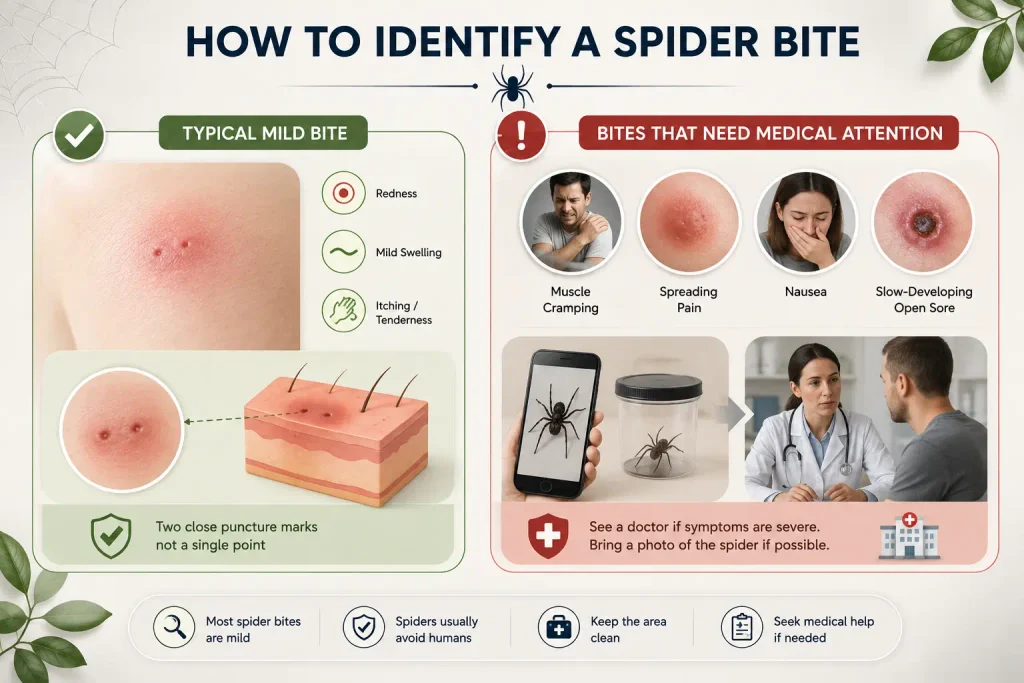
How to Identify a Spider Bite
Spider bites are less common than people assume, since most spiders avoid contact rather than seek it out, but recognizing the signs still matters.
Typical Mild Bite
A mild spider bite usually causes localized redness, mild swelling, and some itching or tenderness that fades within a day or two. Two small puncture marks close together, rather than a single point, often distinguish a spider bite from other insect bites.
Bites That Need Medical Attention
Bites accompanied by muscle cramping, spreading pain, nausea, or a slow-developing open sore point toward a more serious species and should be evaluated by a doctor rather than treated at home. Bringing a photo of the spider, if it was seen or captured, gives medical staff useful information for treatment decisions.
Where Spiders Are Usually Found Around the Home
Knowing typical hiding spots helps both with identification and with reducing unwanted encounters in the first place. Basements, garages, and attics tend to attract web-building species that prefer dark, undisturbed corners with steady humidity.
Woodpiles, storage boxes, and cluttered closets are common hiding places for both harmless species and the two dangerous ones covered earlier, since these spots offer shelter without much foot traffic. Bathrooms and areas near drains sometimes attract ground hunters like wolf spiders, which follow the insects those damp areas naturally draw in. Certain regions have unique species — see our guide on house spiders in Texas.
Common Mistakes People Make When Identifying Spiders
A few recurring errors make spider identification less accurate than it needs to be. Relying on color as the main clue is probably the most frequent mistake, since coloring varies more between individuals than most people expect.
Skipping a location detail is another common issue, since it leaves the tool considering species that do not even live in the area where the spider was found. Assuming every large or fast-moving spider must be dangerous also leads to unnecessary alarm, since size and speed have little to do with whether a species poses any real risk.
Tips for Getting a More Accurate Result
A handful of small habits make identification noticeably more reliable. Take the photo from directly above the spider whenever possible, since this angle shows body shape and markings more clearly than a side view.
Include something for scale in the frame, like a coin, so size is clear rather than estimated from memory. Note whether the spider was in a web, on the ground, or moving quickly, since behavior narrows the possibilities just as much as appearance does.
What to Do After You Identify a Spider
Once identification confirms the species, the right response depends heavily on which one it turned out to be. For harmless species like house spiders, cellar spiders, or jumping spiders, there is usually no need to do anything beyond gently relocating them outside if their presence is unwelcome.
For a confirmed black widow or brown recluse, clearing the immediate area, wearing gloves when handling storage boxes or woodpiles, and considering professional pest control are reasonable next steps, especially if more than one has been spotted. If a bite occurred and matches the warning signs described earlier, seek medical evaluation promptly rather than waiting to see if symptoms improve on their own.
Frequently Asked Questions
Conclusion
Telling one spider from another comes down to a handful of consistent details: body shape, leg proportions, eye arrangement, markings, and whether it builds a web at all. Running a clear, well-lit photo through our bug identifier, along with your location and where the spider was found, turns a guessing game into a confident answer within seconds. Most spiders encountered around a home turn out to be harmless, and knowing the specific warning signs of the few that are not means you can act quickly when it actually matters. Keep the tool bookmarked for the next unfamiliar spider that shows up, so a moment of uncertainty turns into a clear, useful answer instead of unnecessary worry.