7 Most Common House Spiders in Texas
Texas hosts a wider variety of spiders than most states, thanks to a climate that ranges from humid coastal air to dry western heat, and homeowners run into a fairly consistent lineup of species as a result.
Most of them are harmless, a couple can deliver a bite worth taking seriously, and one shows up in dramatic numbers every fall in a way that catches plenty of people off guard. Our bug identifier tool can confirm which one you are looking at from a single photo, but knowing the basic traits of each species first makes that identification faster and less stressful.
This article covers the seven spiders Texas residents encounter most often, what makes each one recognizable, and which ones actually deserve caution. It also walks through when spider activity peaks across the state and what actually works to keep them out of a home rather than just reacting every time one shows up.
The 7 Spiders Covered
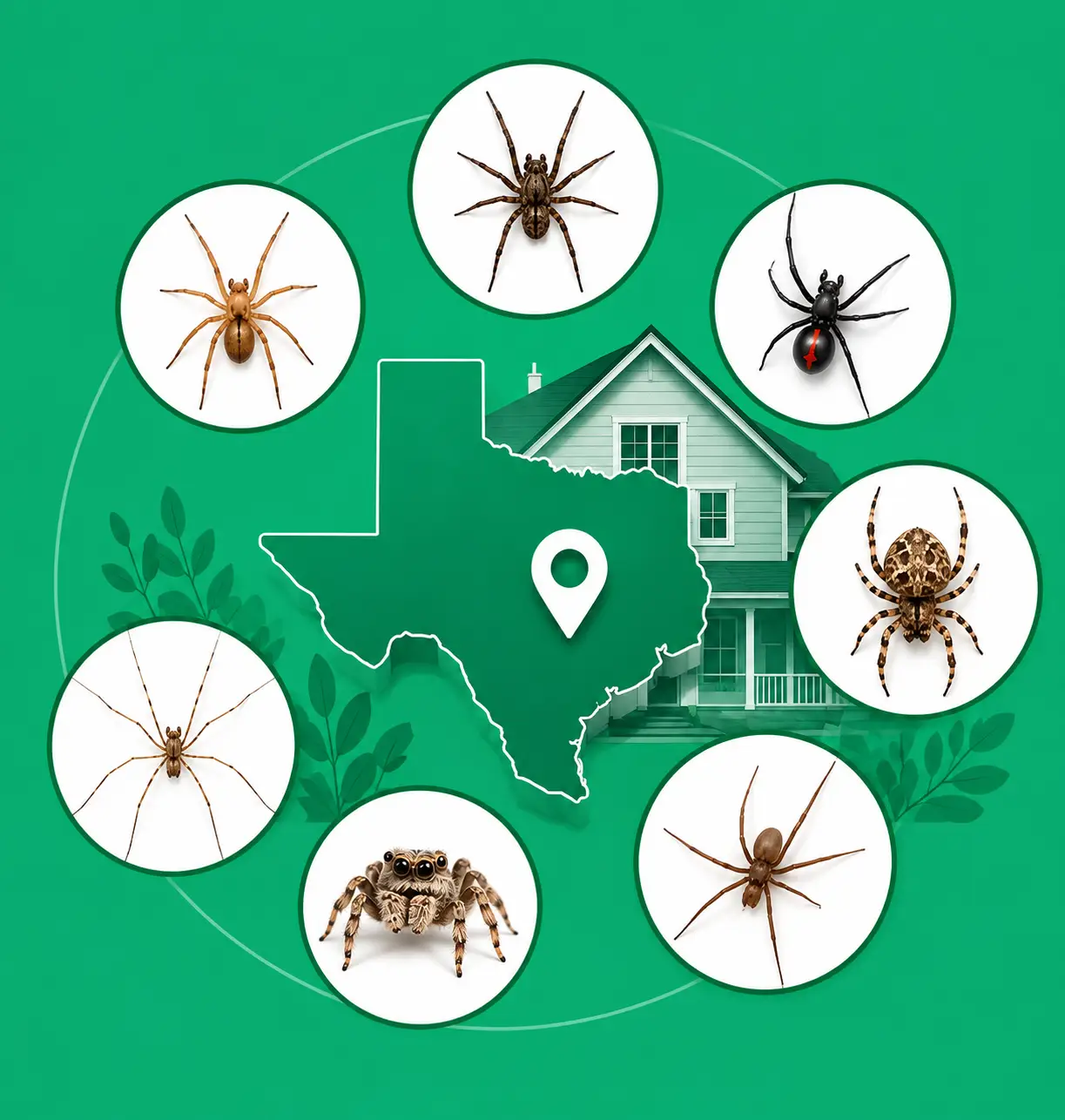
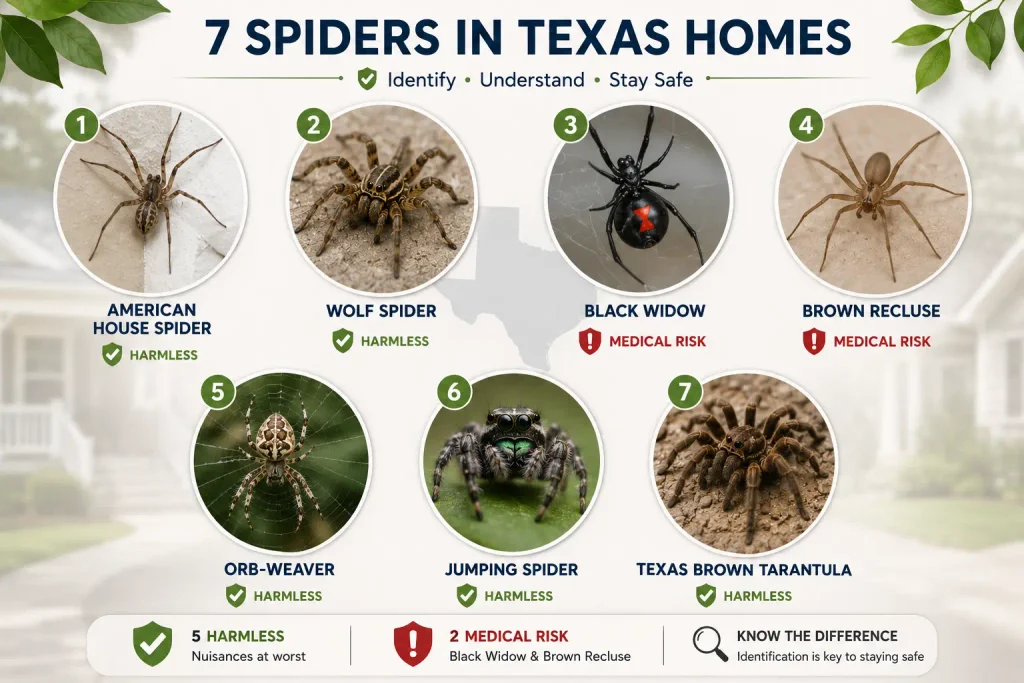
The seven spiders most commonly found in and around Texas homes are the American house spider, wolf spider, black widow, brown recluse, orb-weaver, jumping spider, and the Texas brown tarantula. Of these seven, only the black widow and brown recluse pose a real medical risk, while the rest are harmless nuisances at worst. Each one is covered in detail below, including the specific traits that separate it from the others.
1. American House Spider
The American house spider is one of the most frequently seen spiders indoors across Texas, recognizable by its round, brownish-tan abdomen with darker mottled patterns. It builds messy, irregular cobwebs in corners, closets, and window frames, often in spots that go undisturbed for weeks at a time.
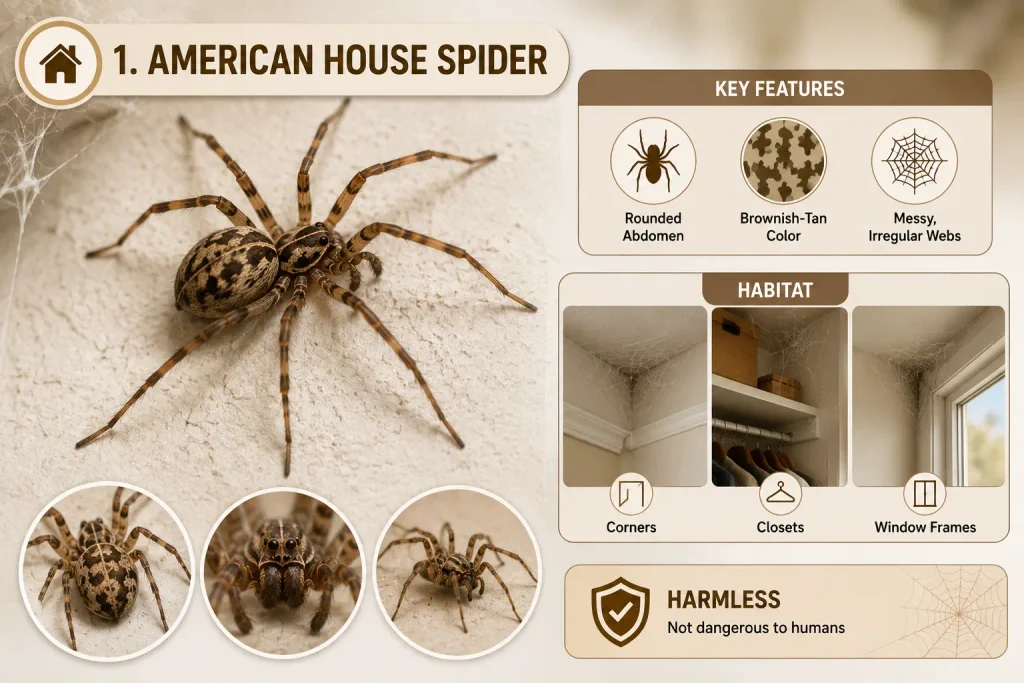
This species is completely harmless to people and actually helps by trapping other household insects in its web. A web appearing overnight in a rarely used room is almost always this spider rather than anything worth worrying about.
2. Wolf Spider
Wolf spiders are stocky, fast-moving hunters covered in a mottled brown and gray pattern that helps them blend into soil and leaf litter. Unlike web-building species, they chase down prey directly and are often spotted low to the ground, along baseboards, or near doorways where insects wander in from outside. For a full species breakdown, see our spiders identifier tool.
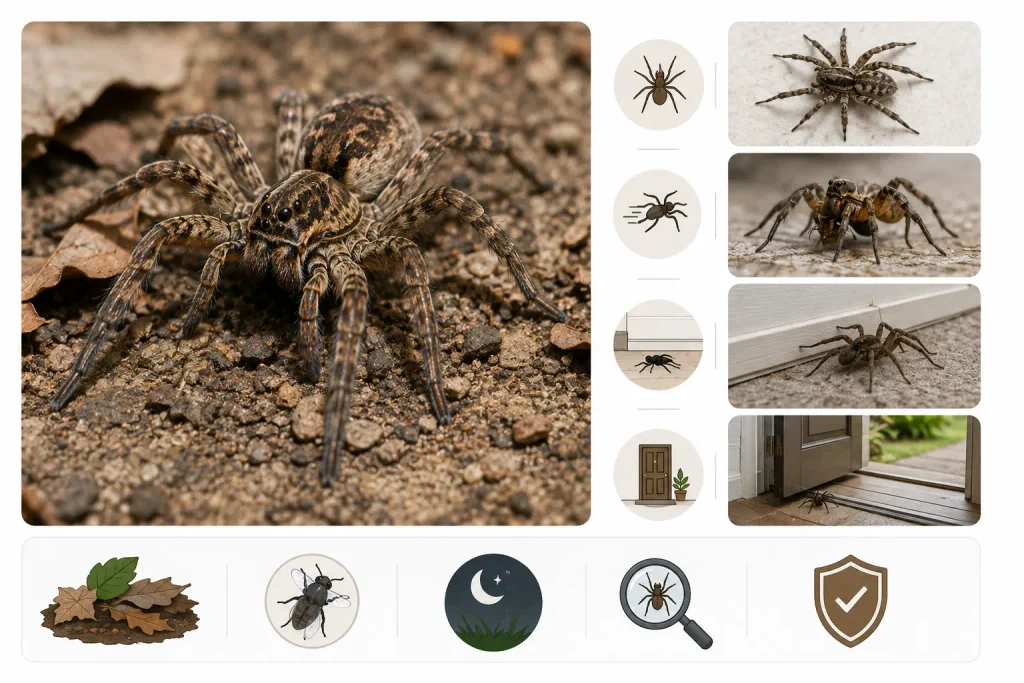
Their size and speed make them look far more intimidating than they actually are, since wolf spiders are not aggressive and rarely bite unless directly handled or trapped against skin. Females often carry their egg sac attached to their abdomen, a detail unique enough to rule out most other species on sight.
3. Black Widow
A mature female black widow has a glossy, jet-black, rounded abdomen with a red or orange hourglass marking on the underside, making her one of the more distinctive spiders on this list once the marking is visible. Males and juveniles look completely different, showing tan or brown coloring with pale streaks instead of solid black.
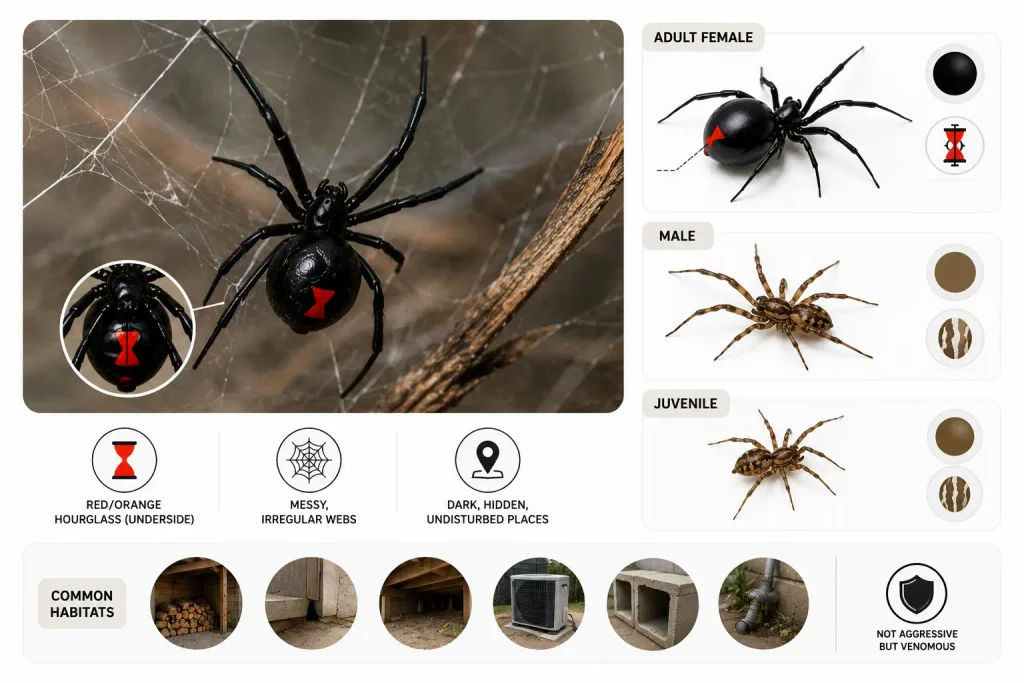
Black widows prefer dry, undisturbed spots like woodpiles, garages, and storage boxes, building a messy, tangled web close to the ground rather than a neat, symmetrical one. A bite causes cramping and muscle stiffness that can spread from the bite site, and while rarely fatal in healthy adults, it warrants prompt medical attention, especially for children or older adults.
4. Brown Recluse
The brown recluse is light to medium brown with a distinct violin-shaped marking on its back, along with six eyes instead of the usual eight, arranged in three separate pairs. It favors dark, undisturbed areas such as closets, attics, garages, and stacks of stored cardboard, and it tends to avoid open, frequently used spaces.
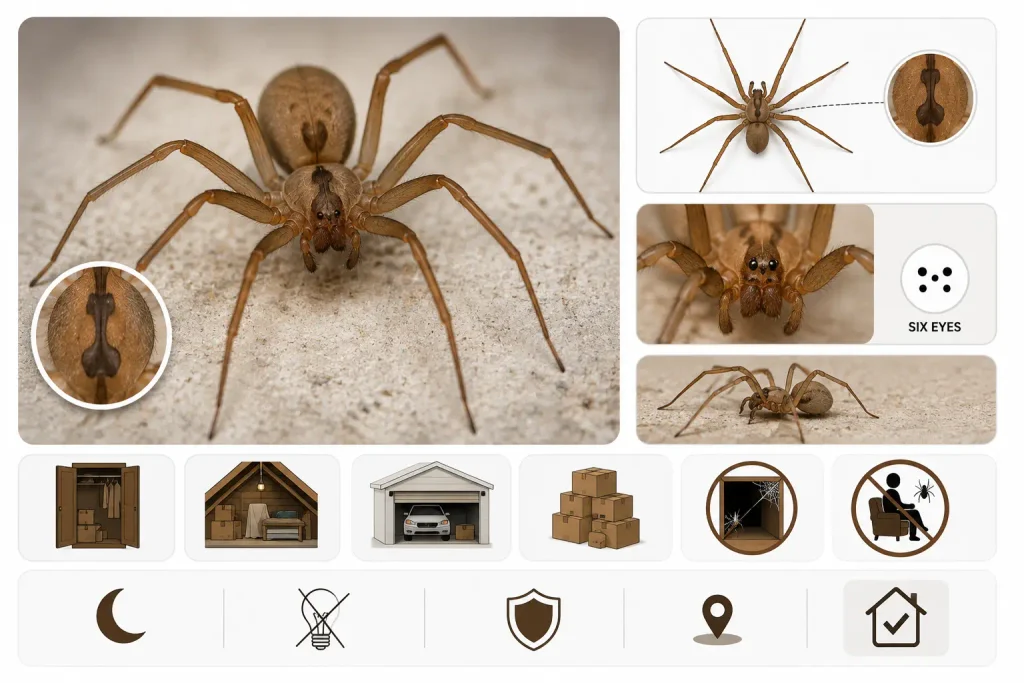
Bites from a brown recluse are often painless at first, then develop into a slow-healing sore over several days, which is why delayed treatment is a common and risky mistake with this species. Wearing gloves when reaching into storage boxes and shaking out clothing left in a closet for a long time both reduce the chance of an accidental encounter. Learn the general steps for how to identify a spider accurately.
5. Orb-Weaver Spider
Orb-weavers are the spiders behind the classic circular, wheel-shaped webs stretched between two fixed points, often noticed first thing in the morning when dew makes the silk visible. Texas is home to several colorful orb-weaver species, some with strikingly patterned abdomens in yellow, black, or even bright green.
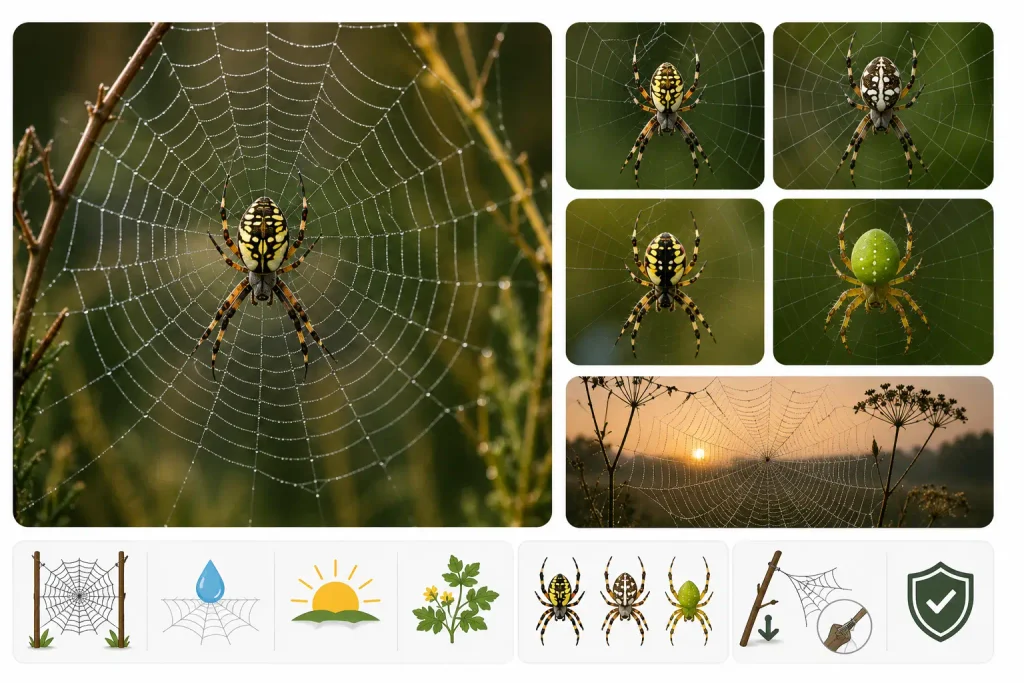
These spiders are almost always found outdoors, spanning porch corners, garden plants, and fence lines rather than indoor spaces. They are harmless to people despite their sometimes large size and dramatic appearance, and most simply rebuild their web nightly rather than lingering near a home’s entry points.
6. Jumping Spider
Jumping spiders are compact, fuzzy, and easy to recognize thanks to a pair of noticeably large front eyes that give them an alert, almost curious expression. They move in short, quick hops rather than crawling steadily, and they hunt by stalking prey at close range before pouncing.
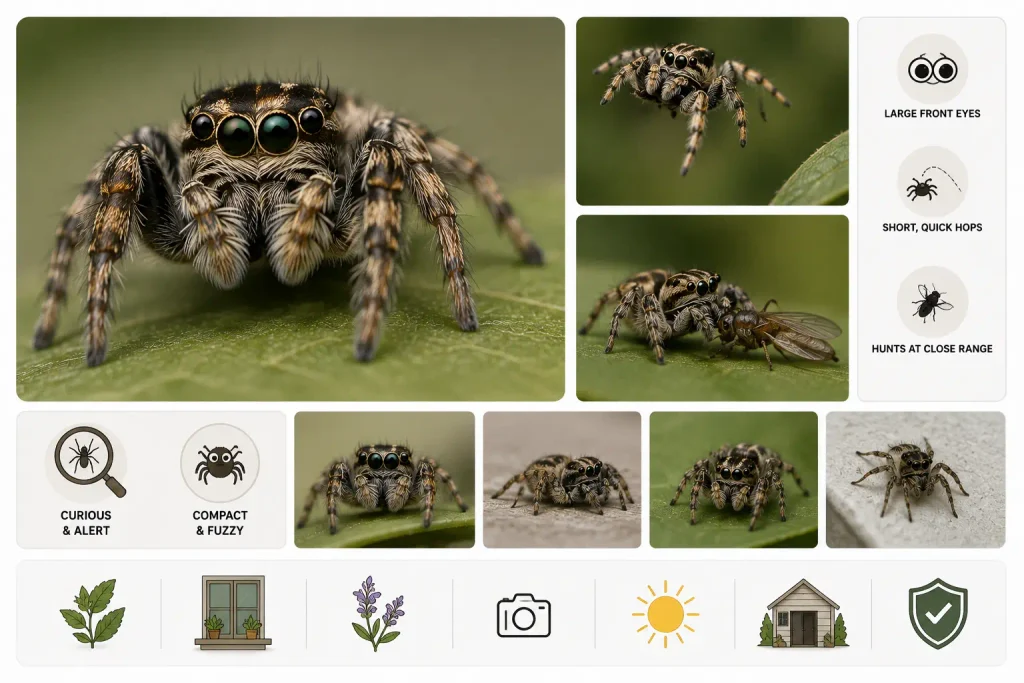
Despite their sometimes startling speed, jumping spiders are not dangerous and rarely bite unless cornered or pressed directly against skin. They are frequently spotted on sunny walls, window screens, and porches, where they hunt flies and other small insects during the day.
7. Texas Brown Tarantula
The Texas brown tarantula is the largest spider on this list, covered in dense brown hair and capable of a leg span reaching several inches across. It is best known for a dramatic seasonal migration each fall, when males leave their burrows in large numbers searching for mates, occasionally wandering into yards, garages, or onto roads in rural and suburban areas.
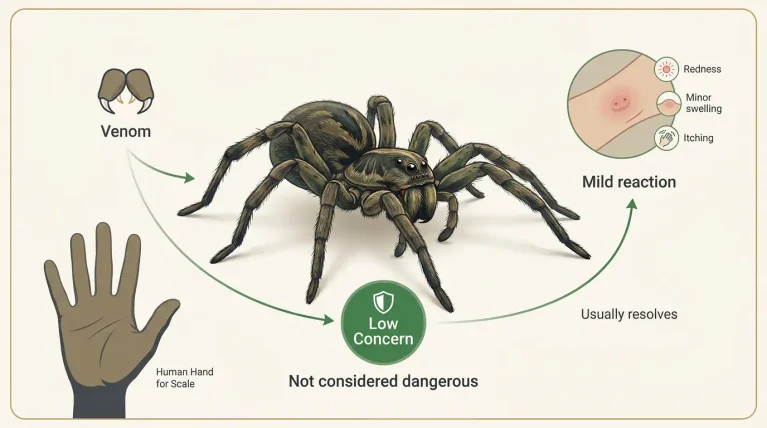
Despite their size, tarantulas in Texas are not aggressive and their bite, while painful, is roughly comparable to a bee sting for most people. They spend most of the year in underground burrows and are far more commonly seen outdoors than inside an actual house.
Which of These Spiders Are Actually Dangerous
Out of the seven species covered, only the black widow and brown recluse carry a real medical risk, and even those bites are treatable and rarely fatal in healthy adults with prompt care. The remaining five, the American house spider, wolf spider, orb-weaver, jumping spider, and Texas brown tarantula, are harmless or, at worst, produce a bite comparable to a minor insect sting. Some larger species raise the question of how big a wolf spider can get.
The table below summarizes the key differences at a glance.
| Spider | Web Type | Typical Location | Risk Level |
|---|---|---|---|
| American House Spider | Messy cobweb | Indoor corners | Harmless |
| Wolf Spider | None, ground hunter | Baseboards, floors | Harmless |
| Black Widow | Tangled, ground-level | Woodpiles, garages | Dangerous |
| Brown Recluse | Loose, hidden webs | Closets, attics | Dangerous |
| Orb-Weaver | Circular, symmetrical | Outdoor porches, gardens | Harmless |
| Jumping Spider | None, active hunter | Walls, screens | Harmless |
| Texas Brown Tarantula | None, burrow dweller | Yards, roads (fall) | Mild bite only |
When Spiders Are Most Active in Texas
Spider activity across Texas rises sharply from late spring through early fall, when warm temperatures and increased insect prey encourage more movement and web-building. Late summer and early fall bring an added spike thanks to tarantula migration season, when males actively wander in search of mates.
Indoor sightings tend to increase heading into cooler months, since species like the brown recluse and American house spider move toward shelter as outdoor temperatures drop. Understanding this seasonal pattern helps explain why a home that seemed spider-free all spring suddenly has more visitors once fall arrives.
How to Keep Spiders Out of a Texas Home
Sealing gaps around doors, windows, and foundation cracks removes the easiest entry points spiders use to move indoors from outside. Reducing outdoor lighting near entrances also helps, since bright lights attract the flying insects that spiders feed on, indirectly drawing spiders closer to the house as well.
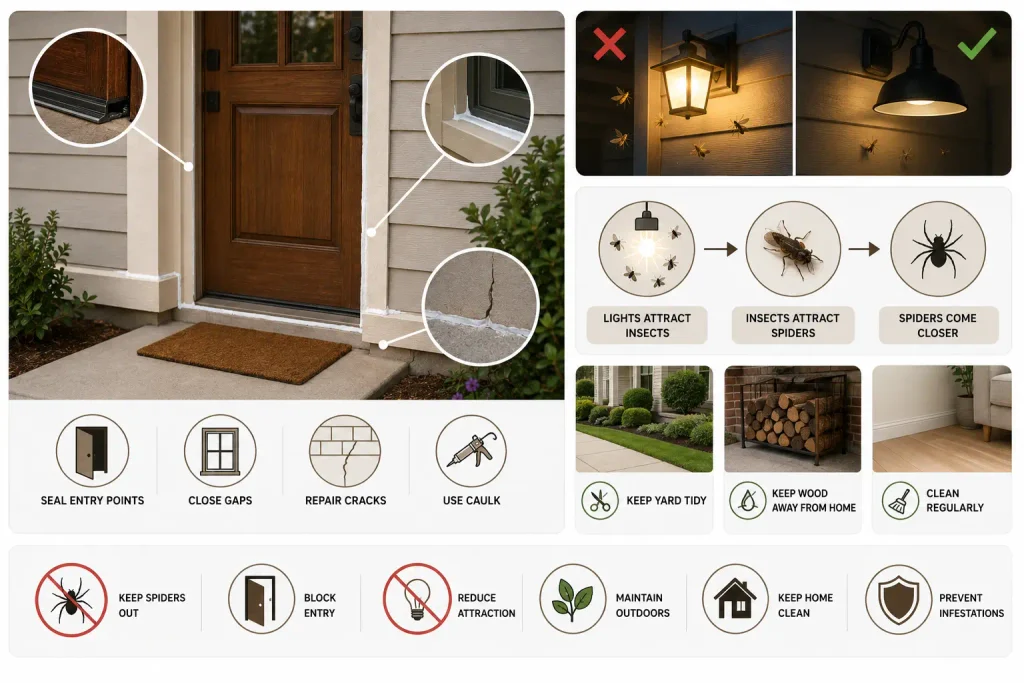
Keeping firewood, storage boxes, and yard debris away from the home’s foundation removes the sheltered hiding spots that species like black widows and brown recluses prefer. Regularly vacuuming corners, closets, and rarely used rooms disrupts web-building before it becomes established, cutting down on both sightings and egg sacs.
How to Get Rid of Spiders Already Inside
For occasional, harmless spiders like jumping spiders or American house spiders, a vacuum or a gentle relocation outside is usually all that is needed. Sticky traps placed along baseboards and in closets help monitor activity and catch wandering spiders without needing chemical treatment for a minor, isolated sighting.
For a confirmed black widow or brown recluse, especially if more than one has been spotted or an egg sac is found, professional pest control is the safer route. Wearing gloves and long sleeves when clearing storage areas, along with shaking out boxes and clothing before handling them, reduces the risk of an accidental bite during cleanup.
Common Mistakes When Identifying Texas Spiders
Assuming every large, hairy spider must be a dangerous species is one of the most common mistakes, since size alone says very little about actual risk, as the harmless Texas brown tarantula demonstrates. Relying on color without checking body shape, web type, or specific markings also leads to frequent misidentification, especially between wolf spiders and young black widows before their markings fully develop.
Overlooking the underside of a suspected black widow is another frequent gap, since the red hourglass marking is easy to miss without turning the spider or catching the right angle in a photo. Running a clear picture through an identifier tool settles most of these uncertain cases faster than trying to match memory against a mental image alone.
Frequently Asked Questions
Conclusion
Most spiders found in Texas homes turn out to be harmless once identified correctly, with only the black widow and brown recluse genuinely warranting extra caution. Learning the specific traits covered here, body shape, web type, marking patterns, and typical hiding spots, turns a startling discovery into a quick, confident identification rather than unnecessary panic. Running a photo through our bug identifier tool settles any remaining uncertainty in seconds, particularly for tricky cases like a young black widow or a wolf spider carrying an egg sac. Keeping entry points sealed and storage areas tidy handles most spider problems before they start, leaving genuinely dangerous encounters as the rare exception rather than the rule.