How Can I Get Rid of Cockroaches? A Complete Treatment Plan
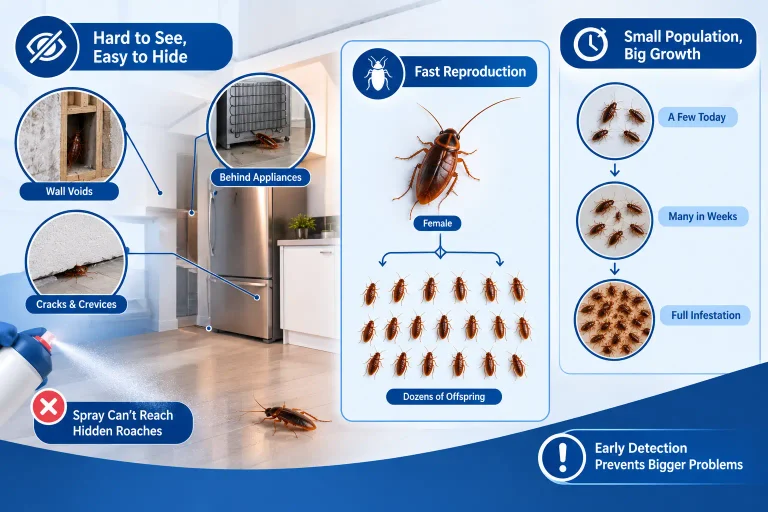
Spotting one cockroach scurrying across the kitchen floor is rarely the whole story, since roaches are experts at staying hidden until conditions push more of them out into the open. Getting rid of them for good takes more than a single spray, since a real solution combines identification, sanitation, targeted treatment, and prevention working together.
Our bug identifier tool can confirm exactly which species you are dealing with from a photo, which matters more than most people expect since treatment approaches differ by roach type.
This article lays out a complete plan for eliminating cockroaches, covering natural remedies, conventional treatments, and the sanitation habits that determine whether a solution actually sticks. It also explains what draws roaches into a home in the first place and how to keep them from returning once the current problem is resolved.
What Actually Gets Rid of Cockroaches
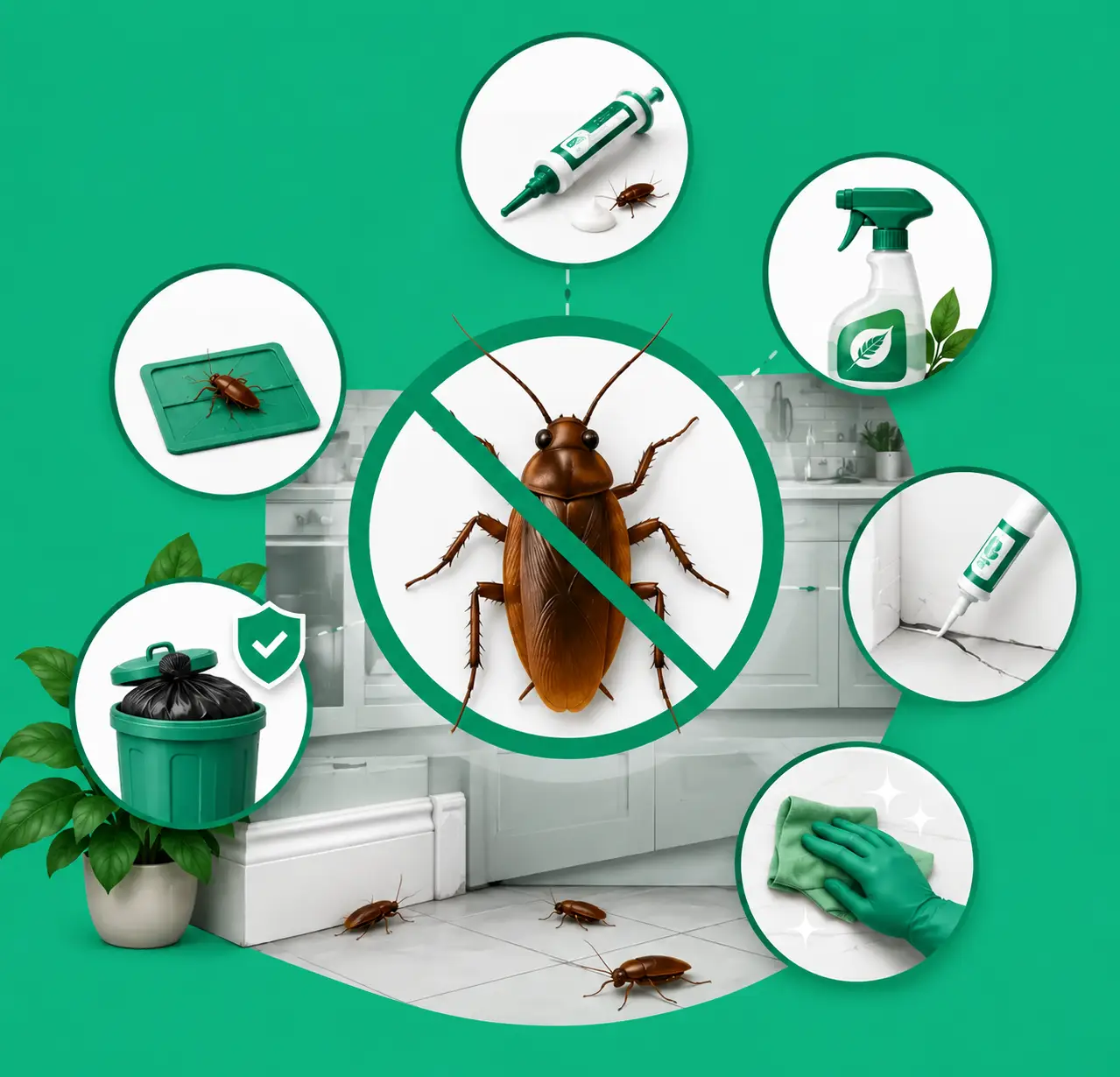
A combination of sanitation, targeted bait or boric acid treatment, and sealing entry points removes cockroaches more reliably than any single method alone. Sanitation eliminates the food and water sources drawing roaches in, bait or boric acid kills the ones already present along with those that stay hidden in wall voids, and sealing gaps prevents new roaches from replacing the ones eliminated. Skipping any one of these three steps usually explains why a treatment that worked briefly ends up failing within a few weeks.
Identify the Roach You Are Dealing With
Smaller Roaches
German cockroaches and brown-banded cockroaches both fall into the smaller category, typically measuring around half an inch to five-eighths of an inch long. German cockroaches are light brown with two dark stripes running behind the head, while brown-banded roaches show lighter bands across the wings and tend to prefer warmer, drier areas of a home like closets and electronics. For professional-grade options, see what exterminators use for roaches.
Larger Roaches
American cockroaches and other larger species can reach over an inch and a half in length, with a reddish-brown color and a distinctive yellowish marking behind the head. These larger roaches favor damp, humid areas such as basements, drains, and sewer systems, and they are more commonly found outdoors before making their way inside through pipes or gaps near plumbing.
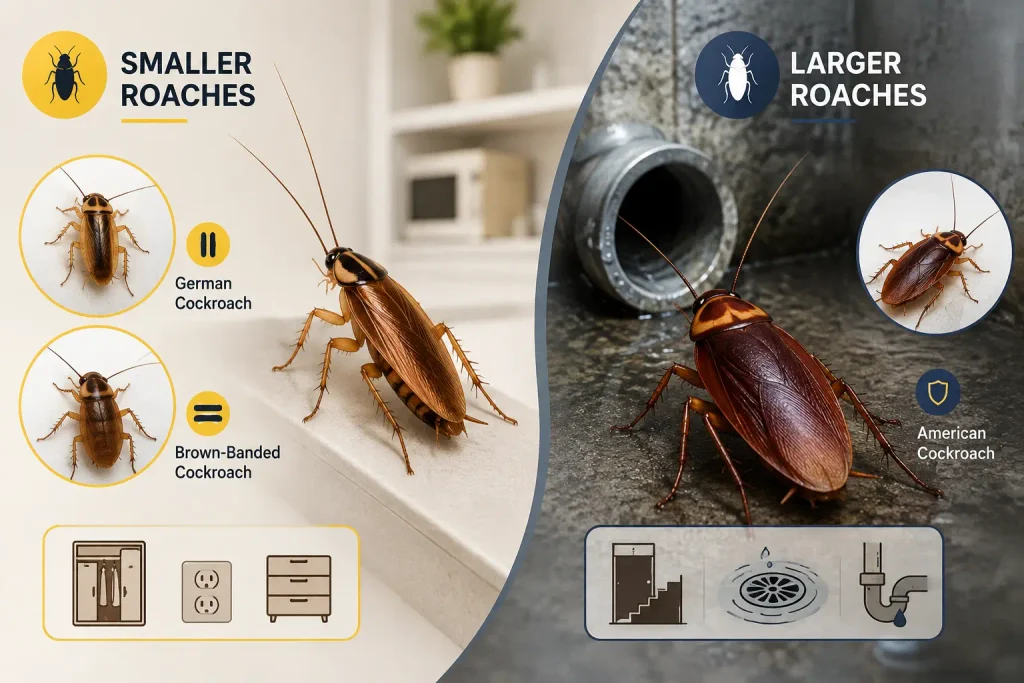
Correctly identifying which type is present changes the treatment approach significantly, since German roaches respond well to bait placed in kitchens and bathrooms, while American roaches often require addressing moisture sources and drain access points directly. A clear photo run through our bug identifier tool settles any uncertainty quickly, especially when size alone makes the species hard to judge.
Where to Find Cockroaches and Signs of an Infestation
Cockroaches favor warm, dark, and often damp spaces, which is why kitchens and bathrooms account for the majority of sightings in most homes. Common hiding spots include under sinks, behind appliances like refrigerators and stoves, inside cabinet gaps, and around plumbing penetrations where pipes pass through walls.
Signs of an active infestation go beyond the occasional live roach and include small, dark droppings resembling coffee grounds or pepper flakes near food storage areas. A musty, oily odor is another common indicator, produced by pheromones roaches release as their population grows, along with egg cases, small brown capsules often tucked into cracks or behind furniture. Finding several of these signs together strongly suggests an established population rather than a single wandering roach.
What Attracts Cockroaches to Your Home
Food residue left on counters, dishes soaking in the sink, and crumbs accumulating under appliances all provide a reliable food source that keeps roaches returning night after night. Standing water in sinks, leaky pipes, and condensation around appliances offer the moisture roaches need to survive, particularly for larger species like American roaches that favor damp conditions.
Cardboard boxes, paper bags, and cluttered storage areas provide both shelter and, in some cases, a food source, since roaches can feed on the glue and starch found in packaging materials. Cracks around doors, windows, and utility penetrations give roaches an easy path indoors, especially during seasonal temperature shifts when they seek more stable conditions inside.
Step-by-Step Treatment Plan
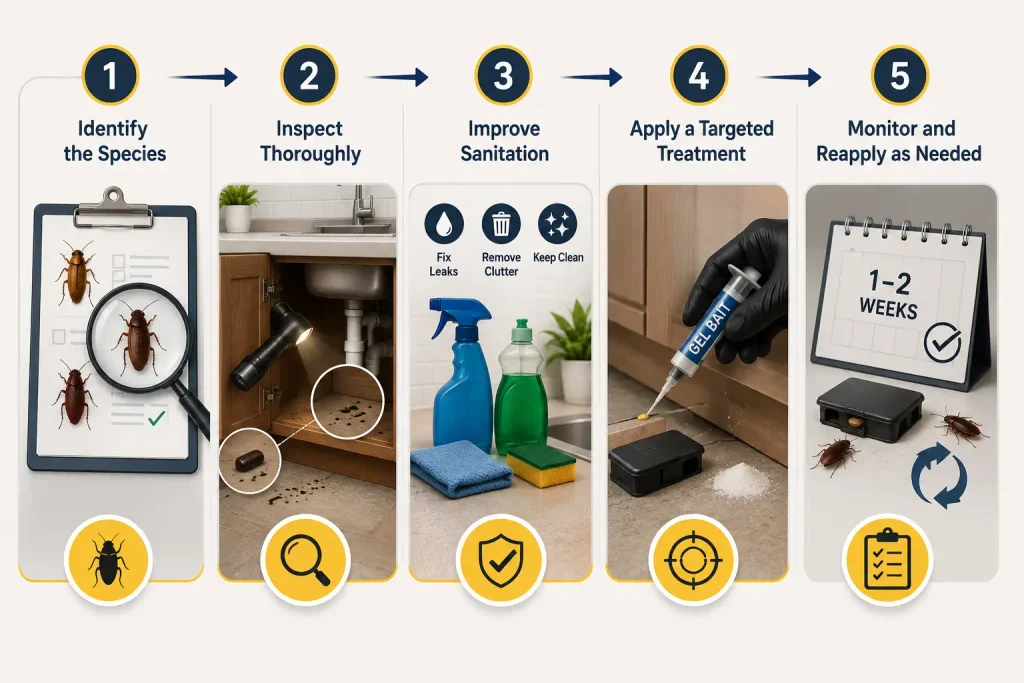
A methodical approach produces far more reliable results than reaching for a single spray at the first sighting.
Step 1: Identify the Species
Confirm whether the roach involved is a smaller species like German or brown-banded, or a larger one like American, since this determines which treatment products and placement strategies will actually work.
Step 2: Inspect Thoroughly
Check under sinks, behind appliances, inside cabinets, and around plumbing for droppings, egg cases, and live activity to understand the scope of the problem before choosing a treatment.
Step 3: Improve Sanitation
Clean up food residue, fix leaky pipes, and reduce clutter in the areas identified during inspection, since roaches cannot sustain a population without consistent access to food and water.
Step 4: Apply a Targeted Treatment
Place bait stations or apply boric acid in the specific areas identified during inspection, focusing on cracks, corners, and behind appliances rather than open floor space where roaches rarely linger.
Step 5: Monitor and Reapply as Needed
Check treated areas over the following one to two weeks, since bait and boric acid work gradually as roaches carry the substance back to shared hiding spots, and reapply according to product instructions if activity continues.
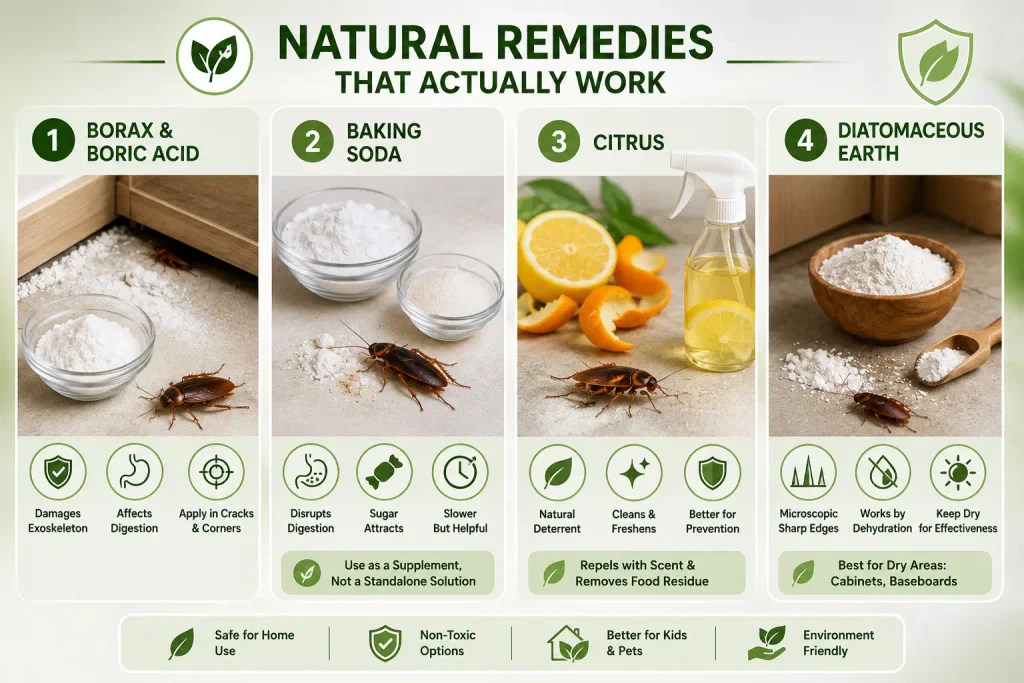
Natural Remedies That Actually Work
Borax and Boric Acid
Boric acid works by damaging a roach’s exoskeleton and digestive system when the roach walks through it and later ingests it during grooming, making it one of the more effective natural options available. Applying a thin layer in cracks, under appliances, and along baseboards works better than a thick, visible layer, since roaches avoid large piles but readily walk through a light dusting.
Baking Soda
Baking soda mixed with a small amount of sugar to attract roaches can disrupt their digestive system when ingested, though results tend to be slower and less consistent than boric acid. This method works best as a supplementary measure alongside other treatments rather than a standalone solution for an established infestation.
Citrus
Citrus peels and citrus-based cleaning sprays can help deter roaches from specific surfaces due to the strong scent, though this approach works better for prevention than for eliminating an existing population. Wiping counters and floors with a citrus-based cleaner removes food residue at the same time, adding a sanitation benefit alongside the mild repellent effect.
Diatomaceous Earth
Food-grade diatomaceous earth works mechanically rather than chemically, damaging a roach’s exoskeleton through microscopic sharp edges that cause dehydration over time. It needs to stay dry to remain effective, which makes it better suited to dry areas like cabinet backs and baseboards than damp spots like under sinks. It’s also worth knowing whether cockroach droppings are dangerous to your household.
Essential Oils
Peppermint, tea tree, and eucalyptus oils diluted in water and sprayed around entry points can help deter roaches from crossing treated areas, though the effect tends to be temporary and requires frequent reapplication. These oils work best as part of a broader prevention routine rather than a primary treatment for roaches already established indoors.
Conventional Methods for Cockroach Removal
Glue Traps
Glue traps placed along walls, under appliances, and near suspected entry points capture roaches passively and provide a useful way to monitor how severe an infestation actually is. While they do not eliminate a population on their own, they help identify hot spots that deserve more targeted bait or boric acid treatment.
Roach Bombs
Roach bombs, or total-release foggers, treat open areas of a room but often fail to reach the cracks, wall voids, and hidden spots where roaches actually spend most of their time. Because of this limitation, foggers tend to work better as a supplementary measure alongside targeted bait rather than a complete solution used alone.
Bait Stations
Pre-made bait stations placed in high-activity areas offer a convenient, low-mess option that roaches carry back to shared hiding spots, gradually reducing the population over one to two weeks. This delayed effect is intentional, since it allows treated roaches to spread the bait to others before dying, reaching individuals that never directly contacted the station.
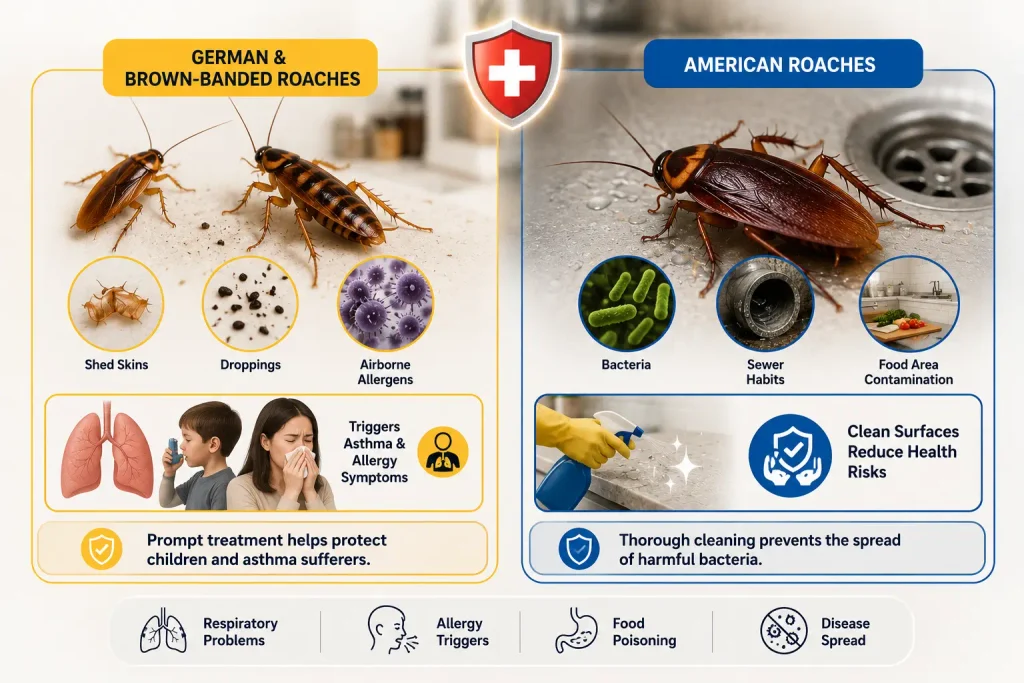
Health Hazards Cockroaches Actually Pose
German and Brown-Banded Roaches
Smaller roaches like German and brown-banded species are strongly linked to indoor allergen and asthma triggers, since their shed skins and droppings accumulate in kitchens and can become airborne over time. Homes with children or family members with asthma benefit particularly from prompt treatment, since roach allergens are a well-documented trigger for respiratory symptoms.
American Roaches
Larger species like American roaches are more closely associated with contamination risks in food preparation areas, since their outdoor and sewer-adjacent habits mean they can carry bacteria into a kitchen environment. Thorough cleaning of any surfaces roaches have crossed, particularly food prep areas, reduces this risk significantly during and after treatment.
How to Prevent Roaches From Coming Back
For German and Brown-Banded Roaches
Keeping kitchens and bathrooms free of food residue, fixing minor leaks promptly, and storing dry goods in sealed containers removes the specific conditions these smaller species rely on most. Regular vacuuming behind and under appliances catches crumbs and debris before they accumulate into a reliable food source. For long-term prevention, learn how to keep insects away naturally.
For American and Larger Roaches
Sealing gaps around plumbing penetrations, drains, and foundation cracks blocks the entry points these larger roaches typically use to move indoors from sewers or crawl spaces. Reducing outdoor moisture near the foundation, including fixing drainage issues and clearing debris, removes the damp conditions this species depends on most.
Common Mistakes That Make Roach Problems Worse
Relying on visible sprays alone, without addressing sanitation or sealing entry points, often produces short-term results that fade within a few weeks as new roaches replace the ones killed. Placing bait stations only in open areas, rather than the cracks and hidden spots roaches actually travel through, reduces effectiveness significantly compared to targeted placement.
Skipping the identification step and treating every roach the same way overlooks the different habits and hiding spots between smaller and larger species. Giving up on treatment too early, before the one-to-two-week window bait and boric acid need to work through a population, is another common reason people assume a method failed when it simply needed more time.
Frequently Asked Questions
Conclusion
Getting rid of cockroaches for good comes down to combining identification, sanitation, targeted treatment, and sealed entry points rather than relying on any single method by itself. Knowing whether smaller German and brown-banded roaches or larger American roaches are involved shapes where treatment should focus, since each type favors different hiding spots and responds to slightly different approaches. Boric acid, bait stations, and thorough cleaning handle the current population, while sealing gaps and removing standing water keep new roaches from replacing the ones eliminated. Running a quick photo through our bug identifier tool clears up any uncertainty about which species is present, making the entire treatment plan more targeted from the very first step.