Do Insects Sleep? What Science Actually Shows
A motionless bee clinging to a flower stem overnight, or a fruit fly that seems to vanish into stillness after dark, raises a question that sounds simple but turns out to have a genuinely interesting answer. Insects do sleep, though their version of sleep looks quite different from anything resembling closed eyes and a quiet bedroom.
Our bug identifier tool can confirm exactly which insect you have spotted resting somewhere unusual, which helps when trying to understand whether a particular behavior is normal rest or something else entirely.
This article breaks down what scientists actually mean when they say an insect is sleeping, how that rest differs across common species, and why it matters for an insect’s survival at all. It also covers a practical question many people search for after finding a motionless bug: how to tell whether it is sleeping, simply resting, or actually dead.
What Scientists Mean by “Sleep” in Insects
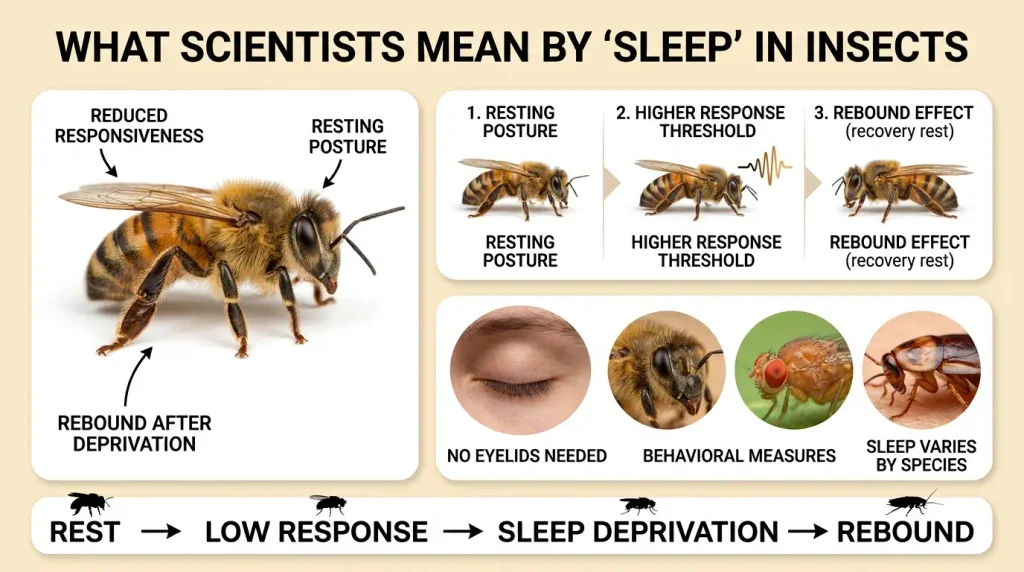
Yes, insects do sleep, defined by scientists as a state of reduced responsiveness, a specific resting posture, and a rebound effect when sleep is disrupted, rather than requiring closed eyelids the way mammals experience rest. Sleep patterns vary considerably by species, with some insects like bees and fruit flies showing clear, measurable sleep cycles, while others display more continuous, less structured rest periods. Sleep in insects serves the same core purposes it does in other animals: supporting memory, managing energy, and improving overall survival.
Key Criteria for Insect Sleep
Researchers define sleep in insects using a specific set of behavioral markers rather than relying on the visible signs used to identify sleep in mammals. These criteria include a specific, often stereotyped resting posture, a measurably higher threshold before the insect responds to stimulation, and a documented rebound effect where an insect that has been sleep-deprived shows increased rest afterward.
Why This Definition Matters
Since insects lack eyelids and, in most cases, do not close their eyes the way mammals do, scientists needed an objective, measurable definition rather than relying on visual cues alone. This is especially interesting when looking at the praying mantis lifespan. This behavioral definition allows fair comparison across wildly different species, from bees to cockroaches, despite their vastly different bodies and nervous systems.
How Researchers Study Insect Sleep
Scientists typically track movement patterns using video recording or motion-sensitive equipment, looking for extended periods of stillness that meet the behavioral criteria for sleep described above. Response threshold testing, which measures how much stimulation, such as a light touch or vibration, is needed to trigger a reaction, helps distinguish true sleep from simple pauses in activity.
Brain activity monitoring, where feasible given an insect’s small size, has also revealed patterns in some species that resemble the electrical changes seen during mammalian sleep stages. Combining these methods gives researchers a more complete picture than any single observation method could provide on its own. Similar dormant behavior happens during caterpillar cocoon duration.
How Insects Actually Sleep
Since most insects do not have movable eyelids, their version of sleep centers on stillness, a specific resting posture, and reduced responsiveness rather than closed eyes. Many species lower their antennae, tuck their legs into a compact resting position, or find a sheltered spot away from potential threats before entering this quieter state.
Unlike the single consolidated sleep period common in many mammals, insect rest is often split into multiple shorter periods spread across a day or night, depending on the species and its typical activity pattern. This fragmented rest structure still meets the scientific criteria for sleep, even though it looks quite different from a single long stretch of nighttime rest.
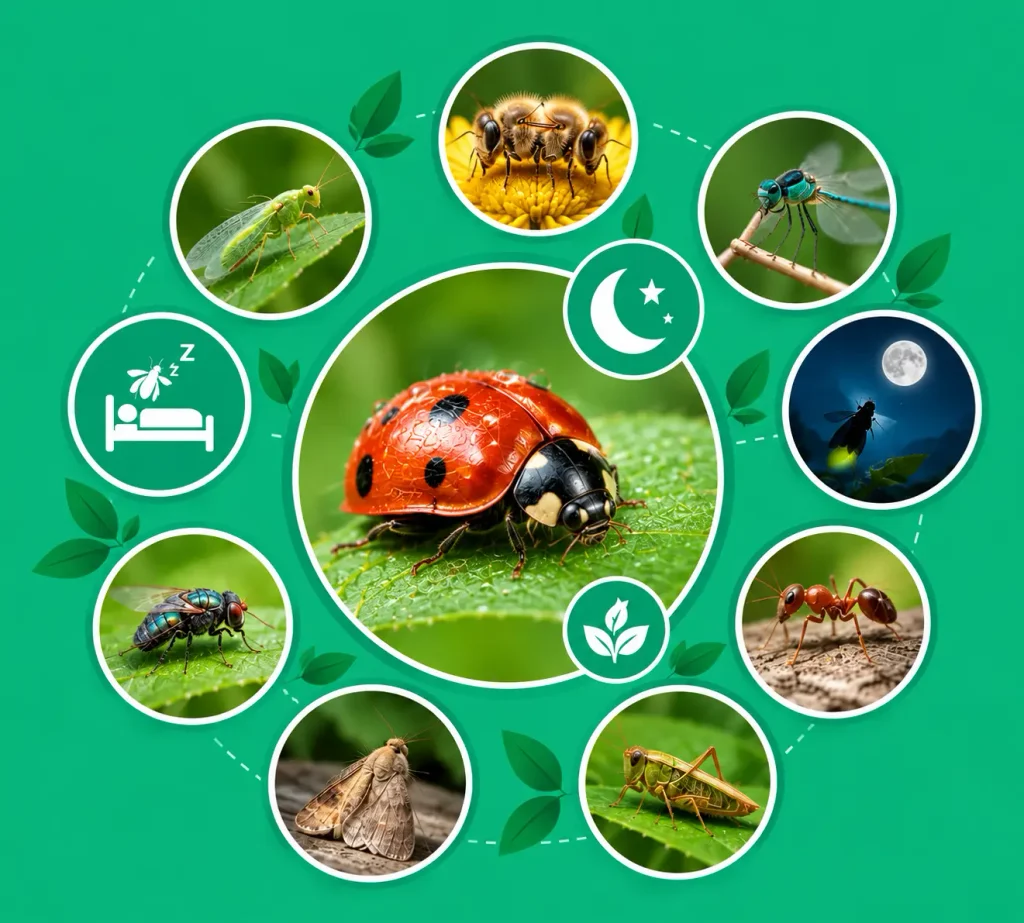
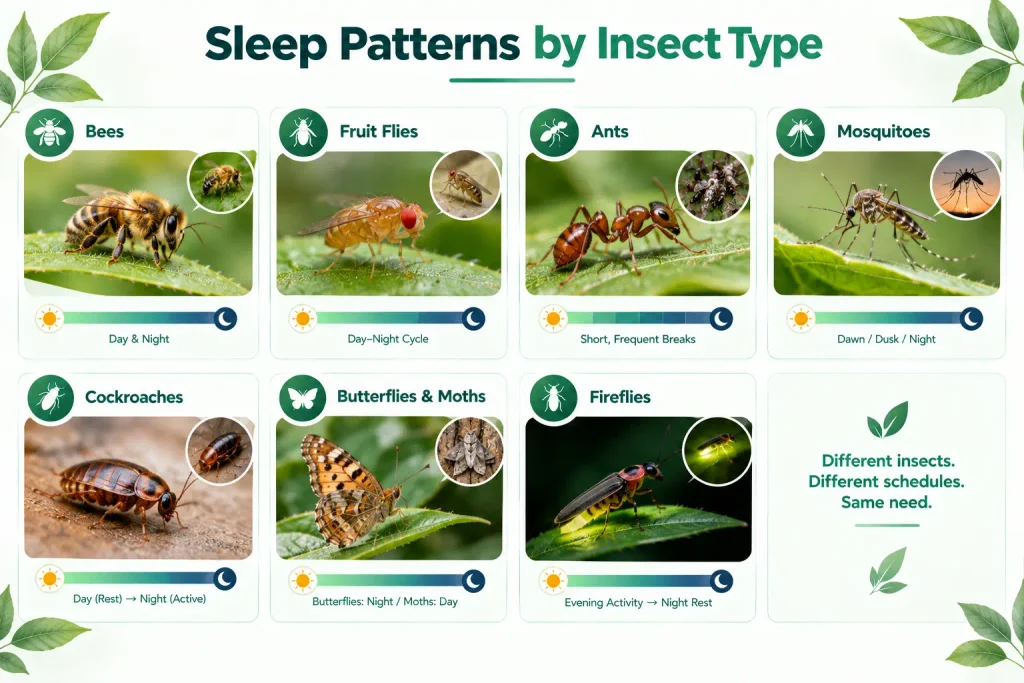
Sleep Patterns by Insect Type
Bees
Bees show some of the most well-documented sleep behavior among insects, resting with their antennae drooping and their bodies becoming notably still, sometimes even falling over briefly before repositioning. Sleep-deprived bees show measurable impairments in their ability to communicate location information to other bees through their characteristic waggle dance, directly linking rest to cognitive performance.
Fruit Flies
Fruit flies have become one of the most studied species in sleep research due to their short lifespan and simple nervous system, showing clear day-night sleep cycles that respond predictably to light exposure. Sleep-deprived fruit flies display the same rebound effect seen in mammals, sleeping more intensely following a period of enforced wakefulness.
Ants
Ants, particularly worker ants in social colonies, take numerous brief rest periods throughout a 24-hour cycle rather than one extended sleep period, allowing the colony to maintain continuous activity even while individual ants take turns resting. Queen ants tend to sleep more overall than worker ants, reflecting their different roles within the colony structure.
Mosquitoes
Mosquitoes show activity patterns tied closely to light and temperature, with many species resting during the hottest part of the day and becoming more active during dawn, dusk, or nighttime hours depending on the specific species. This rest period during peak heat likely serves to conserve energy and avoid the physiological stress of extreme daytime temperatures.
Cockroaches
Cockroaches display a clear preference for resting during daylight hours and becoming active at night, a pattern known as nocturnal behavior that aligns with reduced predation risk in the dark. Their daytime rest periods show the reduced responsiveness and consistent posture that meet the scientific definition of sleep in insects.
Butterflies and Moths
Many butterfly species rest overnight in a distinctive posture, often with wings folded upright and antennae tucked close to the body, typically choosing a sheltered spot on the underside of a leaf. Moths, being largely nocturnal, show the reverse pattern, resting during daylight hours in camouflaged positions on bark or foliage before becoming active after dark.
Fireflies
Fireflies display a distinctive rest pattern tied closely to their bioluminescent signaling behavior, becoming active and flashing during specific evening hours before settling into stillness for the remainder of the night. This tightly timed activity window reflects a strong circadian rhythm governing both their light production and their subsequent rest period.
Do Spiders and Other Non-Insects Sleep Too
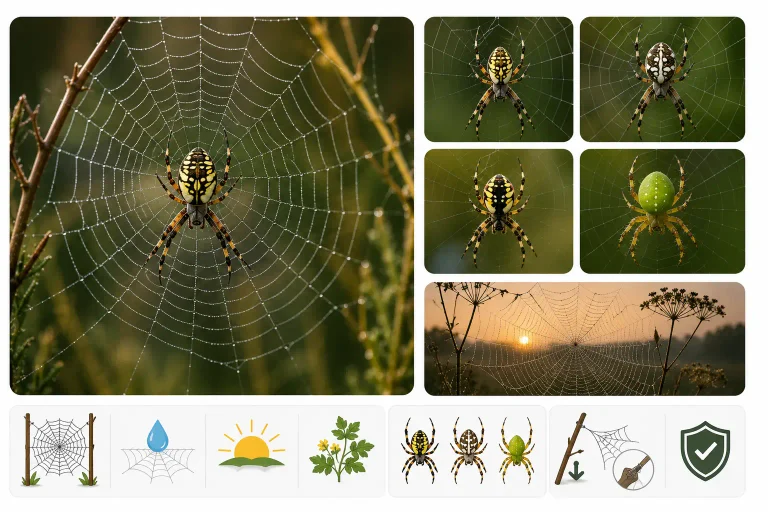
Spiders, while not technically insects, show sleep-like behavior that researchers have documented using similar behavioral criteria, including periods of reduced leg movement and decreased responsiveness to stimulation. Jumping spiders in particular have shown evidence of REM-like twitching during rest periods, a finding that surprised researchers given how different their nervous systems are from vertebrates that experience REM sleep.
Other arthropods, including certain crustaceans, have also shown behavioral patterns consistent with sleep, suggesting this restorative process extends well beyond insects specifically. This broader pattern across so many different nervous system types suggests sleep serves a fundamental biological function that evolved independently, or very early, across a wide range of animal groups.
Why Sleep Matters for Insects
Cognition and Memory
Sleep-deprived insects across several studied species show measurable declines in learning and memory tasks, mirroring the cognitive effects of sleep deprivation seen in mammals. Bees specifically show impaired communication abilities after sleep disruption, directly connecting rest to a skill essential for colony-wide foraging success.
Energy Management
Rest periods allow insects to conserve energy during times when activity would be less productive or more physiologically costly, such as extreme heat or low light conditions unsuitable for effective foraging. This energy management function helps explain why many species time their rest to coincide with the least advantageous periods for their specific activity patterns.
Survival Mechanisms
Resting during predictable, lower-risk periods, such as daylight hours for nocturnal predators or nighttime for species vulnerable to nocturnal threats, reduces overall exposure to danger. This survival-oriented timing suggests sleep patterns have been shaped by evolutionary pressure just as much as by any internal biological need for rest itself.
Insects That Rarely Rest or Never Fully Sleep
Some insect species, particularly those with extremely short adult lifespans focused entirely on reproduction, show minimal rest behavior, prioritizing near-continuous activity during their brief adult stage. Certain migratory species, including some moths and butterflies during peak migration periods, also reduce typical rest behavior significantly to maximize distance covered during favorable travel conditions. Even beneficial insects like ladybugs follow cycles tied to what they eat.
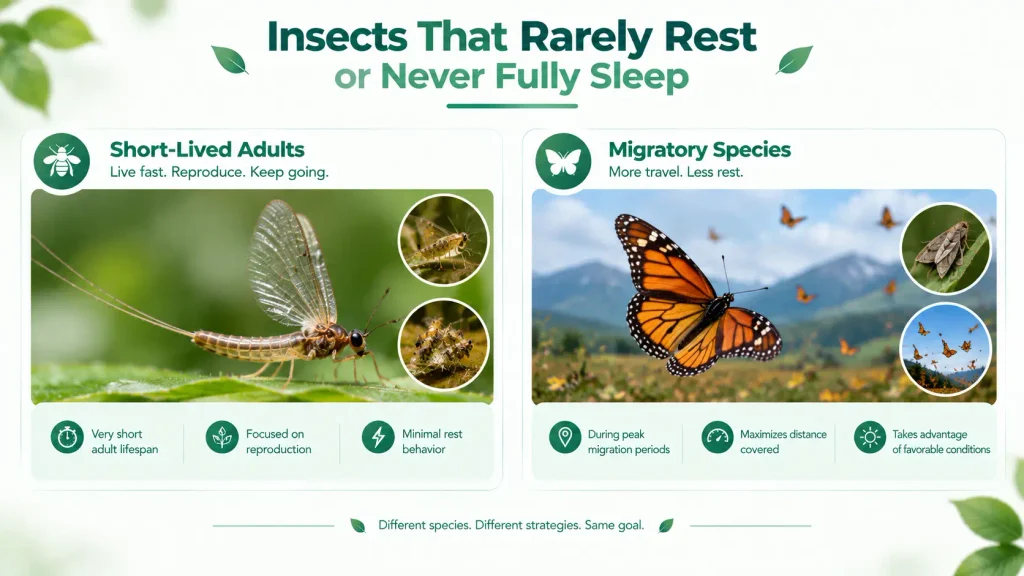
This does not mean these species never experience any form of rest, but rather that their rest periods are shorter, less frequent, or less clearly defined compared to species with longer lifespans and more stable daily routines. Researchers continue studying these exceptions specifically because they offer insight into how flexible or essential sleep truly is across different evolutionary pressures.
How to Tell if an Insect Is Sleeping, Resting, or Dead
A sleeping or resting insect typically maintains a specific, often symmetrical posture, with legs tucked in a consistent pattern rather than sprawled awkwardly or curled tightly inward. Gently blowing air near the insect or introducing a mild vibration nearby often triggers a response in a sleeping insect, such as slight movement or repositioning, while a dead insect shows no reaction at all.
Checking for continued, if slow, breathing movements in larger insects, visible through subtle abdominal pulsing, can also help distinguish rest from death in species where this is observable. If genuine uncertainty remains, especially for an unfamiliar species, running a photo through an identifier tool at least confirms what the insect actually is, which can inform expectations about its typical resting behavior and posture.
Differences Between Human and Insect Sleep
Human sleep involves distinct stages, including REM sleep associated with vivid dreaming, cycling through a single extended period typically once every 24 hours. Insect sleep, by contrast, is often fragmented into multiple shorter periods throughout a day or night, lacks the same clearly defined stage structure in most studied species, and relies on behavioral rather than brainwave criteria for identification in most research.
Despite these structural differences, the core functions, memory consolidation, energy conservation, and restored responsiveness after rest, appear remarkably consistent between humans and insects. This shared underlying purpose, despite such different implementation, is part of why insect sleep research has become valuable for understanding the broader biology of rest across the animal kingdom.
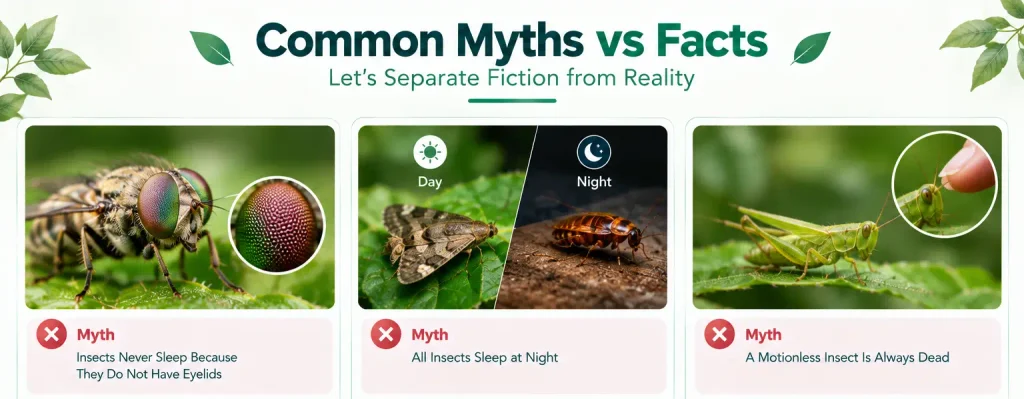
Common Myths vs Facts
Myth: Insects Never Sleep Because They Do Not Have Eyelids
Fact: The absence of movable eyelids does not mean insects skip sleep entirely, since researchers define sleep behaviorally rather than through visible eye closure. Many insects achieve the reduced responsiveness and consistent posture that define sleep without ever needing to close their eyes.
Myth: All Insects Sleep at Night
Fact: Sleep timing varies considerably by species, with nocturnal insects like many moths and cockroaches resting during the day and becoming active at night instead. Assuming a uniform nighttime sleep schedule across all insects overlooks this significant behavioral diversity.
Myth: A Motionless Insect Is Always Dead
Fact: A still, unresponsive-looking insect is often simply resting or sleeping rather than deceased, particularly if it maintains a consistent posture and responds to gentle stimulation. Confirming actual death typically requires checking for a complete lack of response to stimulation over an extended period rather than assuming based on stillness alone.
Common Mistakes People Make When Observing Insect Behavior
Assuming a motionless insect found during the day is dead, without checking for a response to gentle stimulation, is one of the most common observational mistakes, particularly with nocturnal species resting during daylight hours. Disturbing a resting insect repeatedly to test for a reaction can also cause unnecessary stress or energy expenditure, working against the very rest period being observed.
Assuming every insect follows the same sleep schedule as commonly discussed species like bees or fruit flies overlooks the significant variation across different species and lifestyles. Misidentifying an unfamiliar insect before drawing conclusions about its expected behavior is another frequent gap, since accurate species identification should generally come before interpreting any observed resting pattern.
Frequently Asked Questions
Conclusion
Insects genuinely sleep, even without eyelids to close, meeting the scientific definition through consistent resting posture, reduced responsiveness, and a measurable rebound effect after disrupted rest. That rest looks different depending on the species, from a bee’s drooping antennae to a cockroach’s daytime stillness, but it consistently supports the same core functions: memory, energy management, and survival. Even spiders and other non-insect arthropods show similar rest patterns, suggesting sleep serves a purpose deep enough to appear across a remarkably wide range of nervous systems. The next time a motionless insect turns up somewhere unexpected, checking its posture and response to gentle stimulation, and running a photo through our bug identifier tool if the species itself is uncertain, answers the question far more reliably than assuming based on stillness alone.