How to Kill a Spider Safely (And When to Just Let It Go)
Finding a spider on the wall triggers an instant decision: squash it, trap it, or leave it alone. That decision actually matters more than most people realize, since the majority of spiders found indoors are harmless and even helpful, while a small number deserve real caution before getting anywhere close.
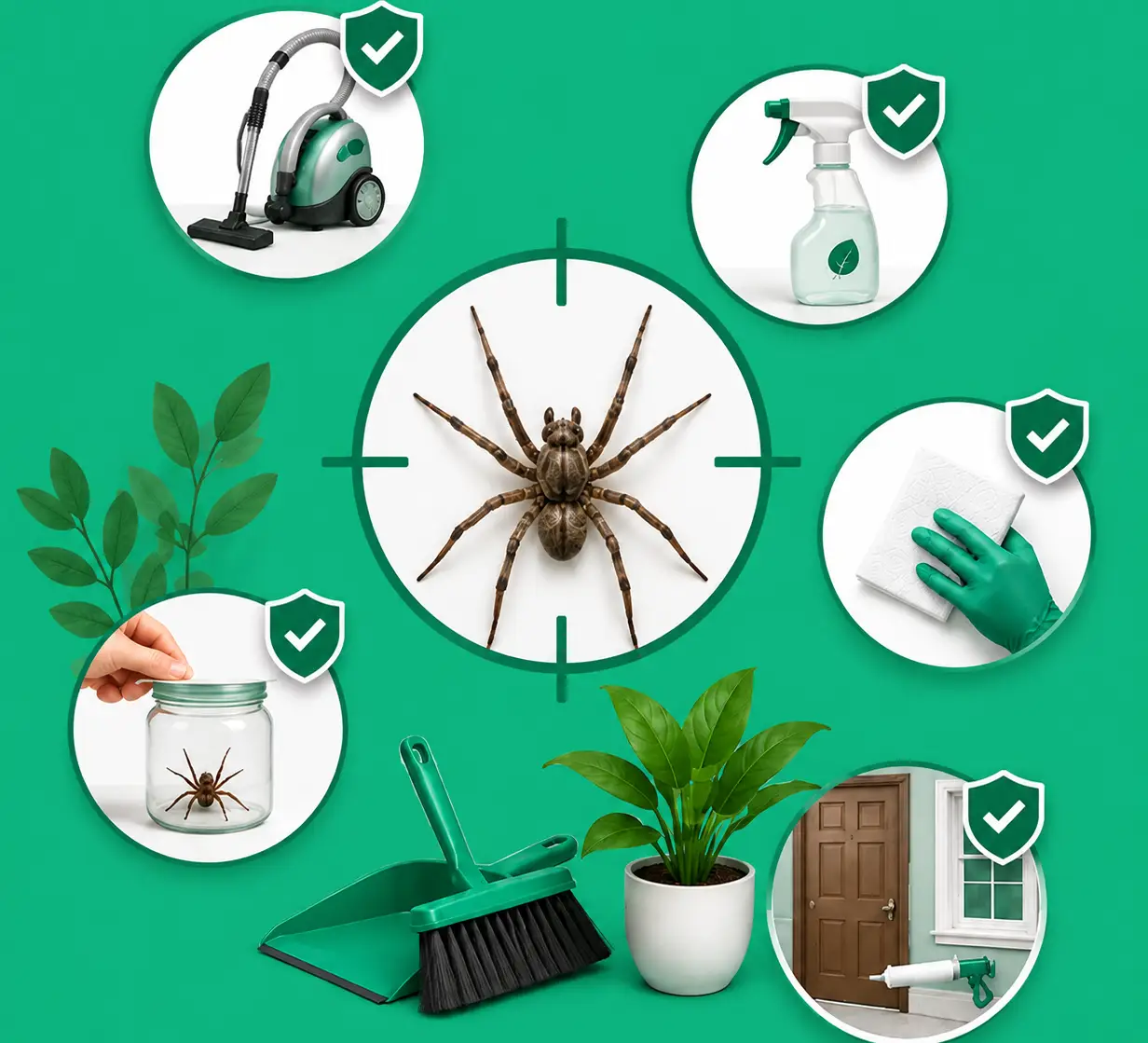
Our bug identifier tool can confirm which one you are dealing with from a quick photo, which is often the smarter first step before reaching for a shoe or a can of spray.
This article covers every practical method for killing or removing a spider safely, along with natural repellents, prevention tips, and the specific warning signs that mean a spider should be identified rather than squashed on sight. By the end, you will know exactly which method fits which situation, and when caution matters more than speed.
Should You Even Kill the Spider First
Killing a spider on sight is not always the best move, since most household spiders are completely harmless and actually help control other insects like flies and mosquitoes. A quick photo run through our bug identifier tool takes only a few seconds and tells you whether the spider in front of you is worth relocating outside or worth taking seriously.
If the spider matches the markings of a black widow or brown recluse, identification matters even more, since handling either one directly raises the risk of an accidental bite. For every other common species, a simple capture-and-release approach avoids killing something beneficial while still solving the immediate problem of a spider indoors.
What Kills Spiders Instantly
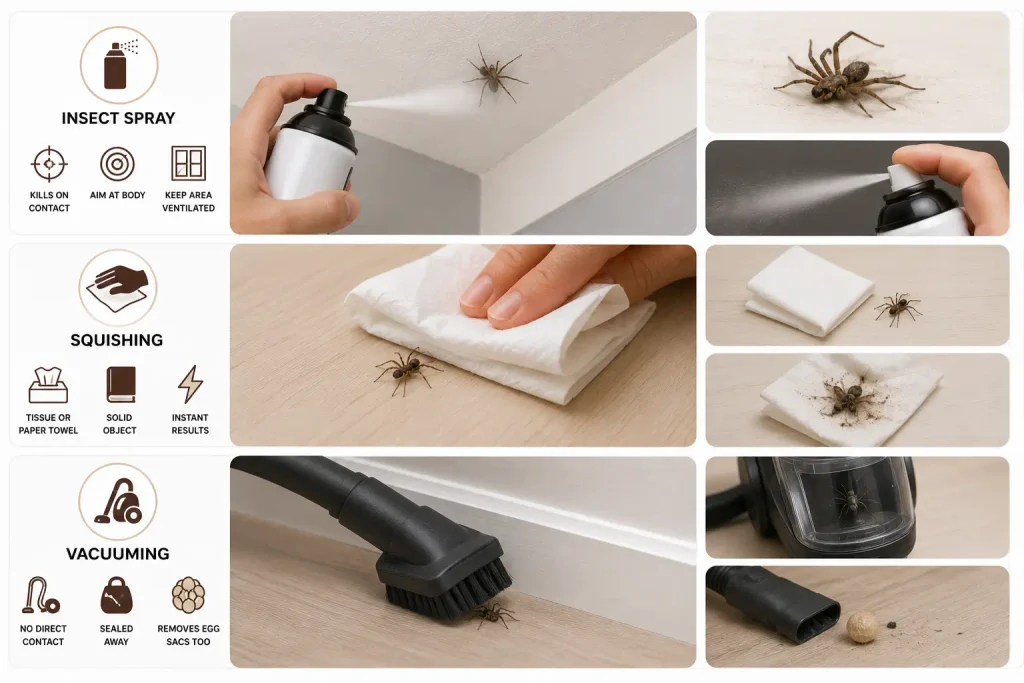
Insect Spray
A spray labeled specifically for spiders kills on contact within seconds and works well for spiders in hard-to-reach spots like ceiling corners or behind furniture. Aim directly at the body rather than the legs, since the legs are more resistant to the chemical than the abdomen, and keep the area ventilated during and after use. Before doing so, make sure you’ve correctly used our spiders identifier tool.
Squishing With a Tissue or Solid Object
A folded tissue, paper towel, or solid object like a book provides a fast, chemical-free method for spiders found on a flat, accessible surface. Applying firm, direct pressure kills the spider instantly, though this method works best on smaller species, since larger spiders can survive a light tap.
Vacuuming
A vacuum with a hose attachment removes a spider quickly without direct contact, sealing it inside the bag or canister rather than leaving a mess on the wall or floor. This method also works well for egg sacs, which are harder to squash cleanly and better suited to being sealed away and disposed of outside afterward.
Why Spiders End Up in Your Home
Spiders typically follow their food source indoors, meaning a home with flies, moths, or other small insects naturally attracts more spiders looking to feed. Gaps around doors, windows, and foundation cracks give spiders easy entry points, particularly during seasonal temperature shifts when they seek shelter from extreme heat or cold outside.
Clutter, especially in basements, garages, and closets, creates the dark, undisturbed conditions many spider species prefer for building webs undisturbed. Outdoor lighting near entrances can make the problem worse indirectly, since bright lights attract the flying insects that spiders feed on, drawing both closer to the house over time.
How to Get Rid of Spiders Indoors
Cleaning Up
Regular vacuuming of corners, ceiling edges, and behind furniture removes both spiders and the webs they rely on before either becomes established. Reducing clutter in storage areas eliminates the dark, undisturbed spots spiders favor most, making the space noticeably less appealing to settle into.
Spider Traps
Sticky traps placed along baseboards, closets, and other high-activity areas catch wandering spiders without chemicals, making them a good option for monitoring activity over time. These traps work particularly well in spots where spray or direct contact is impractical, such as under furniture or behind appliances.
Indoor Insecticides
Insecticides labeled for indoor spider control can be applied directly to cracks, corners, and other known hiding spots for longer-lasting results than a single spray application. Always follow label instructions closely regarding ventilation, pet safety, and reapplication timing, since indoor use carries more restrictions than outdoor treatments.
Natural Spider Repellents and Deterrents
Peppermint oil diluted in water and sprayed around entry points and corners acts as a natural deterrent, since spiders tend to avoid the strong scent. Vinegar solutions work similarly and offer a low-cost, chemical-free option for spot-treating windowsills, doorframes, and other common entry areas.
Other Natural Deterrents
Chestnuts and citrus peels placed near entry points are sometimes used as a mild deterrent, though results vary and neither works as reliably as a targeted spray. Reducing humidity with a dehumidifier in basements and crawl spaces removes conditions that both spiders and their insect prey rely on, addressing the root cause rather than just the symptom.

How to Get Rid of Spiders Outdoors
Outdoor Insecticides
Perimeter treatments applied around the foundation, entry points, and outdoor light fixtures create a barrier that reduces the number of spiders reaching the house in the first place. Reapplication after heavy rain is usually necessary, since outdoor treatments break down faster than indoor applications protected from the weather. Learn the general steps for how to identify a spider first.
Outdoor Prevention
Trimming vegetation and tree branches away from the exterior walls removes bridges spiders use to reach windows and rooflines directly. Storing firewood, mulch, and yard debris away from the foundation reduces the sheltered, undisturbed spots that outdoor species like wolf spiders and black widows favor for building webs.
When a Spider Is Actually Dangerous
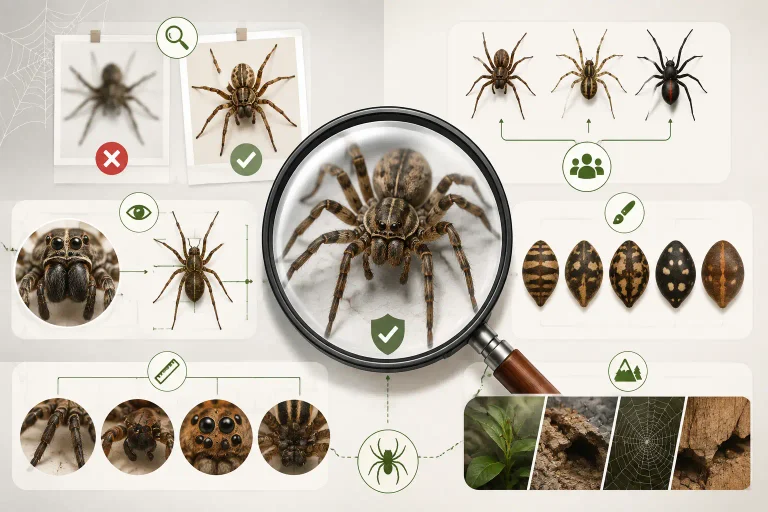
Most spiders encountered around a home pose no real risk, but two species, the black widow and brown recluse, genuinely warrant extra caution before any direct contact. A black widow shows a glossy black, rounded abdomen with a red hourglass marking on the underside, while a brown recluse is light to medium brown with a distinct violin-shaped marking on its back.
If a suspected spider matches either description, avoid direct contact and consider trapping it in a container for a clear photo rather than squishing it by hand. Running that photo through our bug identifier tool confirms the species quickly, which matters more for these two than almost any other spider found indoors.
How to Spot a Brown Recluse Before You Act
A brown recluse is identifiable by its violin-shaped marking, six eyes arranged in three pairs instead of the usual eight, and a preference for dark, undisturbed spaces like closets, attics, and stored cardboard boxes. Because bites are often painless at first and develop into a slow-healing sore over several days, avoiding direct contact matters more with this species than almost any other spider commonly found indoors.
Wearing gloves when reaching into storage boxes, shaking out clothing or shoes left untouched for a while, and using a container-and-paper method for removal rather than a direct swat all reduce the risk of an accidental encounter. If a bite does occur and later develops into an unusual sore, seeking medical attention promptly matters more than trying to identify the spider after the fact. If it turns out to be venomous, see our guide on the identified brown recluse.
Common Mistakes People Make Killing Spiders
Reaching in to squash a spider by hand without confirming the species first is one of the more avoidable risks, particularly in dark storage areas where a black widow or brown recluse could be hiding. Using excessive amounts of insecticide indoors, beyond what the label recommends, creates unnecessary chemical exposure without improving results.
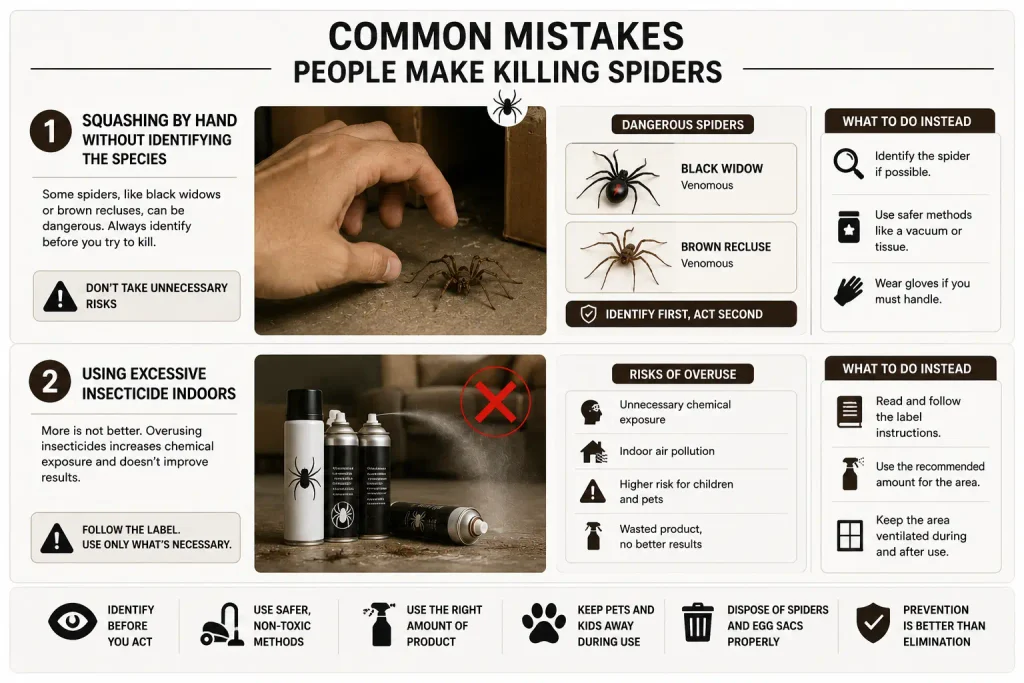
Ignoring egg sacs while focusing only on the adult spider allows a new generation to hatch shortly after, undoing whatever progress the initial treatment achieved. Ignoring entry points after dealing with a single spider is another common gap, since without sealing gaps or reducing outdoor lighting, new spiders continue finding their way inside regardless of how many individual bugs get killed.
Long-Term Spider Prevention
Sealing gaps around doors, windows, and utility lines removes the easiest entry points spiders use to move indoors from outside. Reducing outdoor lighting near entrances, or switching to yellow-toned bulbs that attract fewer insects, indirectly reduces the number of spiders drawn toward the house.
Keeping storage areas decluttered and firewood away from the foundation removes the sheltered spots preferred by both harmless and dangerous species alike. Regular vacuuming and periodic inspection of basements, garages, and closets catches new activity early, before a handful of spiders turns into a recurring problem throughout the home.
Frequently Asked Questions
Conclusion
Killing a spider is often the fastest solution, but identifying it first, even with a quick photo, prevents the two real mistakes people tend to make: harming a beneficial, harmless species unnecessarily or making direct contact with something genuinely dangerous. Sprays, tissues, and vacuums all handle the immediate problem effectively once a spider is confirmed safe to approach, while natural repellents and sealed entry points reduce how often the problem comes up at all. For anything matching the markings of a black widow or brown recluse, caution and identification matter far more than speed. Keep our bug identifier tool in mind for the next uncertain sighting, so the decision to kill, trap, or simply leave a spider alone is based on a confirmed answer rather than a guess.