What Kills Bed Bugs Instantly? Every Method That Actually Works
Finding a bed bug crawling across a mattress at night creates an urge to eliminate it immediately, and understandably so, but “instant” results depend heavily on which method is actually used.

Heat, cold, direct sprays, and steam all kill bed bugs quickly under the right conditions, though each comes with its own requirements and limitations. Our bug identifier tool can confirm a suspected bed bug from a photo, which matters before committing to any treatment, since a few other insects get mistaken for this species regularly.
This article covers every method that genuinely kills bed bugs quickly, the specific temperatures and products involved, and why eggs often survive treatments that kill adult bugs instantly. It also covers do-it-yourself control, when professional extermination becomes the better option, realistic timelines, and the most common myths and mistakes that slow down an otherwise solvable problem.
What Kills Bed Bugs Instantly
Heat above 118°F (48°C) and cold below 0°F (-18°C) both kill bed bugs on contact within minutes, making temperature extremes the most reliable instant-kill methods available. Direct contact sprays containing pyrethrin or pyrethroid compounds also kill on contact within seconds, though they leave no lasting protection against bugs that were not directly hit. Before treating, make sure you know how to find bed bugs in every hiding spot. Isopropyl alcohol sprayed directly onto a bed bug kills it almost immediately as well, though it carries fire risk and offers no residual effect against the rest of a population.
How to Identify Bed Bugs Before Treatment
Size and Appearance
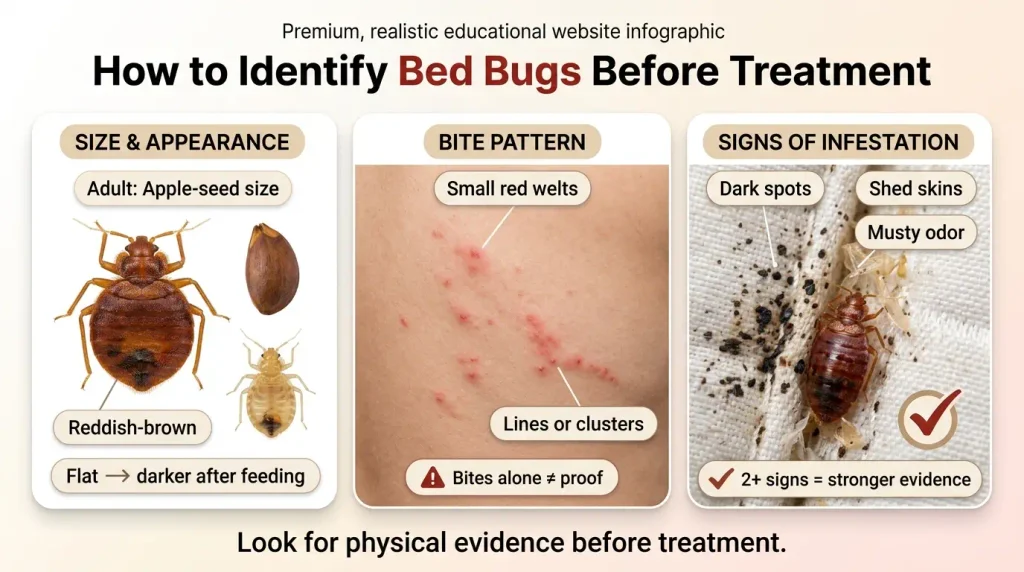
Adult bed bugs are small, flat, reddish-brown insects roughly the size of an apple seed, while nymphs appear smaller and more translucent before their first blood meal. After feeding, a bed bug’s body becomes noticeably more elongated and darker in color, which can make a recently fed bug look different from images showing an unfed one.
Bite Marks
Bed bug bites typically appear as small, itchy, red welts arranged in a line or small cluster on skin exposed while sleeping. This pattern differs from the scattered single bumps typical of mosquito bites, though bite appearance alone should never be treated as definitive proof without physical evidence of the bugs themselves.
Signs of Infestation
Small, dark, ink-like droppings in mattress seams, pale shed exoskeletons, and a faint musty odor in a heavily infested room all indicate an established population rather than a single wandering bug. Finding two or more of these signs together provides far stronger confirmation than a bite pattern or a single suspected insect sighting alone.
What Temperature Kills Bed Bugs Instantly
Heat Treatment
Bed bugs and their eggs die within minutes at sustained temperatures of 118°F (48°C) or higher, which is the principle behind professional heat treatment services that raise an entire room to this level using specialized equipment. At home, a clothes dryer set to high heat for at least 30 minutes reliably kills bed bugs in washable fabric items, provided the load is not too large to reach full heat throughout.
Cold Treatment
Freezing temperatures below 0°F (-18°C) also kill bed bugs, though this method requires sustained exposure of at least four days to guarantee full effectiveness, including on eggs. A standard household freezer can work for smaller items like shoes or accessories, but items must be sealed in a bag first and the freezer must reliably maintain that specific temperature throughout the treatment period.
Why Extreme Temperatures Work So Well
Both heat and cold disrupt the biological processes bed bugs depend on to survive, with heat denaturing proteins rapidly and cold halting cellular function once ice crystals begin forming. This is why temperature-based methods, when applied correctly and for the full required duration, reliably kill every life stage, including eggs that survive many chemical treatments. Also check for bed bug bites on your skin to confirm the infestation.
Chemical Sprays That Kill Bed Bugs on Contact
Pyrethrin and Pyrethroid Sprays
Sprays containing pyrethrin, a natural compound derived from chrysanthemum flowers, or its synthetic version pyrethroid, kill bed bugs within seconds of direct contact by attacking their nervous system. These sprays work well for bugs caught out in the open but provide no protection against bugs hidden in cracks, seams, or wall voids that the spray never reaches.
Isopropyl Alcohol
Isopropyl alcohol sprayed directly onto a bed bug dissolves its protective outer coating and kills it almost immediately, making it a readily available option for spot-treating an individual bug. This method carries a real fire hazard due to its flammability and should never be used near open flames, pilot lights, or in large quantities in an enclosed space.
Desiccant Dusts
Diatomaceous earth and silica gel dust work more gradually than a direct spray, damaging a bed bug’s exoskeleton through microscopic sharp edges or moisture absorption that leads to dehydration over hours rather than seconds. While not truly instant, these dusts offer a longer-lasting residual effect in cracks and crevices that sprays cannot match, making them a useful complement to faster-acting methods.
Steam Treatment
Steam applied directly to a mattress, seams, or upholstered furniture kills bed bugs and their eggs instantly on contact, since the moist heat penetrates fabric more effectively than dry heat alone. A steamer capable of reaching at least 130°F (54°C) at the nozzle, moved slowly across a few inches at a time, treats seams and folds far more thoroughly than a quick pass with a handheld unit.
This method works particularly well for mattress seams, box spring corners, and upholstered furniture where bed bugs commonly hide but where washing or freezing is not practical. Steam treatment should always be followed by allowing the treated area to dry completely, since trapped moisture can encourage mold growth if items remain damp for an extended period.
Do-It-Yourself Bed Bug Control
Identify the Problem
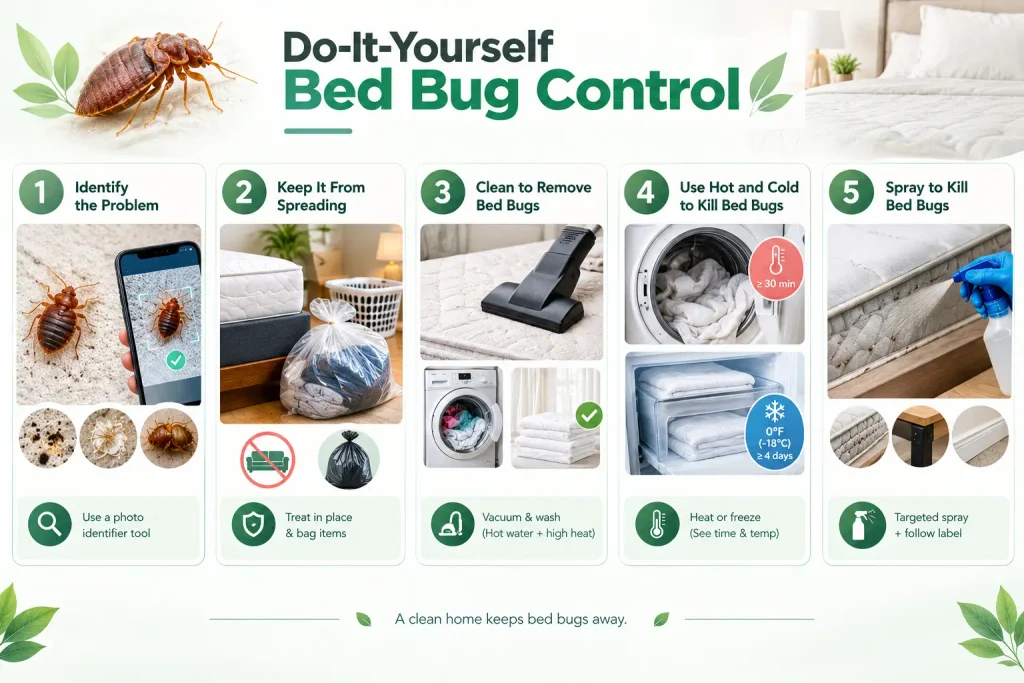
Confirming an actual bed bug infestation through physical evidence, rather than bite marks alone, ensures that whatever treatment follows actually targets the correct pest. A photo run through an identifier tool provides quick confirmation before committing time and resources to a full treatment plan.
Keep the Infestation From Spreading
Avoiding the temptation to move infested furniture into other rooms, and instead treating items in place whenever possible, prevents an already-contained problem from spreading throughout a home. Bagging infested clothing and linens for transport to a washing machine or dryer, rather than carrying them loosely through the house, further limits accidental spread.
Clean to Remove Bed Bugs
Vacuuming mattress seams, baseboards, and nearby furniture thoroughly removes visible bugs, eggs, and shed skins, though the vacuum bag or canister should be sealed and disposed of outside immediately afterward. Washing all bedding, curtains, and washable fabric items in hot water, followed by a full cycle in a high-heat dryer, kills bed bugs at every life stage present in those items.
Use Hot and Cold to Kill Bed Bugs
Running affected clothing and linens through a hot dryer cycle for at least 30 minutes reliably kills bed bugs and eggs present in washable items. For items unsuitable for washing, sealing them in a bag and placing them in a freezer maintaining 0°F (-18°C) for a minimum of four days offers an equally effective alternative.
Spray to Kill Bed Bugs
A direct-contact spray applied to visible bugs, along mattress seams, and around bed frame joints kills on the spot, though this should be combined with cleaning and encasement methods rather than relied upon alone. Following label instructions precisely regarding reapplication and ventilation prevents both reduced effectiveness and unnecessary chemical exposure indoors.
Why Some Methods Do Not Kill Bed Bug Eggs
Bed bug eggs have a tougher, more protective outer shell than adult or nymph bugs, which allows them to survive some direct-contact sprays that kill active bugs instantly. This is a major reason a single spray treatment often appears successful initially, only for a new generation to hatch and repopulate an area within one to two weeks. For long-term prevention, see how to keep insects away naturally.
Heat, cold, and steam remain effective against eggs specifically because they work through physical processes, protein breakdown or ice crystal formation, rather than a chemical mechanism the egg’s shell might partially resist. This is why combining a residual method like diatomaceous earth, which continues working over time, with an instant method that also addresses eggs directly produces far more reliable long-term results than a spray-only approach.
Professional Extermination Options
Whole-Room Heat Treatment
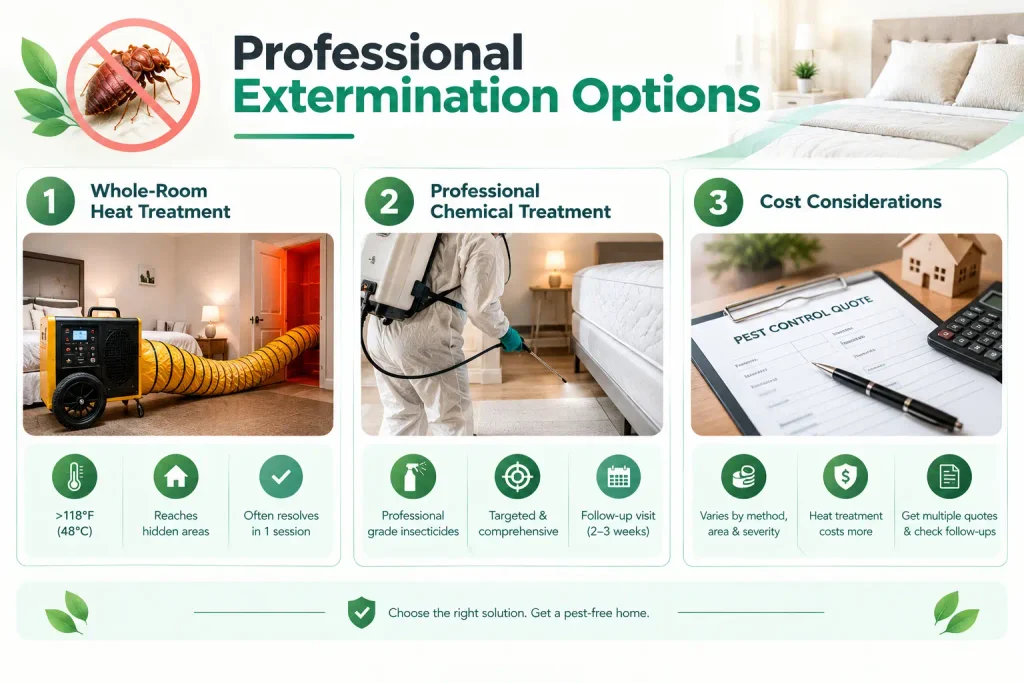
Professional heat treatment raises an entire room to a sustained temperature above 118°F (48°C) using specialized heating equipment, penetrating wall voids, furniture, and other hiding spots that home methods cannot fully reach. This approach typically resolves an infestation in a single treatment session, though the equipment and labor involved make it a more significant upfront cost compared to chemical treatments.
Professional Chemical Treatment
Pest control professionals have access to residual insecticides not available for consumer purchase, applied in a more targeted and comprehensive manner than typical over-the-counter sprays. These treatments often require a follow-up visit two to three weeks after the initial application to address any bugs that hatched from surviving eggs.
Cost Considerations
Professional bed bug treatment costs vary considerably based on the treatment method chosen, the size of the affected area, and the severity of the infestation, with heat treatment generally costing more upfront than chemical treatment due to specialized equipment requirements. Getting quotes from a couple of licensed providers and confirming whether follow-up visits are included in the initial price helps set realistic budget expectations before committing to a service.
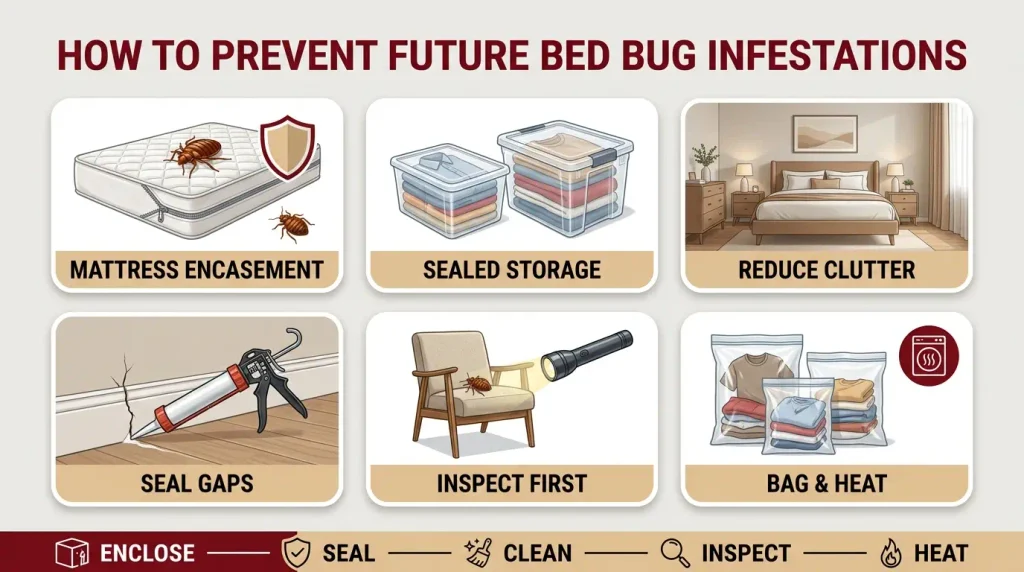
How to Prevent Future Bed Bug Infestations
Protect Your Mattress
A zippered, bed bug-rated mattress and box spring encasement seals off existing hiding spots and makes future activity far easier to spot early. Keeping the encasement in place for at least a year after treatment ensures any surviving eggs inside the mattress cannot escape or receive a blood meal.
Protect Clothing and Other Items with Plastic
Storing off-season clothing and rarely used items in sealed plastic bins, rather than open boxes or bags, prevents bed bugs from establishing a hidden population in storage areas. This step matters particularly for items stored in basements, closets, or other areas where an infestation might otherwise go unnoticed for an extended period.
Keep Your Home Tidy
Reducing clutter around the bed and throughout bedrooms limits the number of hiding spots available if bed bugs are introduced from an outside source. A tidier space also makes early signs of activity, like small droppings or shed skins, considerably easier to spot before a small problem grows significantly.
Seal Cracks and Crevices
Sealing gaps around baseboards, outlets, and wall cracks near the bed reduces the pathways bed bugs use to spread from one area to another within a room. This step also limits how easily bugs can move between adjoining walls in shared housing situations like apartments or dormitories.
Bug-Check and Clean Secondhand or Thrifted Items
Inspecting secondhand furniture and mattresses closely before bringing them home prevents one of the most common ways bed bugs enter a household in the first place. Running secondhand clothing through a hot dryer cycle before wearing or storing it adds an extra layer of protection against hitchhiking bugs.
Take Precautions at the Laundromat
Transporting laundry in sealed plastic bags rather than open baskets, and transferring clean items directly into a fresh bag rather than a used one, reduces the risk of picking up bed bugs from a shared laundry facility. Drying items on high heat for the full recommended cycle provides an additional safeguard even if exposure occurred during transport or washing.
How Long It Takes to Get Rid of Bed Bugs
A single-room, newly discovered infestation treated promptly and thoroughly can often be resolved within two to four weeks using a combination of the methods covered above. Larger or more established infestations spanning multiple rooms typically take longer, sometimes several months, particularly when professional treatment involves a follow-up visit to address bugs that hatched from surviving eggs.
Consistency matters more than speed for a lasting result, since skipping steps like laundering all fabric items or maintaining a mattress encasement for the recommended period often allows a seemingly resolved infestation to return. Monitoring with sticky interceptor traps under bed legs for several weeks after treatment provides an early warning if any bugs remain active.
Common Myths About Killing Bed Bugs Instantly
A persistent myth claims a single spray application eliminates an entire infestation immediately, when in reality most sprays only kill bugs they directly contact and leave hidden bugs and eggs completely unaffected. Another common misconception suggests bed bugs only affect dirty homes, when in fact cleanliness has little bearing on infestation risk, since bed bugs are drawn to a blood meal rather than food debris or general mess.
Some people believe moving to a different room or throwing away the mattress alone solves the problem, without realizing bed bugs frequently spread to nearby furniture and walls before the mattress is ever removed. A final myth holds that bed bugs are too small to see, when adult bugs are actually visible to the naked eye and can be confirmed through careful inspection rather than assumed based on bite marks alone.
Common Mistakes People Make When Trying to Kill Bed Bugs
Relying entirely on a spray without combining it with laundering, vacuuming, and encasement methods is one of the most common reasons an infestation appears to return after initial treatment. Attempting to freeze items in a standard freezer without confirming it reaches and maintains 0°F (-18°C) often fails to fully kill eggs, leading to a false sense of resolution.
Discarding an infested mattress without treating the surrounding room first allows bugs that had already spread to furniture or walls to continue the infestation regardless of the mattress replacement. Stopping treatment too early, before completing the full recommended duration for heat, cold, or a professional follow-up visit, is another frequent gap that allows a small number of surviving eggs to restart the entire problem.