How Long Does a Caterpillar Stay in a Cocoon? A Stage-by-Stage
A caterpillar that has stopped moving and formed a hard, still shell around itself is one of the more fascinating sights in a backyard garden, and the natural question that follows is how long that transformation actually takes.
This article breaks down the difference between a cocoon and a chrysalis, exactly how long each type of transformation lasts, and what factors speed up or slow down the process. It also covers the full life cycle using the monarch butterfly as a clear example, along with how long an adult butterfly lives once it finally emerges.
A butterfly typically spends 10 to 14 days inside its chrysalis before emerging, though this varies by species and environmental conditions. A moth spends noticeably longer inside its cocoon, often several weeks to a few months, and some species overwinter inside their cocoon for several months before emerging in spring. The most common confusion around this topic comes from using “cocoon” for both structures, when technically only moths spin a true cocoon.
Cocoon vs Chrysalis: What Is the Difference
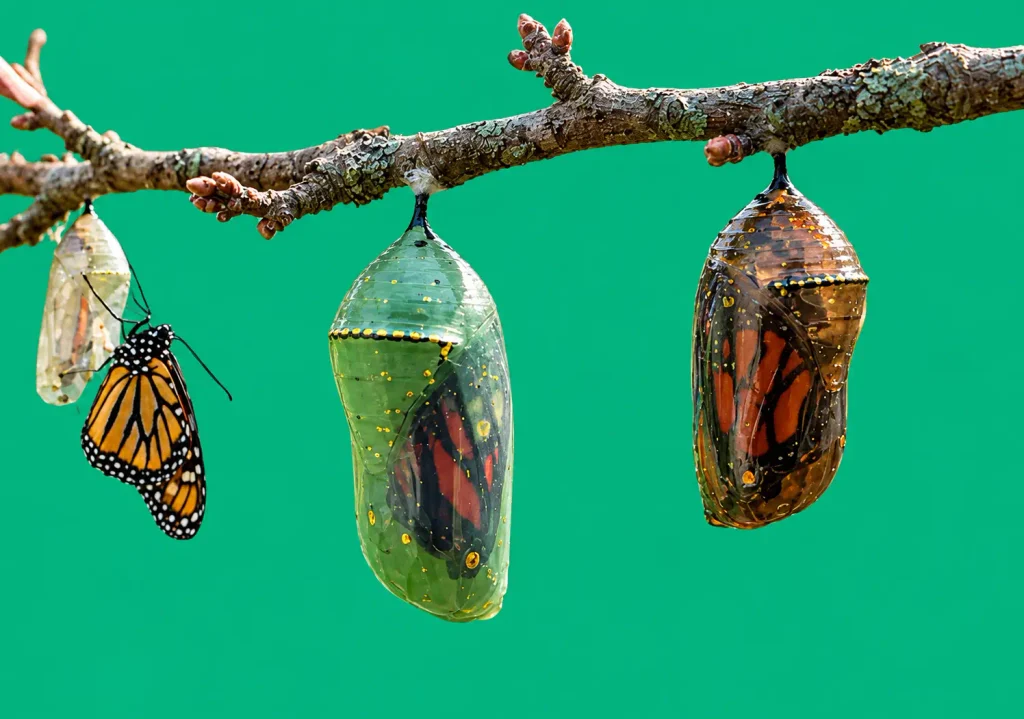
A chrysalis is the hardened outer shell of a butterfly pupa, formed directly from the caterpillar’s own skin without any silk involved, and it is typically smooth, often colorful, and hangs exposed from a twig or leaf. A cocoon, by contrast, is a protective silk casing that a moth caterpillar spins around itself before pupating, often incorporating leaves, bark, or debris for additional camouflage and protection.
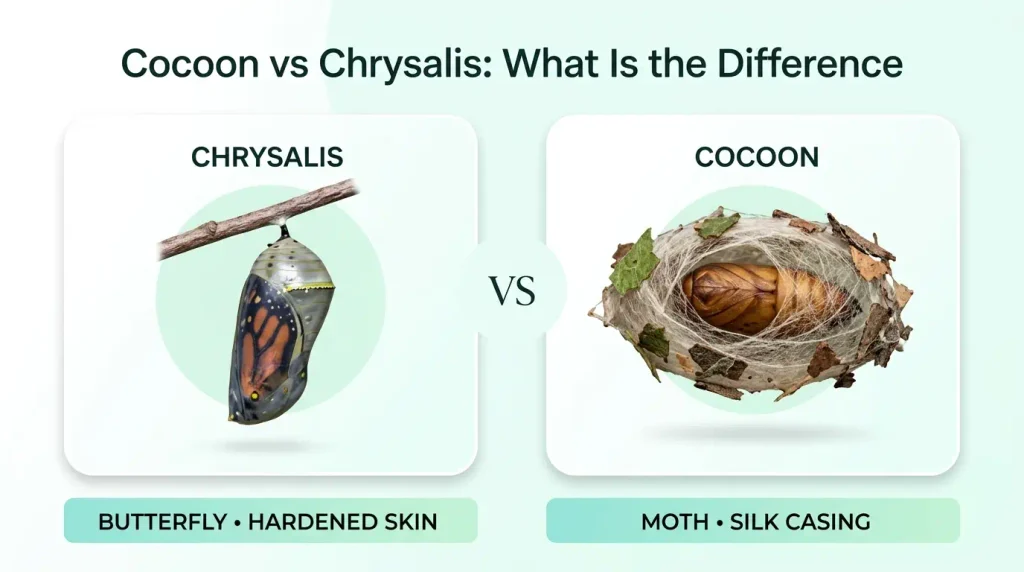
This distinction matters because these two structures belong to different insect groups with meaningfully different transformation timelines, and people commonly use “cocoon” loosely to describe both. Confirming which insect you are actually observing, whether through visible silk threads, shape, or a photo run through an identifier tool, clears up which timeline actually applies to your specific sighting.
How Long Butterflies Stay in a Chrysalis
Most butterfly species remain in their chrysalis for about 10 to 14 days under favorable warm-weather conditions, though this window can extend somewhat depending on species and temperature. The monarch butterfly, one of the most studied and commonly observed species, typically completes this stage in roughly 10 days when conditions are warm and stable. This transformation is just as interesting as the praying mantis lifespan.
Some species that need to survive winter as a chrysalis, known as overwintering species, can remain in this stage for several months, effectively pausing development until conditions warm up again in spring. This extended winter dormancy is a survival adaptation rather than a sign of anything unusual happening inside the chrysalis itself.
How Long Moths Stay in a Cocoon
Moth species generally spend considerably longer inside their cocoon compared to a butterfly’s chrysalis stage, often ranging from a few weeks up to several months depending on the species and season. Species that pupate in fall frequently remain inside their cocoon through the entire winter, emerging only once spring temperatures return and trigger the final stage of development.
This extended cocoon period reflects the added protection a silk cocoon provides against cold weather and predators compared to an exposed chrysalis. Some moth species can even delay emergence for over a year under unfavorable conditions, a survival strategy that gives them flexibility if the environment is not yet suitable for an adult moth to thrive.
The Life Cycle of a Monarch Butterfly
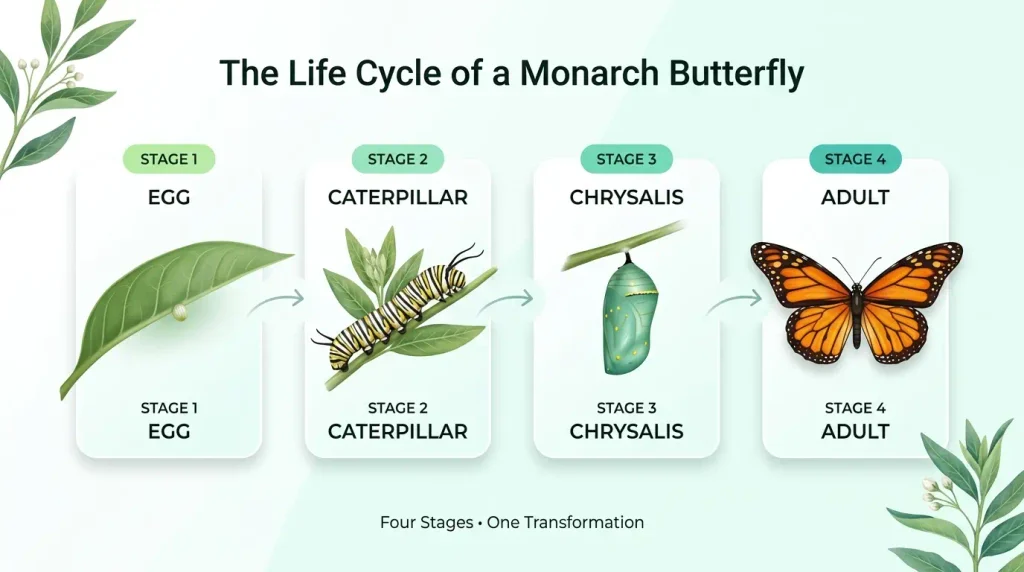
Egg
A monarch butterfly begins life as a tiny egg laid on the underside of a milkweed leaf, the only plant monarch caterpillars can feed on after hatching. This egg stage lasts only three to five days before a caterpillar emerges ready to begin feeding immediately.
Caterpillar
The caterpillar, or larval stage, lasts roughly two weeks, during which the monarch caterpillar feeds almost continuously on milkweed and grows rapidly through five distinct molts. Each molt allows the caterpillar to shed its outgrown exoskeleton and continue increasing in size until it reaches full larval growth.
Chrysalis
Once fully grown, the caterpillar forms a jade-green chrysalis with distinctive gold markings, remaining in this pupal stage for approximately 10 days under warm conditions. Inside this seemingly still shell, the caterpillar’s body undergoes a dramatic transformation, breaking down and reorganizing into the structure of an adult butterfly.
Adult Butterfly
After emerging from the chrysalis, an adult monarch spends the first few hours pumping fluid into its wings and allowing them to dry and harden before its first flight. From this point, the adult stage lasts anywhere from a few weeks to several months, depending on the specific generation and, for monarchs, whether the individual is part of the long migratory generation. You might also wonder if insects sleep during this dormant stage.
What Affects How Long the Pupal Stage Takes
Temperature is the single biggest factor influencing pupal duration, since warmer conditions speed up the internal transformation process while cooler temperatures slow it down considerably. This is why the same species can complete its chrysalis or cocoon stage noticeably faster during a warm summer than during a cooler spring or fall period.
Species-specific biology also plays a significant role, since some species are simply programmed to take longer regardless of temperature, particularly those that rely on an extended pupal stage as a survival strategy through winter. Humidity, predation risk during the vulnerable pupal stage, and even the health of the caterpillar heading into pupation can all influence the exact timeline for any individual insect.
How Long Does a Butterfly Live
Adult butterfly lifespan varies considerably by species, ranging from as little as a week for some smaller species to several months for others under favorable conditions. Monarch butterflies present a particularly interesting case, since most generations live only a few weeks as adults, while the final generation of the year, responsible for the long migratory journey, can live six to eight months.
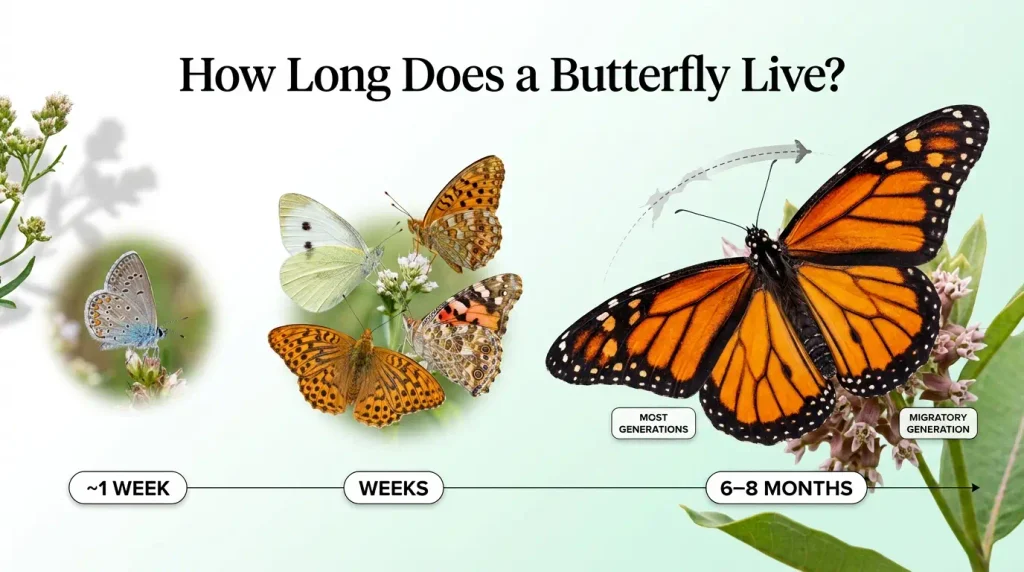
This dramatic difference within a single species highlights how much lifespan can depend on the specific role a generation plays, rather than assuming every individual of a species lives the same length of time. Environmental factors like predation, weather, and food availability also meaningfully shorten lifespan compared to the theoretical maximum for any given species.
How to Identify a Chrysalis or Cocoon Found Outside
A chrysalis typically appears smooth, often brightly colored or patterned, and hangs exposed from a twig, leaf, or structure without any surrounding silk or debris. A cocoon, by comparison, usually looks more textured or fuzzy, often incorporating leaves or bark, and may be tucked into a more hidden location like leaf litter or bark crevices rather than hanging in the open.
If uncertain which type has been found, checking for visible silk threads, a rougher outer texture, or a partially concealed location all point toward a moth cocoon rather than a butterfly chrysalis. Running a photo through an identifier tool settles the question quickly and also gives an estimate of how long the wait for emergence might realistically take.
How Do Butterflies Die
Most butterflies die from natural causes related to age, predation, or simply running out of the energy reserves needed to sustain flight and reproduction. Predators including birds, spiders, and even certain wasps account for a significant portion of butterfly deaths, particularly during the more vulnerable early adult period before flight muscles fully strengthen.
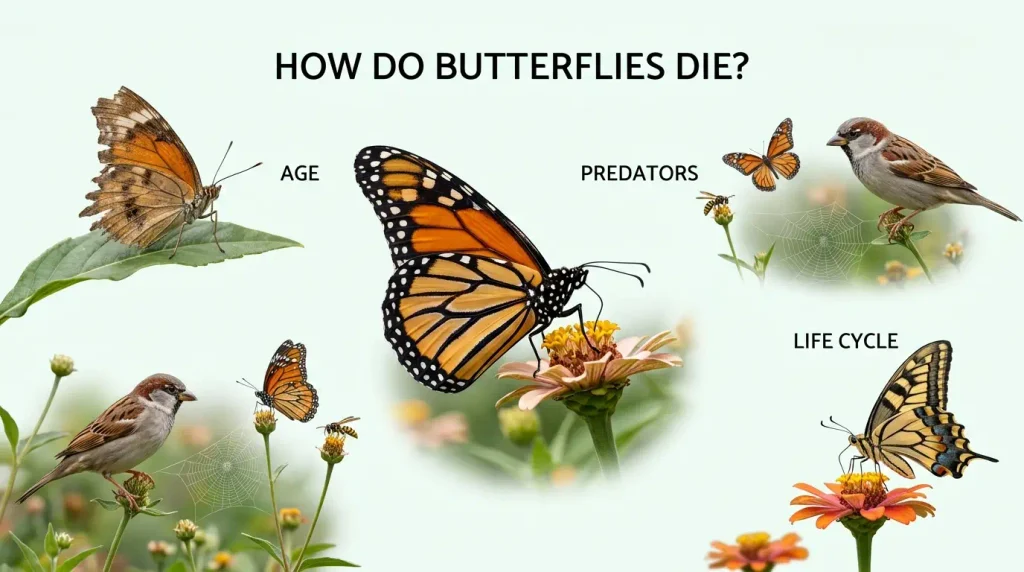
Weather also plays a substantial role, since sudden cold snaps, storms, or extreme heat can prove fatal, especially for species not adapted to rapid temperature shifts. For migratory species like the monarch, exhaustion and habitat loss along the migration route add additional risks beyond what a non-migratory butterfly typically faces during its shorter lifespan.
Common Mistakes When Raising Caterpillars at Home
Assuming every caterpillar will form a chrysalis rather than checking which species is actually being raised leads to incorrect expectations about timing and appearance. Disturbing or moving a chrysalis or cocoon during the transformation process risks damaging the developing insect inside, even though it may appear completely still and inactive.
Assuming a long wait means something has gone wrong is another common concern, when in reality many species, particularly those pupating in fall, are simply following a normal extended timeline through winter. Providing an inappropriate host plant for a caterpillar before it reaches the pupal stage is one of the most consequential mistakes, since many caterpillar species can only eat one or a small handful of specific plants. Once they emerge, some species eat similarly to what ladybugs eat.
Frequently Asked Questions
Conclusion
How long a caterpillar stays in a cocoon really depends on which insect is involved, since a butterfly’s chrysalis stage typically wraps up in about 10 to 14 days while a moth’s true cocoon can take anywhere from several weeks to a few months, sometimes stretching through an entire winter. Temperature, species biology, and whether the individual is preparing to overwinter all shape the exact timeline for any given sighting. Understanding the real difference between a cocoon and a chrysalis clears up a mix-up that even many competing resources gloss over, setting more accurate expectations from the start. Running a photo through our bug identifier tool confirms exactly which caterpillar or moth species is involved, turning a patient wait into an informed one.