Bed Bug Bites: How to Identify, Treat, and Tell Them Apart
Waking up with a new set of itchy red marks is unsettling enough without the added uncertainty of figuring out exactly what caused them. Bed bug bites have a few recognizable patterns, but they also share enough similarities with mosquito bites, flea bites, and mild skin reactions that bite appearance alone often is not enough for a confident answer.
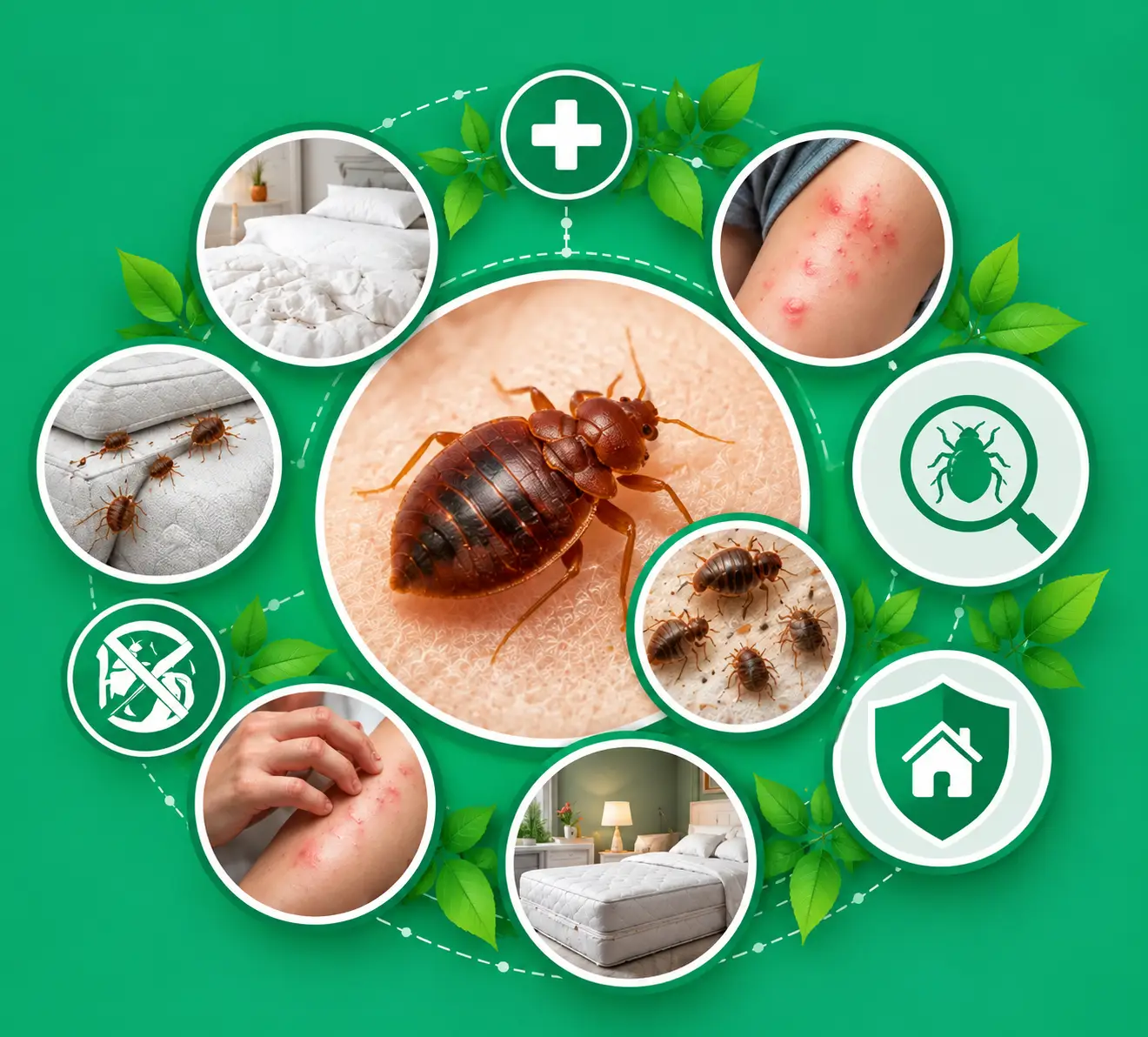
Our bug identifier tool can confirm a suspected bed bug from a photo, which matters since bite marks should always be paired with physical evidence rather than treated as proof on their own.
This article covers exactly what bed bug bites look like, how they differ from other common bites, and what treatment actually helps once they appear. It also covers the specific situations that warrant a doctor’s visit, how bites tend to affect children differently than adults, and the physical confirmation steps that should always accompany a suspected bite pattern.
What Bed Bug Bites Look Like
A typical bed bug bite starts as a small, raised, red welt, often slightly firmer to the touch than a mosquito bite, with a noticeably itchy sensation that can intensify over the following day. If you suspect an infestation, learn how to find bed bugs in your home. Bites frequently appear in a line or small cluster of three or more, a pattern that develops as a single bed bug feeds at multiple points during one feeding session.
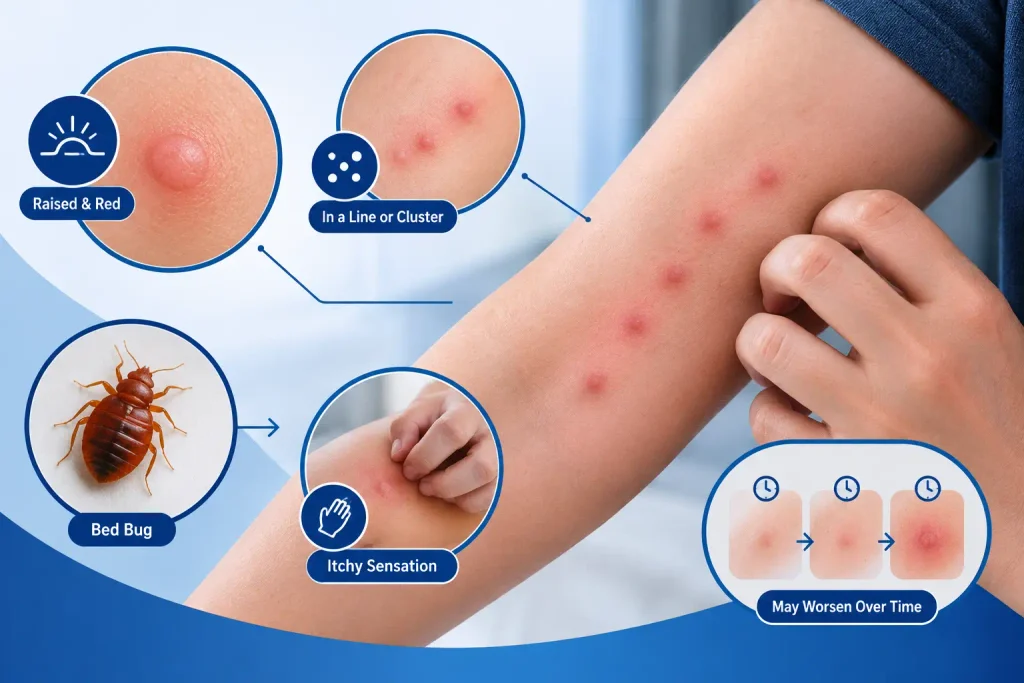
Some people develop a small blister or a darker red center within the welt, particularly with repeated exposure over several nights, while others show only a mild, flat pink mark. This variation in appearance, even from the same source, is one of the main reasons bite pattern alone is not always a reliable identification method without additional physical evidence.
Where Bed Bug Bites Typically Appear on the Body
Bed bug bites concentrate on skin left exposed while sleeping, most commonly the arms, shoulders, neck, and legs, since these areas make the easiest access points for a bug crawling from nearby bedding. Areas covered by tight-fitting sleepwear or blankets tend to show noticeably fewer bites, since bed bugs generally avoid areas requiring them to bite through fabric.
Facial bites do occur, particularly on the cheek or forehead for someone who sleeps with their face uncovered, though they are somewhat less common than bites on the arms and legs. Noticing a consistent pattern across exposed skin, rather than a truly random distribution across the entire body, supports a bed bug identification over other possible causes.
Bed Bug Bites vs Other Insect Bites
| Bite Source | Typical Pattern | Timing | Distinguishing Feature |
|---|---|---|---|
| Bed Bugs | Line or small cluster of 3+ | Hours to 2 days after biting | Found on skin exposed while sleeping |
| Mosquitoes | Scattered single bumps | Minutes after biting | Immediate, isolated itchy bumps |
| Fleas | Small clusters, often on lower legs | Minutes to hours | Tiny red dot at bite center, near pets |
| Ants | Tight cluster near ground contact | Immediate, sharp sting | Often a small blister at each site |
Mosquito bites appear almost immediately and show up as isolated, scattered bumps rather than a consistent line or cluster pattern. Flea bites often concentrate around the ankles and lower legs, particularly in homes with pets, and show a small, distinct red dot at the center of each bite that bed bug bites typically lack.
Comparing the specific pattern, timing, and typical body location against this table narrows down the likely cause considerably, though physical evidence remains the only way to confirm the source with real certainty.
Symptoms Beyond the Bite Itself
Beyond the visible welt, bed bug bites commonly cause persistent itching that can intensify at night, sometimes disrupting sleep even after the initial biting has stopped. Some people notice mild swelling around the bite site, particularly with bites that have been scratched repeatedly over several days. Once confirmed, see what kills bed bugs instantly so you can act fast.
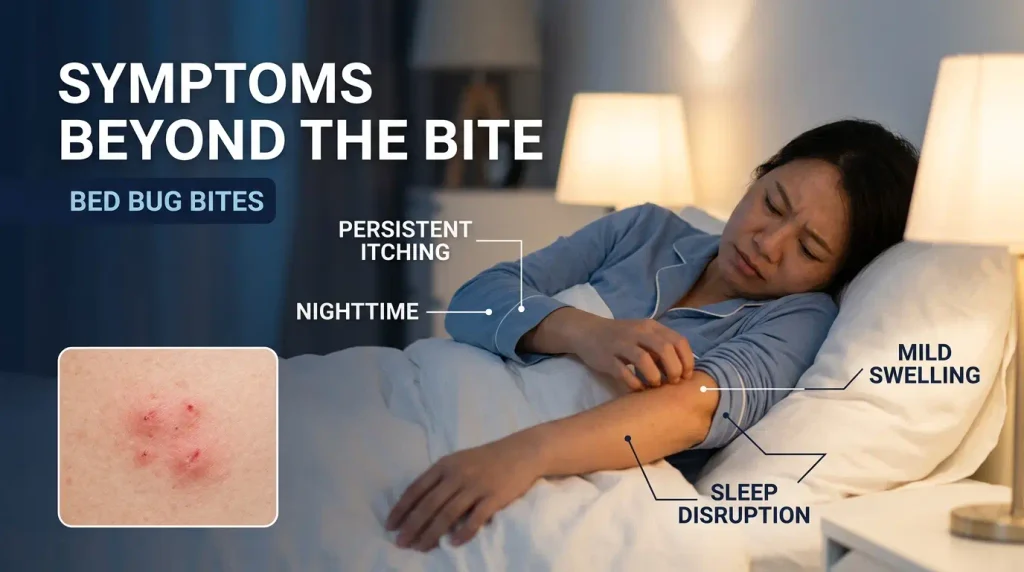
Bed bug bites typically appear as small, itchy, red welts arranged in a line or small cluster on skin exposed while sleeping, often described as a “breakfast, lunch, and dinner” pattern. They usually develop within a few hours to a couple of days after the actual bite and can take one to two weeks to fully heal without treatment. Most bites resolve without medical care, though confirming actual bed bugs through physical evidence, rather than relying on bite appearance alone, is essential before starting any treatment plan.
Widespread anxiety or difficulty sleeping, once someone becomes aware that bed bugs are present, is a real and common secondary effect that goes beyond the physical bite itself. This emotional impact, while not a medical symptom in the traditional sense, is worth acknowledging as part of the overall experience of dealing with a confirmed infestation.
How Long Bed Bug Bites Take to Appear and Heal
Bed bug bites often take longer to become visible than people expect, sometimes appearing anywhere from a few hours up to two days after the actual bite occurred. This delay differs meaningfully from mosquito bites, which typically become visible and itchy within minutes.
Without any treatment, most bed bug bites resolve on their own within one to two weeks, with itching generally peaking within the first few days before gradually fading. Bites that are scratched repeatedly can take longer to heal and carry a higher risk of secondary skin irritation or infection compared to bites left alone.
Do Bed Bug Bites Always Cause a Reaction
No, reactions to bed bug bites vary significantly between individuals, and some people show no visible marks at all despite being bitten repeatedly over multiple nights. This variation depends on individual sensitivity rather than anything about the bite itself, meaning two people sleeping in the same infested bed can have dramatically different bite experiences.
This inconsistency is part of why relying solely on the absence of bites to rule out an infestation is unreliable, since a partner or family member showing no reaction does not mean bed bugs are not present. Physical evidence, such as spotting the insects themselves or finding dark droppings in mattress seams, remains necessary regardless of how one particular person’s skin responds.
Allergic Reactions to Bed Bug Bites
While most bed bug bites cause only mild, localized itching and swelling, a smaller number of people experience a more significant allergic reaction, including pronounced swelling, hives, or widespread redness beyond the immediate bite area. In rare cases, a more serious systemic allergic reaction can occur, involving symptoms like difficulty breathing or swelling in areas away from the bite site.
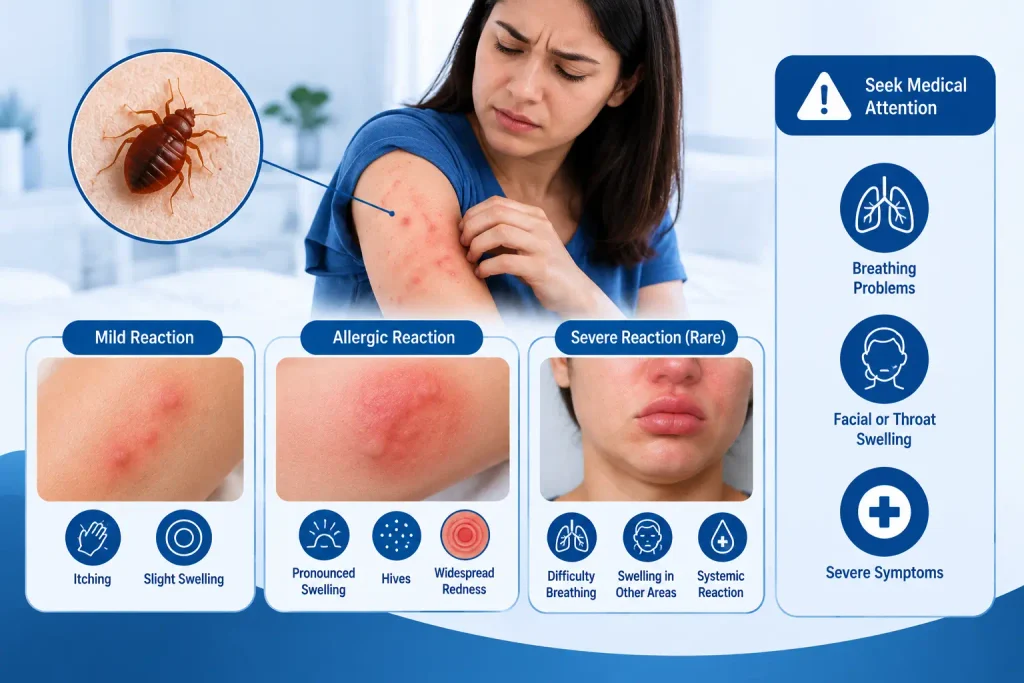
Anyone experiencing symptoms beyond typical localized itching and redness, particularly breathing difficulty or widespread swelling, should seek medical attention promptly rather than assuming it will resolve like a typical mild bite. A known history of significant reactions to insect bites in general is worth mentioning to a doctor if bed bug exposure becomes an ongoing concern.
Bed Bug Bites on Children and Pets
Children often react more visibly to bed bug bites than adults, sometimes developing more pronounced swelling or a stronger itching response from the same bite exposure. Because children may scratch more persistently without recognizing the risk of skin infection, keeping fingernails trimmed and applying an appropriate anti-itch treatment matters more directly for younger children than for most adults.
Bed bugs generally do not feed on pets the way fleas do, since they prefer human blood and typically stay closer to human sleeping areas rather than pursuing animals around a home. Unexplained bites on a pet are more likely caused by fleas or another parasite entirely, making a veterinary check a more appropriate first step than assuming bed bugs are responsible. If you’re unsure whether it’s bed bugs or something else, check our full bug bite identification guide.
How to Treat Bed Bug Bites at Home
Washing the affected area with soap and water helps reduce the risk of infection and provides some relief from initial irritation immediately after noticing a bite. An over-the-counter anti-itch cream or oral antihistamine can meaningfully reduce itching and discomfort for most people experiencing a typical, mild reaction.
Avoiding scratching, even though the itch can be intense, reduces the risk of breaking the skin and developing a secondary infection that complicates healing. A cool compress applied to particularly swollen or irritated bites offers additional short-term relief alongside these other basic care steps.
When to See a Doctor
Seek medical attention if bites show signs of infection, including increasing redness, warmth, swelling, or the appearance of pus, since these symptoms suggest a secondary infection rather than a typical healing bite. A widespread allergic reaction, particularly one involving difficulty breathing or swelling in areas away from the bite site, warrants urgent medical evaluation rather than home treatment.
Bites that fail to improve after one to two weeks, or that seem to worsen rather than gradually fade, should also be evaluated by a doctor rather than continuing to manage them at home indefinitely. Bringing a photo of both the bites and any suspected bed bugs found during an inspection gives a doctor useful context for confirming the cause and recommending appropriate treatment.
How to Confirm Bed Bugs Are Actually the Cause
Bite marks alone are never sufficient proof of bed bugs, since several other causes, including mosquitoes, fleas, and mild allergic skin reactions, can produce visually similar marks. Confirming actual bed bugs requires finding physical evidence: the insects themselves, small dark droppings resembling ink stains in mattress seams, or pale shed exoskeletons near common hiding spots.
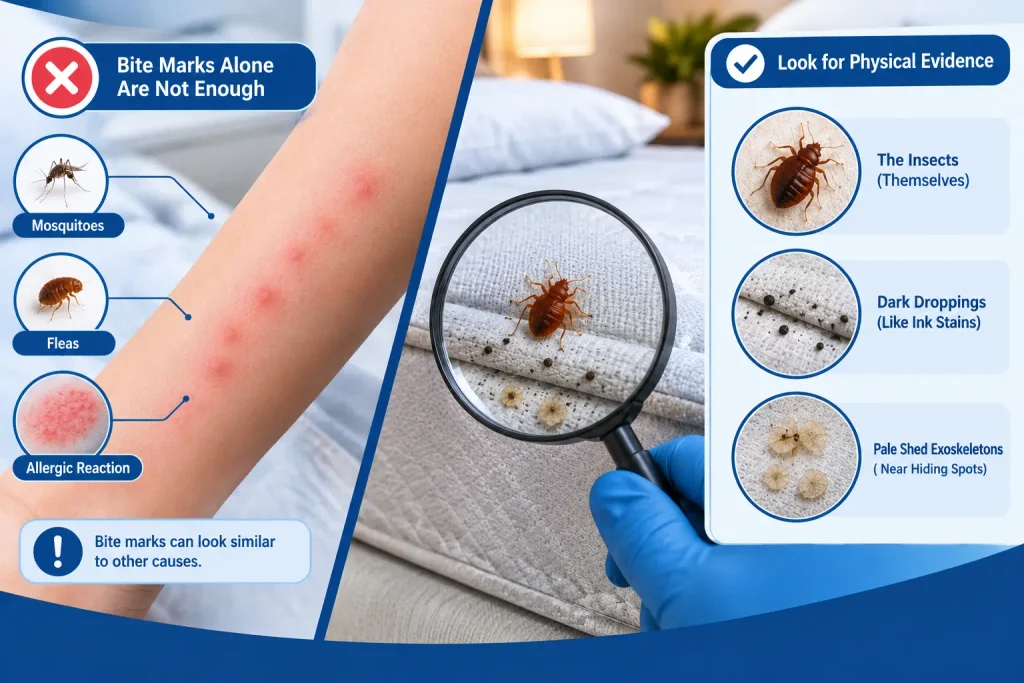
Checking mattress seams, box spring corners, and nearby furniture with a flashlight, ideally soon after noticing a suspicious new bite pattern, provides the physical confirmation bite appearance alone cannot offer. Running a photo of any suspected bug or evidence found through an identifier tool adds a fast, reliable layer of confirmation before committing to a full treatment plan.
Preventing Further Bites While Treating an Infestation
Using a zippered, bed bug-rated mattress and box spring encasement seals off existing hiding spots and helps reduce ongoing exposure while a broader treatment plan is underway. Washing all bedding, curtains, and nearby fabric items in hot water, followed by a full high-heat dryer cycle, addresses bugs and eggs present in those specific items.
Reducing clutter around the bed limits additional hiding spots that could otherwise sustain a smaller, harder-to-treat population even after the main mattress and frame have been addressed. Continuing to monitor with sticky interceptor traps under bed legs during treatment provides an ongoing indicator of whether bite exposure is genuinely decreasing over time.
Common Myths About Bed Bug Bites
A persistent myth holds that bed bug bites always appear in a perfect line of exactly three, when in reality the pattern can vary from a single bite to a larger, less organized cluster depending on how a bug fed during that session. Another common misconception assumes bites appear immediately after being bitten, when in fact a delay of several hours to two days before visible symptoms is common and expected.
Some people believe a lack of any visible bites on their body means bed bugs are not present, overlooking how significantly individual reactions vary between people sleeping in the same infested space. A final myth suggests bed bug bites always itch intensely, when some individuals experience only mild irritation or no noticeable symptoms at all despite confirmed exposure.
Common Mistakes When Dealing With Bed Bug Bites
Assuming a bite pattern alone confirms bed bugs, without checking for any physical evidence in the sleeping area, is one of the most common and consequential mistakes, since it can lead to either unnecessary panic or a missed early infestation. Scratching bites repeatedly, despite the discomfort, increases the risk of secondary skin infection and generally prolongs the overall healing time.
Treating only the visible bites while ignoring the underlying infestation allows new bites to continue appearing night after night, since the bites themselves are a symptom rather than the actual problem needing treatment. Waiting too long to seek medical attention for a worsening or infected bite, in hopes it will resolve on its own, can allow a manageable issue to become more complicated than necessary.
Frequently Asked Questions
Conclusion
Bed bug bites follow a few recognizable patterns, a line or small cluster on exposed skin, a delayed appearance of hours to a couple of days, and itching that typically peaks within the first few days before fading. Even with these patterns in mind, bite appearance alone should never stand in for physical confirmation, since several other causes can look remarkably similar and individual reactions vary so widely between people. Basic home care, avoiding scratching, and watching for signs of infection or a broader allergic reaction handle most cases without needing medical treatment. Confirming the actual source through a thorough inspection, and running any suspected bug or evidence through our bug identifier tool, ensures the right treatment plan gets applied to the real cause rather than a guess based on the bites alone.